



Are VR Controller Grips still worth it when handle length only happens sometimes?

My hands are too big for my Quest 2 controllers. Playing Gorilla Tag feels like I'm trying to hold a pebble. I thought grips would add length, but it's not that simple.
For large-hand users, grips are worth it more for consistent comfort and safety than for the unreliable extra handle length. The best grip fixes the overall fit, adds texture, and doesn't make battery swaps a nightmare. The extra length is a bonus, not the main benefit.
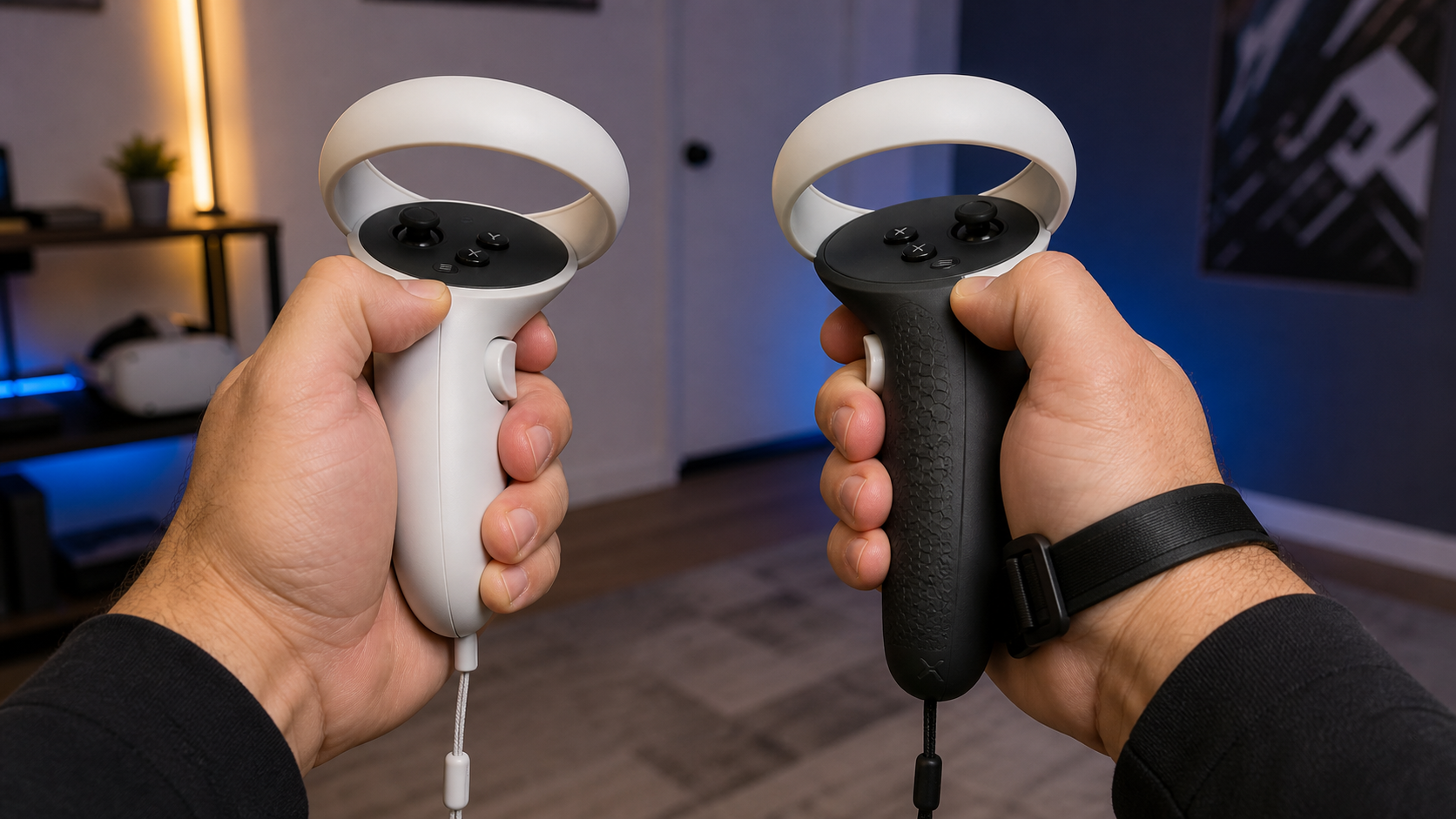
I went into this experiment hoping a simple accessory would make my controller feel longer. As someone with large hands, my pinky finger always dangled off the bottom of the stock controller, making intense games feel awkward. I figured a grip with an extended handle was the obvious solution. The truth I found was much more complicated. The real value of a good grip has less to do with a simple measurement and more to do with how it changes the entire feel, security, and even the frustration of owning a VR headset. The first surprise came the moment I tried to install one.
Would large-hand users notice handle length in Gorilla Tag before they notice comfort or setup?
You buy a grip for more length, but the setup is a pain. Your pinky finger still hangs off sometimes. Is the added length even the first thing you notice?
No, large-hand users will likely notice the improved texture, the added bulk in their palm, and the initial setup difficulty first. The extra handle length is a subtle benefit that you only appreciate after you find a comfortable, secure fit, which can be a real challenge.
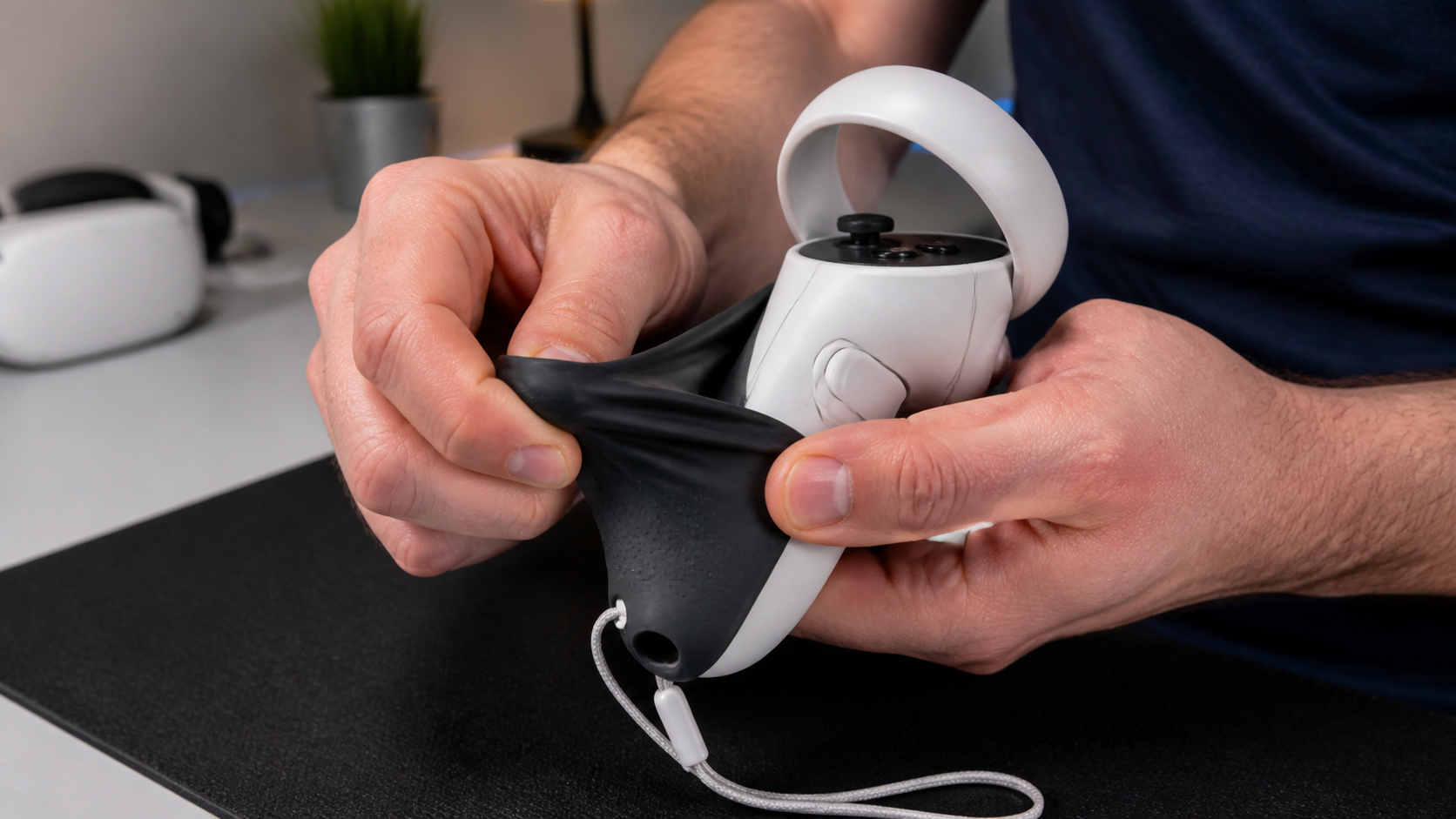
My first experience was with a full silicone cover grip. I thought more coverage meant more quality. The first thing I noticed was not the length, but the struggle. Stretching the silicone over the controller took more effort than I expected. Once it was on, the second thing I noticed was the change in texture. The smooth, slippery plastic of the Quest 2 controller was replaced with a grippy, matte silicone. This was an immediate improvement. My hand felt more planted. The added thickness in the palm area was also more noticeable than the length. My hand could finally relax a bit instead of clenching a controller that felt too small. The handle length was the last thing I noticed, and it felt inconsistent.
First Impressions: Texture and Bulk
The biggest immediate win was the texture. In a fast game like Gorilla Tag, your hands can get sweaty. The standard controller becomes slick, but the silicone grip gave me a confident hold no matter how much I moved. The extra bulk also filled my palm better, which spread out the pressure and made the controller feel more substantial.
The Feel in Gorilla Tag
When I jumped into a game, the change was clear. I wasn't just holding the controller; I was connected to it. The knuckle strap meant I could open my hand completely to relax between movements without dropping it. This reduced fatigue significantly. The supposed extra length at the bottom was still a bit of a letdown. If I didn't hold the controller just right, my pinky would still slip off the end. The real benefit came from the improved overall fit.
| Accessory Type | Initial Comfort | Perceived Length Increase | Setup Difficulty |
|---|---|---|---|
| Minimalist Knuckle Strap | Good. Adds security without changing the controller shape much. | None. It's just a strap. | Low. Usually easy to attach and adjust. |
| Full Silicone Cover Grip | Excellent. Adds bulk and a grippy texture that fills the hand. | Minor and inconsistent. Depends on hand position. | High. Can be difficult to stretch on and align correctly. |
Would remove and reinstall the grip after battery swaps expose the same handle length problem?
Your controller dies mid-game. You have to peel off a tight silicone grip just to swap the battery. Will it ever fit the same way again?
Yes, removing and reinstalling the grip for battery swaps often highlights the handle length problem. The silicone can stretch or shift, making it hard to get the same alignment and consistent feel. This is especially frustrating when you need to change batteries quickly.
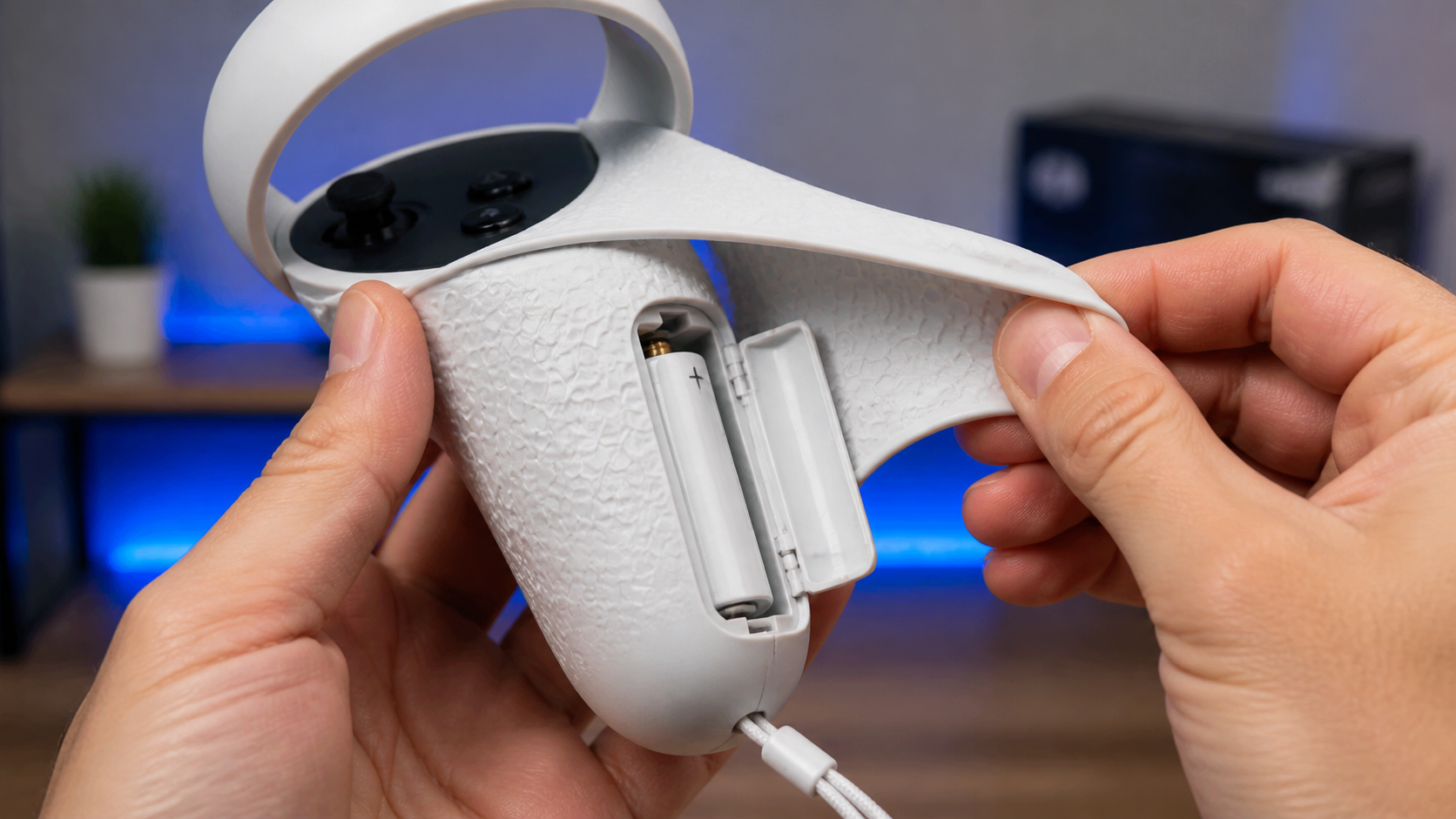
This is where my biggest frustration with full-cover grips emerged. My battery died right in the middle of a match. I had to pause, take off my headset, and deal with the grip. I peeled back the tight silicone sleeve, which felt like wrestling an octopus. After swapping the AA battery, I tried to slide the grip back on. It didn't go on the same way. The bottom part, the part that's supposed to add length, was now slightly twisted. The seam wasn't aligned with the controller body anymore. It felt wrong in my hand. I spent a few minutes trying to adjust it, but I couldn't get it back to that "perfect" fit I had before. The problem is that the silicone has to be stretched to fit, and it doesn't always settle back into the same shape. This failure case made me realize that a grip's design around the battery door is critical. Any grip that forces you to remove it completely for a simple battery swap is a poor design. It introduces an annoying variable and turns a 10-second task into a two-minute struggle.
Is the biggest issue setup, fit, safety, or fatigue?
Are you worried about throwing your controller? Or does your hand just ache after 30 minutes? What is the real problem that controller grips are meant to solve for a user like me?
For large-hand users, the biggest issues are fit and fatigue, which are directly connected. The stock controller is too small, causing hand cramping. Safety is a nice bonus, and setup is a one-time annoyance, but a poor fit causes constant discomfort that ruins long play sessions.
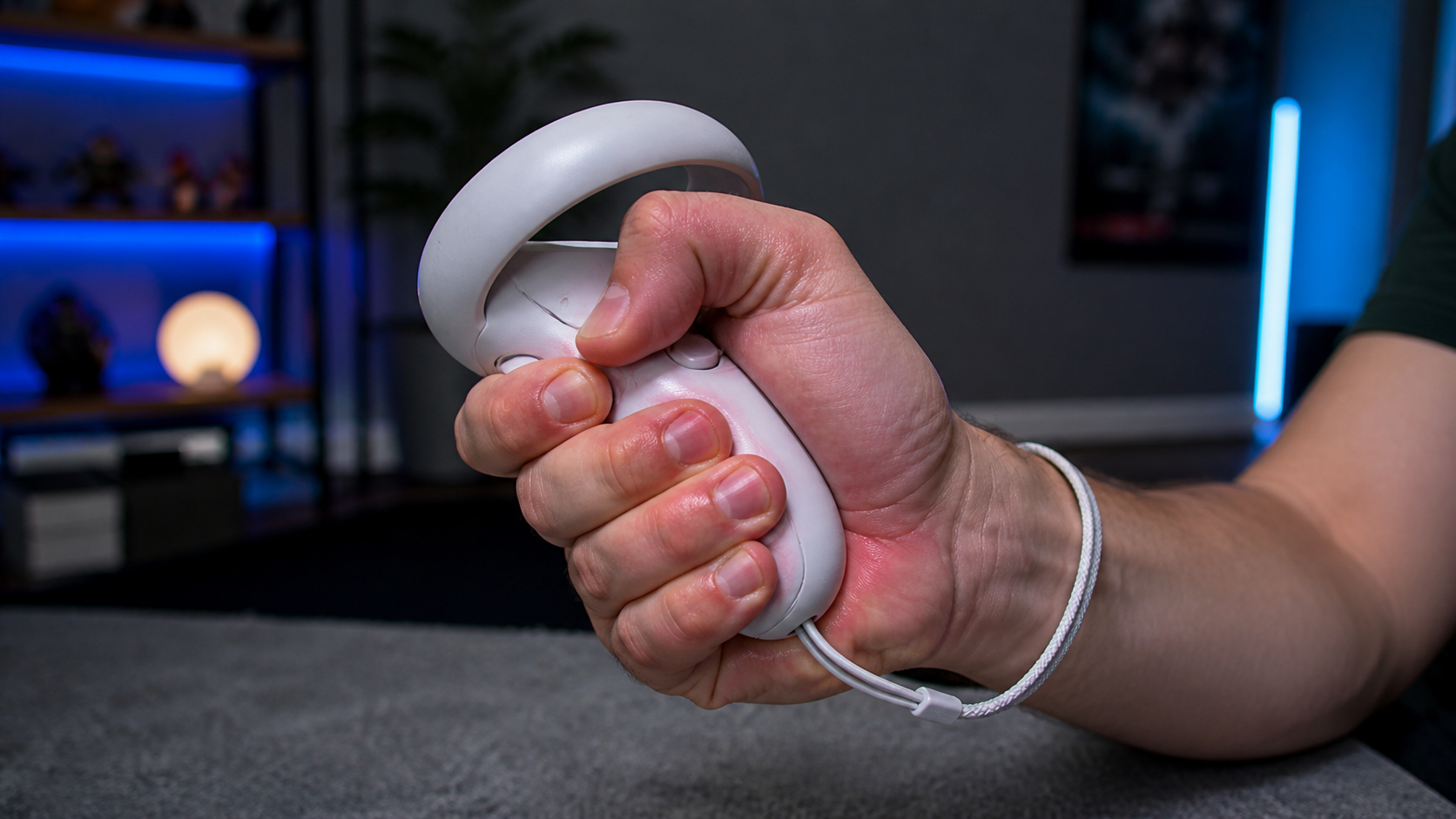
After using grips for a while, I started to rank what problems they actually solved for me. The results were surprising. First and foremost, the issue was fit. My hand physically could not get a proper, ergonomic hold on the small controller. This bad fit directly caused the second biggest issue: fatigue. My hand would start to cramp and ache after about 20 minutes of intense play because I was constantly over-gripping to compensate for the poor fit. A good grip with added bulk solved both of these problems by letting my hand hold the controller in a more relaxed, natural position.
Safety was third on my list. The stock wrist straps work, but the knuckle straps on the grips are a huge upgrade. They give you the confidence to let go of the controller completely. This is great for immersion and for reducing fatigue, but it felt more like a luxury than a necessity. Finally, there was setup. Yes, putting on a full silicone grip for the first time was annoying, but it's a one-time problem. A bad fit and fatigue are problems you experience every single minute you play. A grip's primary job should be to fix the constant issues, not just the rare ones.
Does the final advice change for shared headsets, kids, or small rooms during Gorilla Tag?
You share your headset with family. Your kids have small hands, and your playspace is tight. Do grips designed for large hands make sense for everyone in every situation?
Yes, the final advice changes dramatically. Grips that add bulk for large hands are a terrible fit for kids. For shared headsets, adjustable straps are non-negotiable. And in small rooms, the safety aspect of any grip becomes the most important feature, preventing costly accidents.
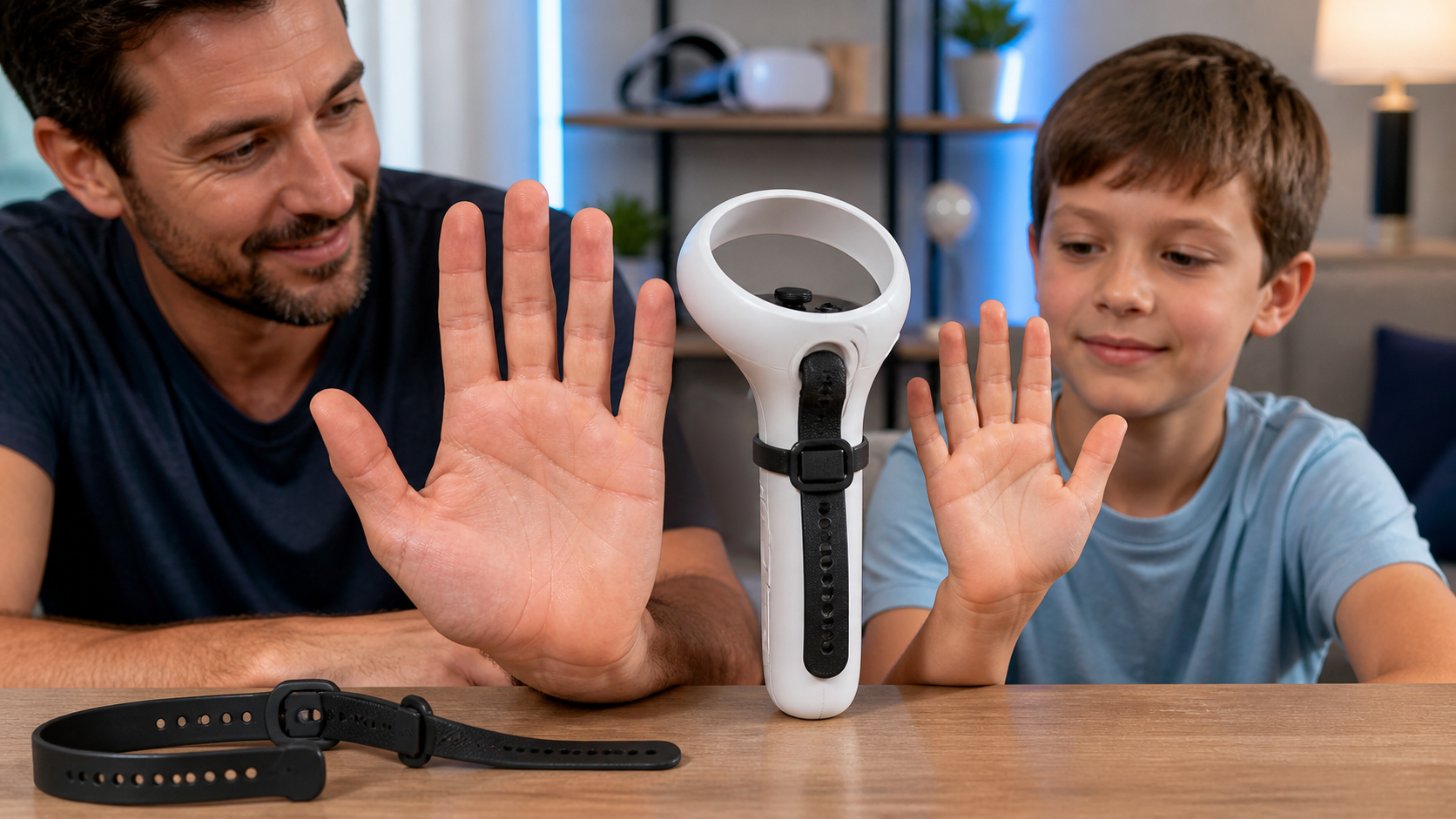
A grip that feels perfect for my large hands is unusable for my nephew. He tried my headset, and the bulky grips made the controllers too big for him to hold securely. For kids or users with smaller hands, a thin, protective silicone skin without the added bulk is a much better choice. If you share a headset with people of different hand sizes, the most important feature to look for is a highly adjustable knuckle strap. You need something that can be tightened or loosened in seconds. A grip that is hard to adjust will just lead to frustration, and someone will end up not using them.
The environment also matters. I play in a room with plenty of space, so I was focused on comfort. But if I were playing Gorilla Tag in a small bedroom, my priority would shift to safety. In a tight space, the risk of hitting a wall, a desk, or a TV is much higher. In that case, the security of a knuckle strap that prevents you from accidentally launching a controller becomes the single most valuable feature. The grip is no longer just a comfort item; it's insurance for your surroundings.
Conclusion
Grips are a great upgrade for large-handed users, but focus on fit and comfort, not just handle length. Find a grip with adjustable straps and an easy way to access the battery.
Leave a comment