



Are Beat Saber Grips still worth using when the trade-off is controller security versus lightweight feel?

I kept dropping my controllers during fast songs. My hands would get sweaty, my grip would loosen, and I'd worry more about launching a controller than hitting the blocks.
For serious Beat Saber players, grips are worth the trade-off. The added security allows for more confident, powerful swings. This leads to better long-term score consistency and higher peaks, even if it means sacrificing the initial lightweight feel of bare controllers and enduring a short learning period.
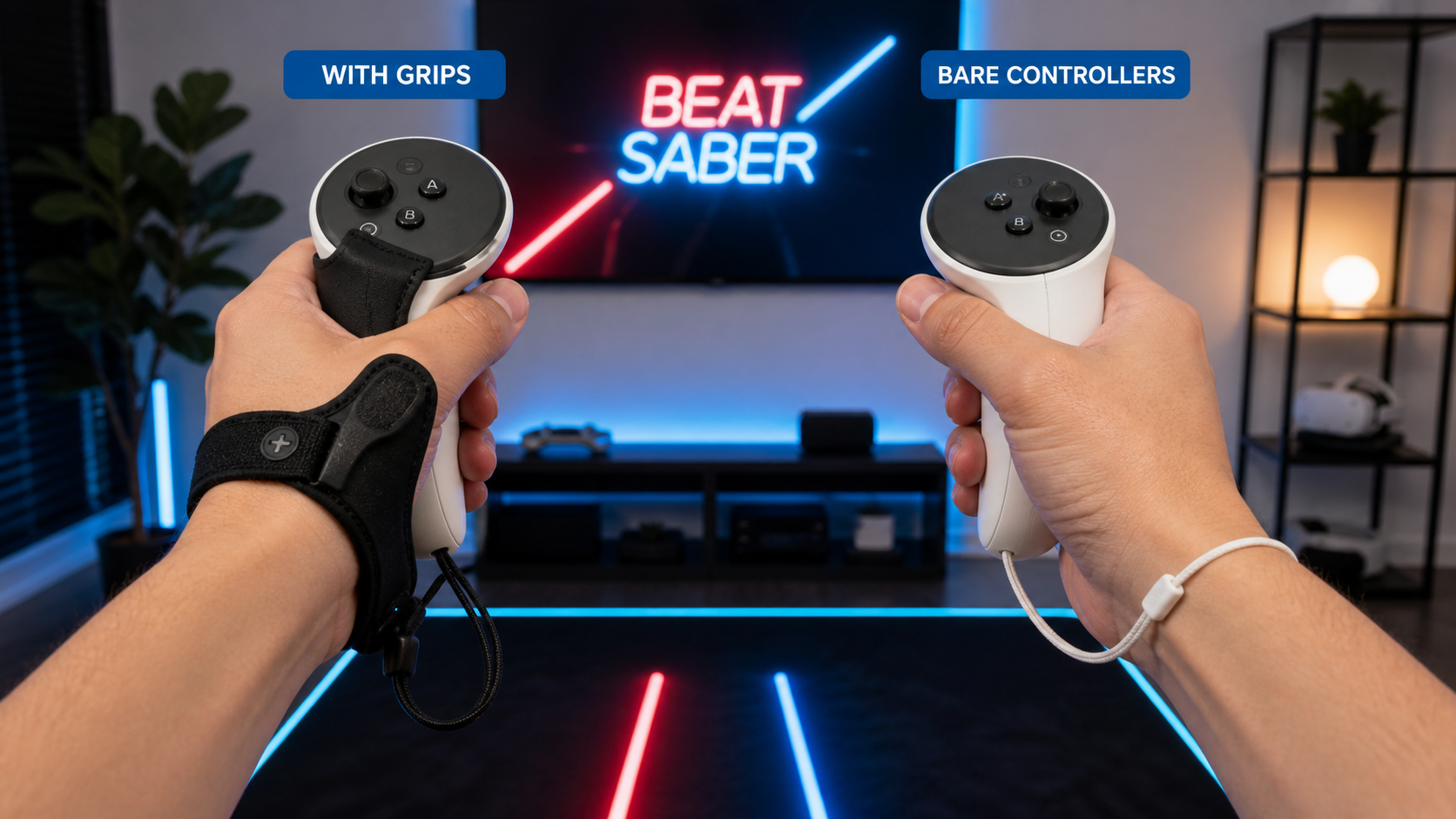
I decided to treat this like a real case study. I'm a new player grinding ranked maps on my Meta Quest 3S, and I wanted to know the truth. Are these grips just for comfort, or do they actually make you a better player? I wasn't interested in generic claims. I needed to see the data and feel the difference myself, especially when it came to the repeatable swing angles that Expert+ players talk about. So I strapped them on and started a week-long test, tracking my scores and my frustrations to find a real answer. I wanted to know if the pain of relearning was worth the potential gain.
When you record whether scores dip during the learning period, does score improvement feel better or worse?
I just put on new grips, and my scores tanked. It felt clumsy, and I immediately wondered if I had wasted my money on this accessory.
Yes, scores almost always dip when you first use grips. The score improvement that follows feels much better, though. It's an earned improvement that comes from a more stable and repeatable swing, not just luck. This new foundation builds confidence for harder maps.
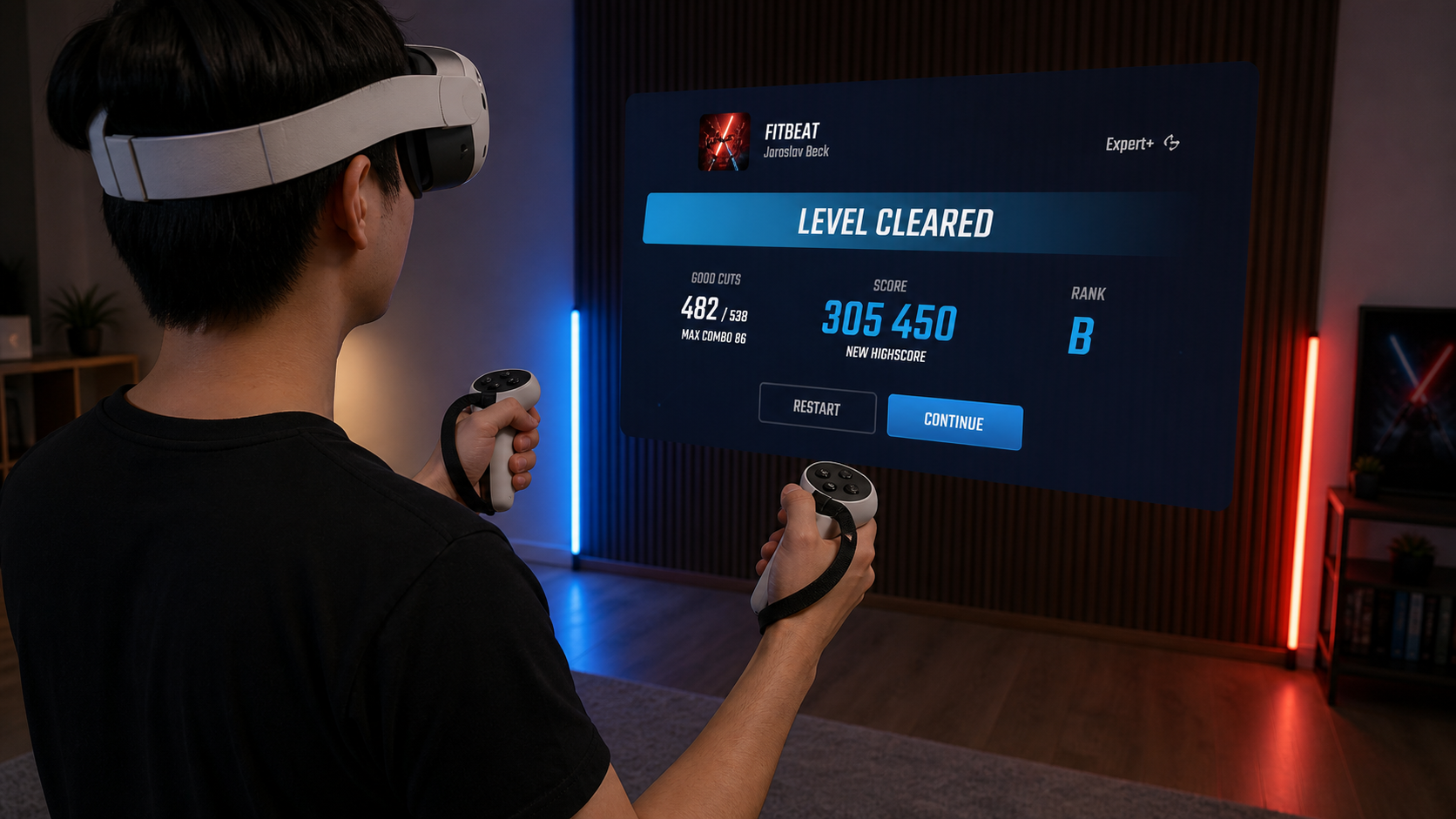
My first hour with the grips was a disaster. The controllers felt bulky and foreign in my hands. The angle of the saber felt wrong, and my timing was completely off on songs I used to pass easily. I was missing simple blocks because my brain was still wired for the lightweight, bare controller. It was discouraging to see my scores go down. I decided to track my progress on a single Expert map to see if I was actually improving or just getting used to the bad feeling.
First Hour Score Comparison
| Run | Grips Status | Misses | Score |
|---|---|---|---|
| Run 1 (Baseline) | Bare Controllers | 5 | 350,112 |
| Run 2 (First Try) | With Grips | 18 | 305,450 |
| Run 3 (After 1 Hour) | With Grips | 8 | 341,890 |
Seeing the data helped. The first run with grips was terrible, but after an hour of pushing through the awkwardness, my misses dropped a lot. I was almost back to my baseline score. The most important thing was how it felt. Even with a lower score, the hits started to feel more solid. The saber didn't wiggle in my hand on fast swings. That feeling, more than the score, told me I was on the right track.
Does score consistency versus relearning muscle memory matter more than score improvement for new Beat Saber players?
My old scores were okay but all over the place. Now I had to relearn my entire swing. Is this struggle for consistency really worth it?
For new players trying to climb the ranks, consistency is everything. Relearning muscle memory with grips builds a solid, repeatable swing. This foundation prevents bad habits and leads to steady, long-term improvement, which is much more valuable than a few random high scores.
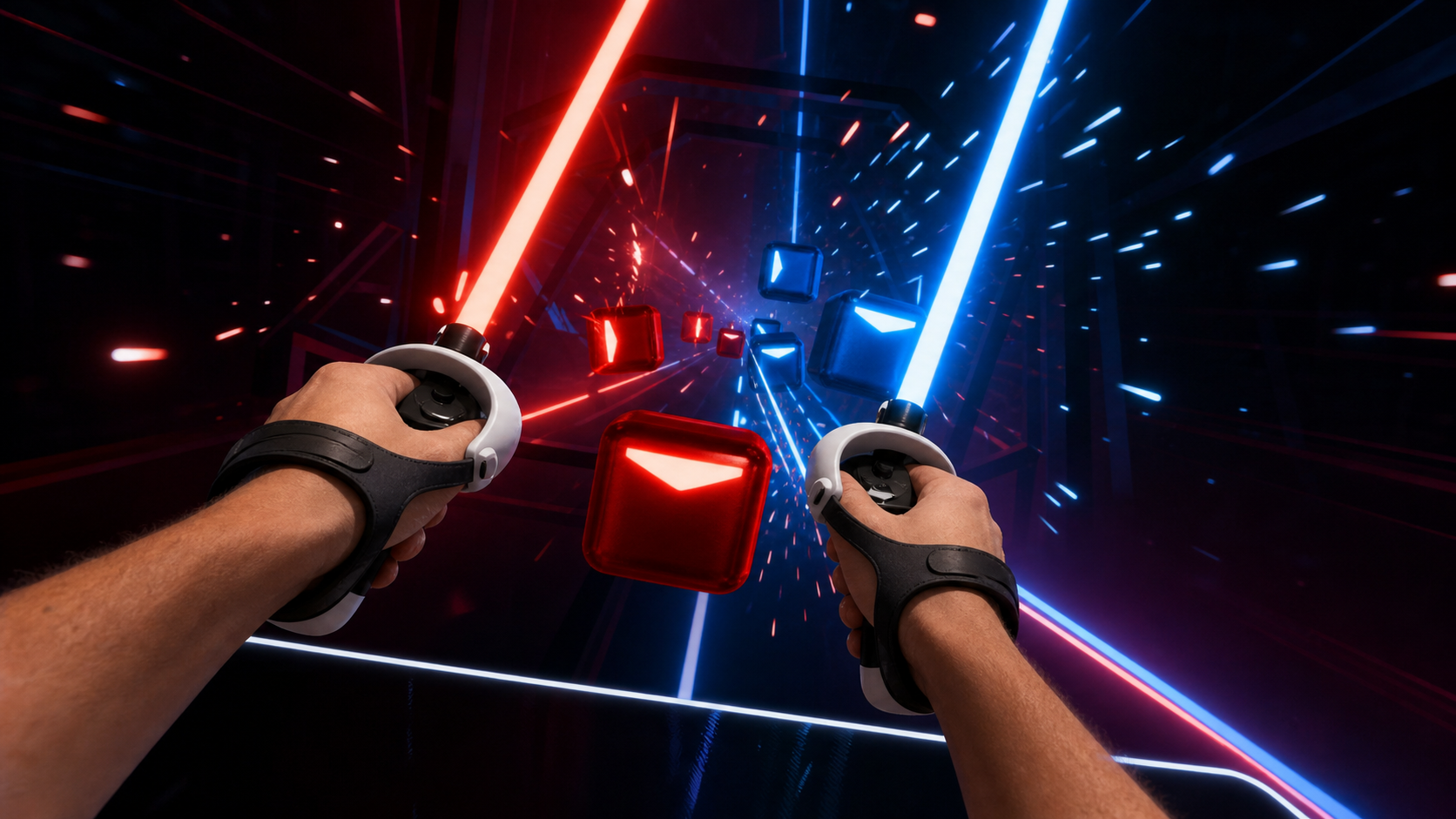
Before using grips, my biggest problem was random misses on patterns I knew I could hit. I realized my hand position on the bare controller would shift slightly during a song. That tiny change was enough to throw off my angle and cause a miss. The grips solved this completely. They lock the controller into the exact same spot in my palm every single time. My swing became repeatable.
This changed how I practiced. My misses were no longer a mystery. If I missed a block, I knew it was because I was too slow or my arm was in the wrong place. It was my fault, not the controller's. I could finally work on fixing my actual technique. For a new player, this is a huge deal. You stop fighting your equipment and start building a real skill base. It felt like I was learning the game the "right" way, building a foundation that would help me clear much harder maps later on. Score improvement felt good, but knowing my scores were becoming more consistent felt even better.
Can bare controllers still feel better for part of ranked play?
I'm used to the grips now, but some maps still feel weird. For those super-fast songs, I miss the light feel of the bare controller.
Yes, for some specific maps that rely on fast, tiny wrist flicks, bare controllers can feel more nimble. The lighter weight can help with quick micro-adjustments. But this is often a trade-off, as you lose power and stability on bigger, more common swing patterns.
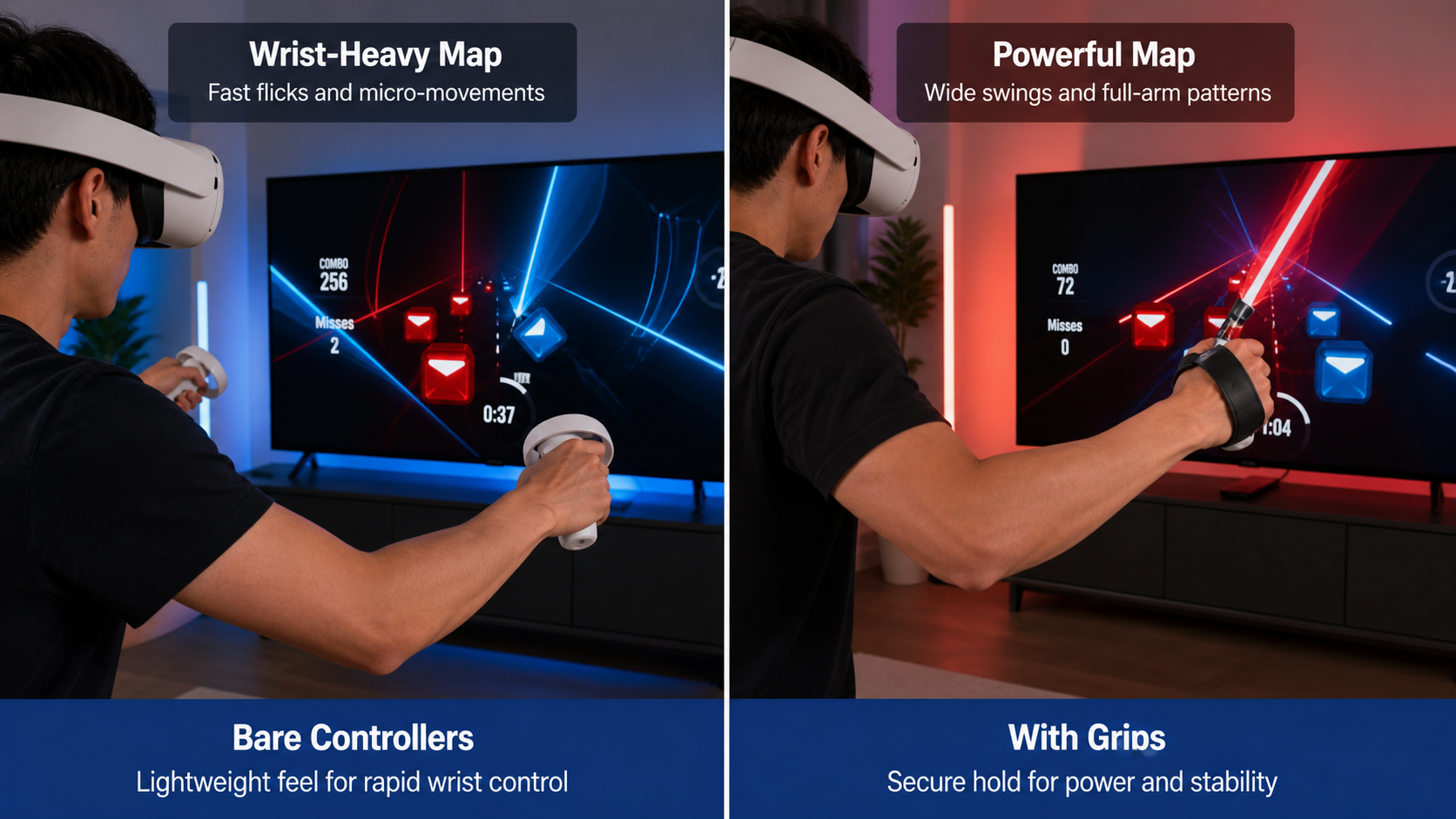
I hit a wall on a map that was all about intense, rapid wrist movements. The added weight of the grips, even though it's small, felt like it was slowing me down. As an experiment, I took the grips off and played the map with bare controllers. It felt amazing for that specific song. The controller felt weightless, and I could flick my wrist much faster. I even beat my high score with the grips on that map.
But then I tried a different map, one with wide, full-arm swings. My performance immediately dropped. My hands got tired from having to grip the controller so tightly to keep it from slipping. I realized that while bare controllers might be better for a very small number of maps, grips are better for almost everything else. I had to choose: optimize for a few songs or build consistency for all of them. I put the grips back on. For anyone serious about ranked play, using one consistent setup is more important than chasing a high score on a single outlier map.
Would the same Beat Saber Grips recommendation still hold after a week of ranked play on Meta Quest 3S?
A few good sessions is one thing. But what about the long term? Will I still think these grips are worth it after a full week of grinding?
Absolutely. After a week, the grips feel like a natural part of the controller. My muscle memory is completely retrained, my scores are consistently higher, and playing without them feels sloppy and insecure. The initial adjustment period was a small price for this huge upgrade.
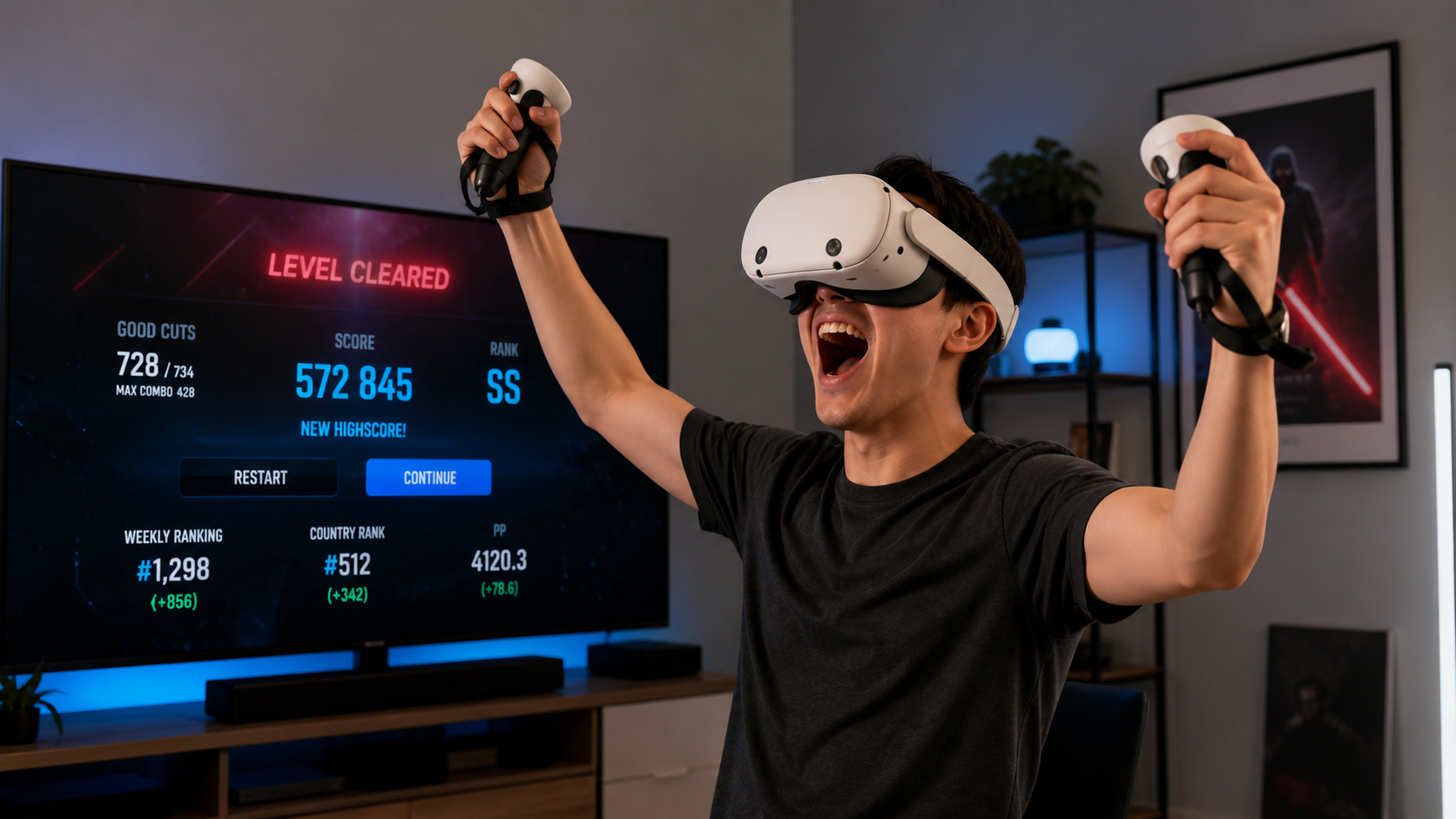
My journey over the week was a perfect arc. Day one was pure frustration. By day three, I was feeling hopeful as my scores started to climb past my old records. By day seven, I couldn't imagine playing without them. The grips became an extension of my hands. I even experimented with the strap settings for both large and small hands. I found that a tighter fit gave me the best angle control, something you can't fine-tune with a bare controller.
The biggest unexpected benefit was reduced fatigue. The straps meant I didn't have to maintain a death grip on the controller. On long downswings, I could completely relax my fingers, letting the strap hold the controller in place, before gripping again for the next swing. This made a huge difference in long play sessions. After a full week of ranked play, my verdict is clear. For any Beat Saber player on the Meta Quest 3S looking to improve, grips are not just a comfort item; they are an essential piece of performance gear.
Conclusion
Grips are a worthy upgrade for serious Beat Saber players. The initial score drop is temporary, but the long-term gains in consistency, confidence, and control are absolutely permanent.
Leave a comment