



Are Beat Saber Grips overkill if you only play fitness play on Meta Quest 3S?

My wrist started hurting after 30 minutes of Beat Saber. It was a sharp pain that ruined my fitness goals. I thought grips were the obvious answer. I was wrong.
For pure fitness players on Meta Quest 3S, Beat Saber grips can be overkill. The added weight, while small, may worsen wrist strain during long sessions. It is better to first try solving the problem by adjusting your form and in-game settings before buying another accessory.
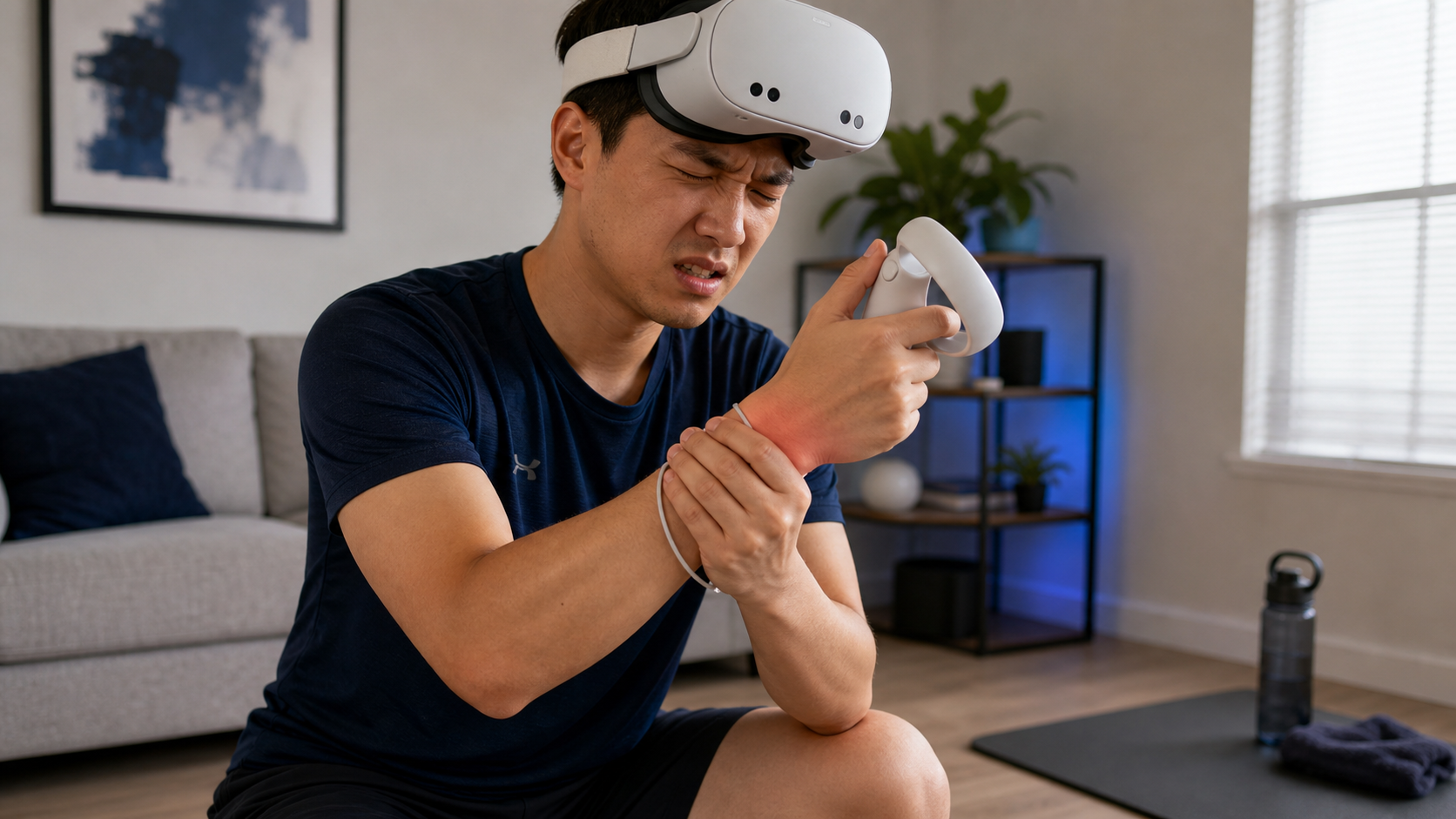
I got into Beat Saber for fitness. I play custom maps designed to make you move and sweat. The problem started about two weeks into my new routine. A sharp pain would shoot through my wrist, forcing me to stop. My first thought was that I needed better grips to support my hands. But before spending money, I wondered if I was missing something simple. Was this a problem I could fix for free?
This simple question led me to test everything. I wanted to understand if an accessory was truly necessary or just a bandage for a bigger issue. What I found was that the answer depends entirely on why your wrist hurts in the first place.
Could Meta Quest 3S owners solve wrist strain without buying another accessory?
My wrist ached after every session. It cut my workout time in half. But what if the fix was already in my hands, and I just needed to change how I used them?
Yes, in many cases, Meta Quest 3S owners can reduce or even solve wrist strain without buying grips. The key is to focus on proper form, use the included wrist straps correctly, and adjust the in-game saber angle settings to minimize unnecessary wrist flicking.
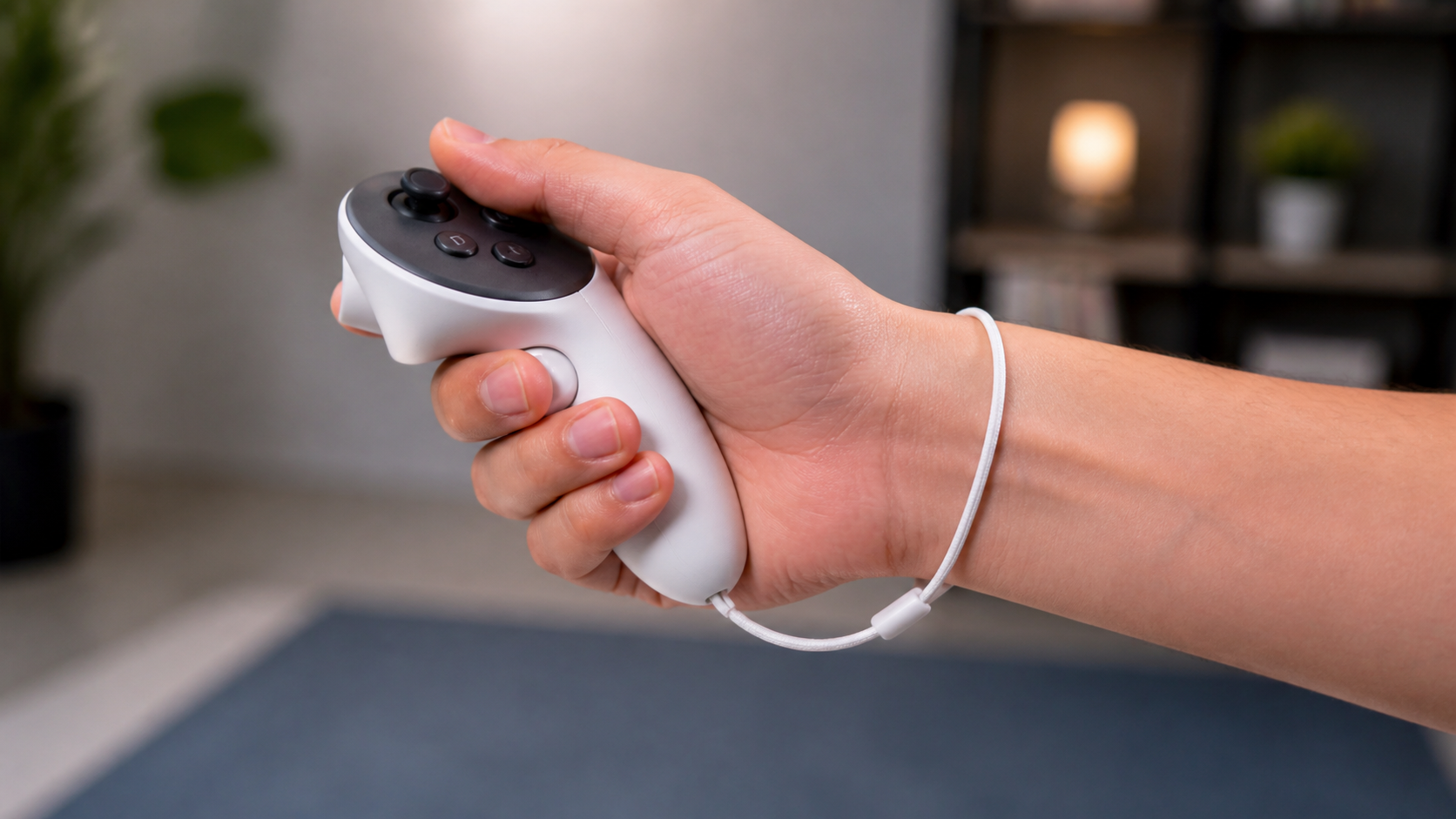
My first mistake was a classic one: the death grip. I thought I needed to hold the controller as tight as possible to be accurate on fast songs. I was completely ignoring the wrist strap. It turns out the strap is there to catch the controller so you don't have to grip it so hard. I started by tightening the strap so it was snug. This simple change allowed me to relax my hand. The controller just rested in my palm instead of being squeezed. The immediate difference was huge. My hand and forearm felt less tired right away.
The Power of In-Game Adjustments
My next discovery was in the game settings. Beat Saber lets you change the angle of your sabers. I never touched this before. I went into the settings and played with the X, Y, and Z rotation. By tilting the sabers down slightly in the settings, I found I didn't need to flick my wrist as much to hit the blocks. My arm was doing more of the work, which is exactly what you want for a workout.
Here is a breakdown of what I changed and how it felt.
| Adjustment Tactic | My Old Habit | My New Approach | Immediate Result |
|---|---|---|---|
| Grip Tightness | Squeezing the controller hard | Relaxed hand, letting it rest | Less forearm fatigue |
| Wrist Strap Use | Loose or not used at all | Snug against the wrist | Felt secure without a tight grip |
| Saber Angle (In-Game) | Default (0 degrees) | Adjusted Y-axis by -15 degrees | Less wrist flicking, more arm movement |
These free adjustments solved about 80% of my wrist pain. It wasn't perfect, but it proved that buying an accessory isn't always the first or best solution.
Does sweat control versus added weight matter more than wrist strain for modded-map players?
You're in the zone on a fast song. Sweat is dripping. Then, the controller starts to slip. Grips seem like the perfect fix, but do they create a new, heavier problem?
For modded-map players, sweat control is critical for maintaining accuracy. However, the added weight from most grips can increase fatigue and strain over time. The choice becomes a trade-off: better security for a slippery controller versus less weight for better wrist endurance.
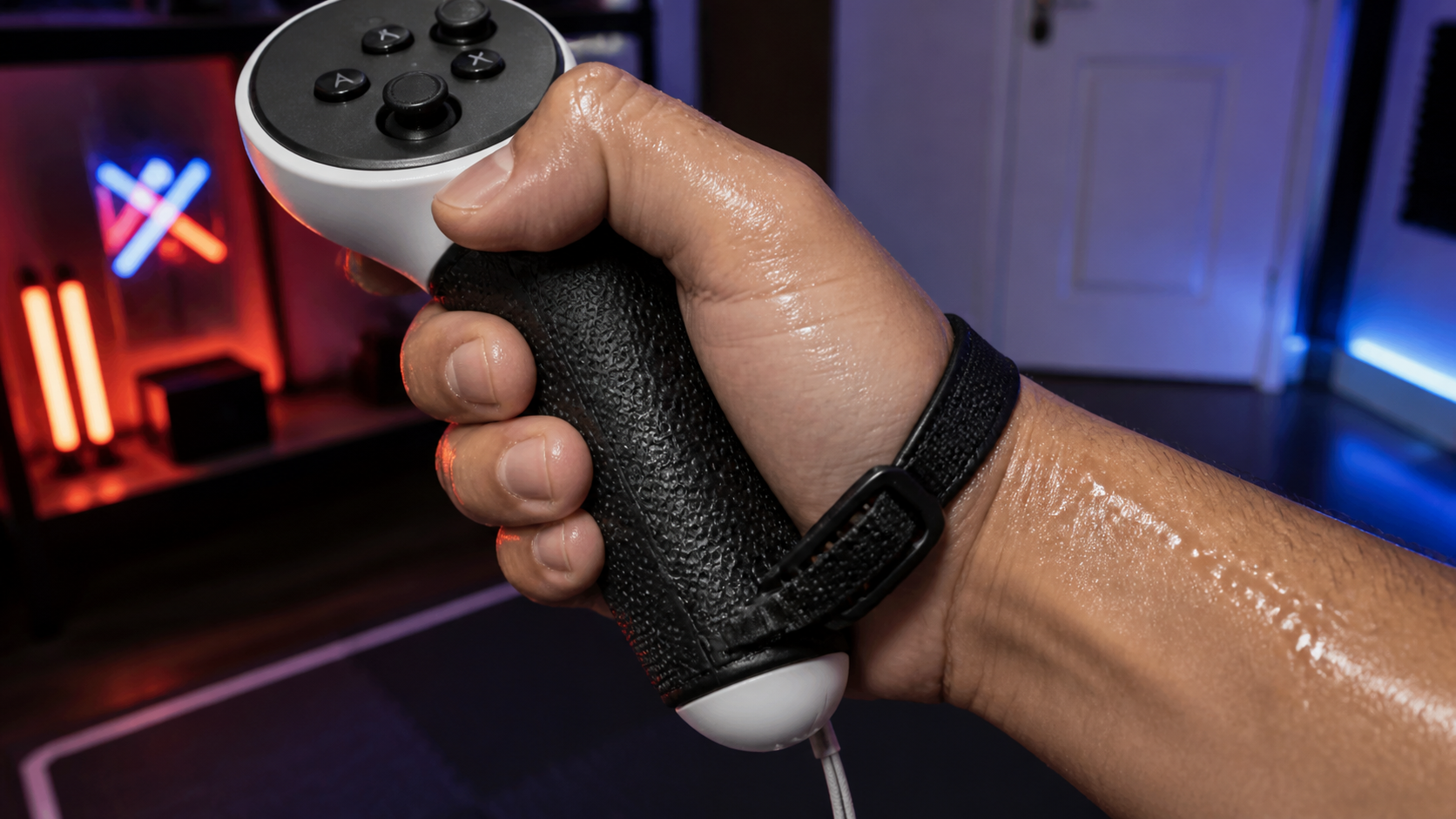
Even after fixing my form, I still had one issue on really intense maps: sweat. The smooth plastic of the Quest 3S controllers gets slick when your palms are sweaty. This made me start gripping tightly again, and the wrist pain started to creep back. So, I decided it was finally time to test some grips. I bought a popular set of silicone grips with knuckle straps.
The first impression was great. The silicone texture completely solved the sweat problem. The controller felt locked in my hand, and the knuckle strap gave me the confidence to keep my grip relaxed. I could finally open my hand completely without fear of throwing the controller across the room. For the first 15 minutes of my fitness session, it felt like the perfect solution. But then, a new problem appeared. It wasn't the sharp pain from before. It was a dull ache, a feeling of heaviness in my wrists. The grips, while not heavy on their own, added just enough weight to change the physics of my swing. My wrists had to work harder to accelerate and decelerate with every movement.
Is this a problem a buyer can fix with adjustment rather than a return?
You got the grips, but now your wrist has a new type of ache. Is it time to box them up and send them back? Not so fast. The fix might be in the fit.
Yes, many issues with new grips can be solved with careful adjustment instead of a return. Experimenting with the knuckle strap tightness and your hand's position on the grip can change the balance and reduce strain, making the accessory work for you.
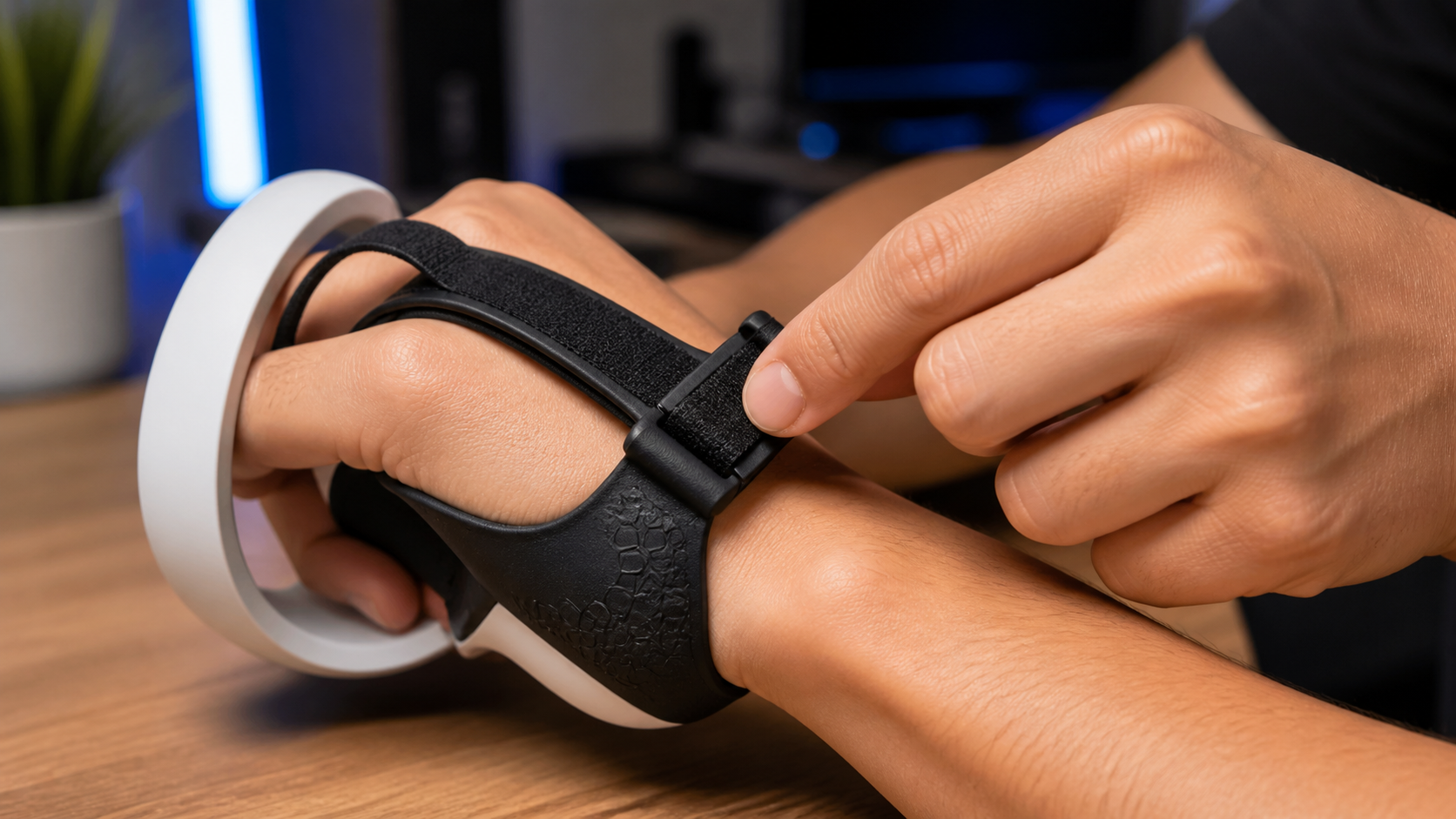
My first reaction to the new ache was disappointment. I thought I had just traded one problem for another. I was ready to return the grips and declare them a failure. But then I remembered my first breakthrough came from adjustment, not a purchase. So, I decided to apply the same logic here. I had the knuckle strap pulled as tight as it would go. I thought this was the point. I loosened it a bit, just enough so my hand had a little room to move inside the strap. This was a huge improvement. My hand felt secure but not constrained.
Next, I changed how I held the grip itself. I slid my hand down about half an inch. This shifted the controller's center of gravity. It felt less top-heavy and more balanced in my palm. This small change made the added weight feel less noticeable. It took a few songs to get it right. I had to pause and readjust the straps and my hand position until it felt natural. It's not a plug-and-play fix. You have to treat the grips like a new pair of shoes that need to be broken in and adjusted for the perfect fit.
What would make the reviewer say Beat Saber Grips is not worth it for wrist strain in fitness play?
You have tried it all. You fixed your form. You adjusted the grips. The pain is still there. When do you finally decide that an accessory is not the solution for you?
A reviewer would call grips "not worth it" if, after all adjustments, the added weight continues to cause more wrist strain than the bare controller. For users focused on long fitness sessions, the lightweight nature of the default controllers is a key feature, not a flaw.
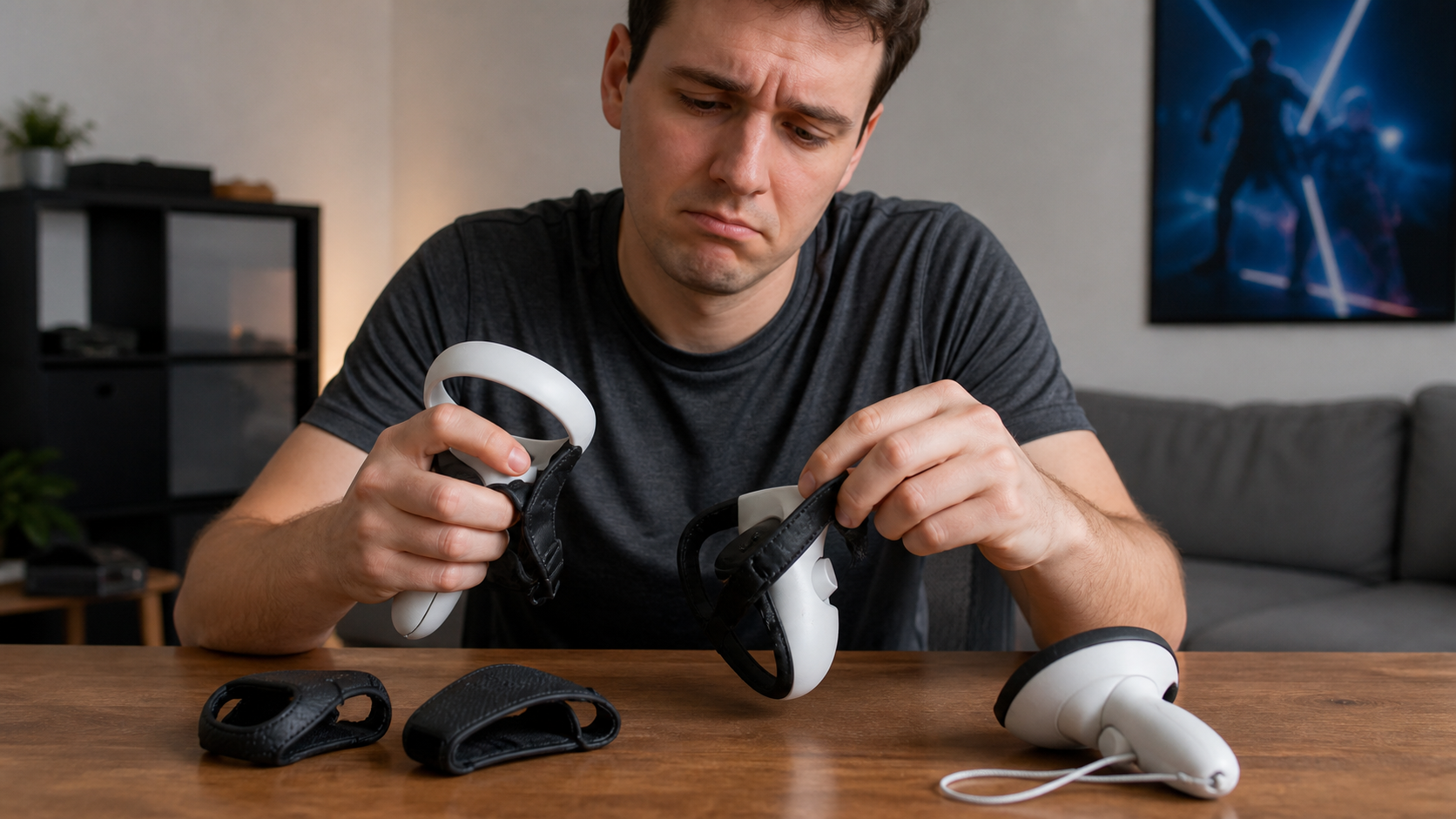
This is where my case study ends, with an honest and slightly disappointing conclusion. After a full week of testing—with and without grips, with different adjustments—I found my personal breaking point. The grips are amazing for one thing: playing difficult, sweaty maps where you need maximum security for 10-15 minutes at a time. In that scenario, they are a clear winner.
But my goal is a 45-minute, continuous fitness session. For that specific use case, the grips failed. No matter how I adjusted them, the small amount of added weight created a dull ache in my wrists by the 30-minute mark. This was a fatigue-based strain that simply did not happen with the lighter, bare controllers once I had fixed my form. The original wrist pain was from bad technique. The new wrist pain was from physics.
So, who should skip these grips? If your primary goal is long-duration fitness play and you don't have a major problem with sweaty, slipping controllers, I believe these grips are overkill. They might introduce a weight problem that you don't currently have. The Quest 3S controllers are designed to be lightweight for a reason. For endurance, that lightweight design is a feature to be embraced, not a problem to be solved.
Conclusion
Beat Saber grips solve sweat but can add wrist strain for fitness players. Always try fixing your form and in-game settings first before you decide to buy another accessory.
Leave a comment