



Will Steam Frame's Foveated Streaming Make Wireless PCVR Popular Again?

Wireless PCVR feels like a promise that's never quite been delivered. We all want to cut the cord, but the lag and compression always pull us back.
Yes, Steam Frame's foveated streaming has the potential to make wireless PCVR popular again. By using eye-tracking to focus bandwidth where you are looking, it promises a high-fidelity, low-latency experience that feels nearly identical to a wired connection, solving the biggest problem for PCVR users.
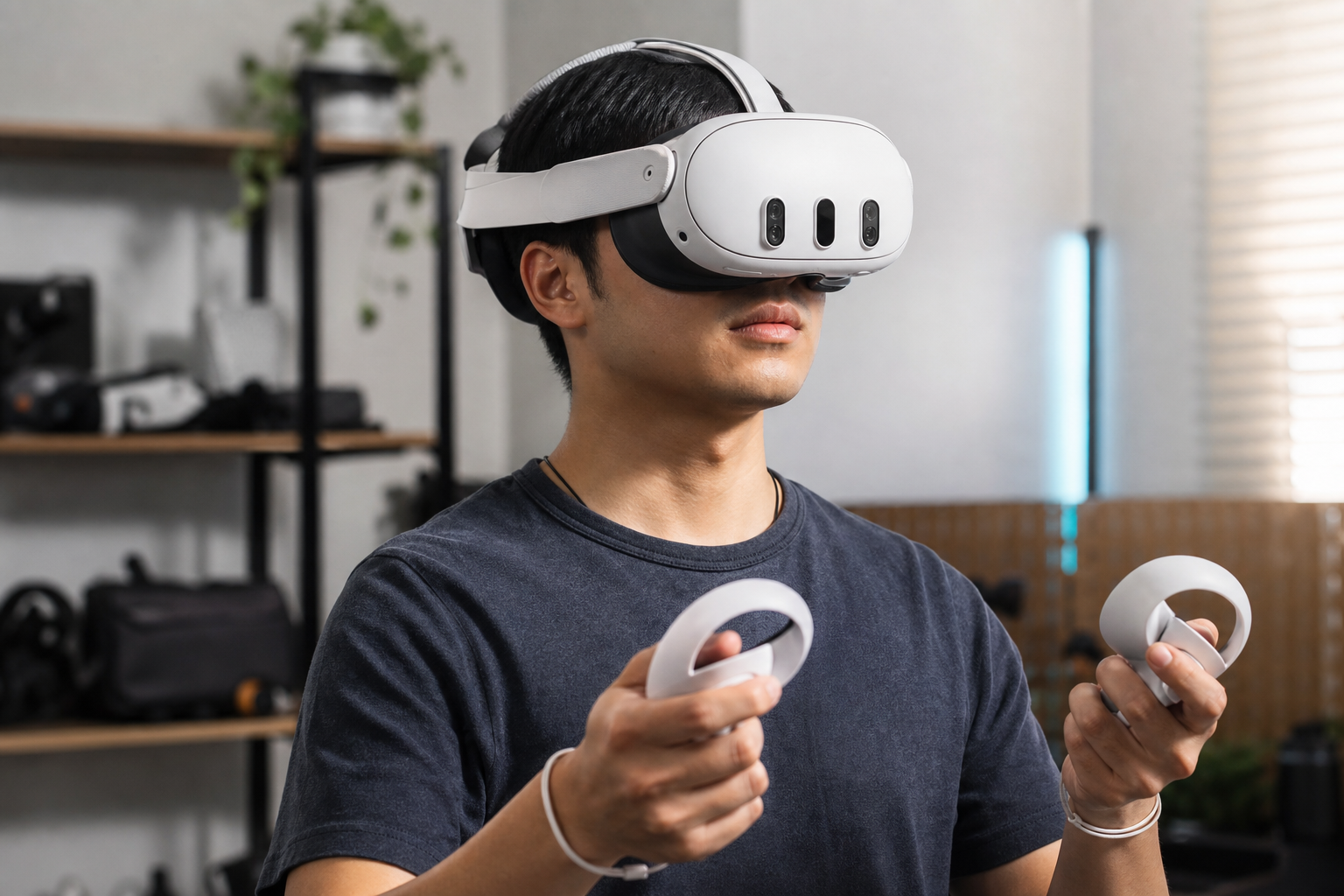
I've spent countless hours trying to perfect my wireless PCVR setup. I used Air Link with my Quest 2, and later Virtual Desktop. I bought a dedicated Wi-Fi 6 router and placed it in the same room. I tweaked every setting I could find. And while it was good, it was never perfect. There was always a slight blurriness, a moment of compression, or a lag spike that reminded me I was streaming. It was a compromise. Valve's new approach feels different. It feels like they are not just improving streaming, but fundamentally changing how it works. This could be the breakthrough we have been waiting for.
What is foveated streaming, and why does it matter more than ordinary wireless streaming?
Your VR stream looks okay, but you know it could be better. The world feels a little soft and blurry, breaking the immersion. Foveated streaming fixes this by making it sharp.
Foveated streaming uses eye-tracking to send a high-quality video feed only to the center of your vision, where your eye sees detail. The periphery gets a lower-quality feed, saving massive amounts of data. This makes the experience look sharper and feel more responsive than standard streaming.
To understand why this is a big deal, we need to think about how our eyes work. You only see a tiny part of the world in sharp, high-resolution detail at any given moment. This area is called the fovea. Everything in your peripheral vision is actually quite blurry. Your brain just stitches it all together so it feels like you're seeing a complete, sharp picture.
How It Works
Foveated rendering has been a concept in VR for a while. It renders the game in high detail where you look and lower detail in the periphery to save GPU power. But foveated streaming applies this same logic to the video stream itself. The headset tracks your eyes, tells the PC where you're looking, and SteamVR encodes the video stream with high detail in that spot and low detail everywhere else. Because your eye can't see the low-quality periphery anyway, the whole world just looks crisp.
The Key Difference
This is a game-changer compared to how Quest Air Link or Virtual Desktop works. Those methods have to compress the entire image to fit it down the Wi-Fi pipe. This new way intelligently throws away data you would never see anyway, freeing up bandwidth for the part of the image that matters most.
| Feature | Standard Wireless Streaming | Foveated Wireless Streaming |
|---|---|---|
| Bandwidth Use | High and constant | Low and dynamic |
| Perceived Quality | Uniformly compressed | High detail where you look |
| Latency | Susceptible to network congestion | Lower and more stable |
| Hardware Requirement | A very powerful router | Built-in eye-tracking |
Can a dedicated 6GHz dongle solve the latency problems of home Wi-Fi?
Your Wi-Fi network is a mess of competing devices. Your game stutters because someone started streaming a 4K movie. A dedicated dongle gives your headset its own private, clean connection.
Yes, a dedicated 6GHz dongle effectively solves the latency problems of home Wi-Fi. It creates a direct point-to-point connection between the PC and the headset, bypassing all other network traffic. This clean channel on the Wi-Fi 6E band dramatically reduces interference and ensures stable, low-latency performance.
I remember the struggle well. To get a decent wireless session in Half-Life: Alyx, I had to make sure no one else in the house was using the internet heavily. I moved my router, I switched Wi-Fi channels, and I even turned off other devices. It was a huge pain. The problem is that home Wi-Fi on the 2.4GHz and 5GHz bands is incredibly crowded. Your PC, phone, TV, and even your neighbor's devices are all shouting over each other.
A dedicated dongle operating on the 6GHz band is like having a private highway for your VR data. The 6GHz band, part of the Wi-Fi 6E standard, is much less congested and offers more channels. By creating a direct link that no other device can use, you eliminate the single biggest cause of lag and stutter: network interference. The connection becomes stable and predictable. When you combine this clean connection with the reduced data needs of foveated streaming, you get the magic formula for perfect wireless VR. It’s no longer about brute-forcing a huge video stream through a messy network. It’s about sending a smaller, smarter stream over a perfect connection.
If developers do not need to modify games, could this become the new standard for Steam Link?
Getting developers to add new features is hard. Great tech often fails if it is not easy to adopt. What if this just worked with every game from day one?
Absolutely. If foveated streaming works without game modifications, it is almost certain to become the new standard for Steam Link and PCVR. By implementing it at the SteamVR driver level, Valve can apply the benefits to thousands of existing games instantly, removing the biggest barrier to adoption.
This is maybe the most important part of Valve's strategy. Many powerful technologies, like NVIDIA's DLSS, require developers to integrate an SDK and update their games. This means many older or indie titles never get the new features. It creates a fractured ecosystem where some games work great and others are left behind.
Valve seems to be avoiding that. The reports suggest that this technology is handled entirely by SteamVR. The game renders a full-resolution image just like it always has. Then, SteamVR takes that image, uses the eye-tracking data from the headset, and intelligently encodes it before streaming. The game developer has to do nothing.
For someone like me, with hundreds of games in my Steam library, this is fantastic news. It means I can fire up Skyrim VR, Fallout 4 VR, or any other classic PCVR title and immediately get the benefits of this new streaming tech. It makes the headset a day-one upgrade for my entire collection. This frictionless, backward-compatible approach is how you create a new standard. It just works. It makes the entire PCVR platform better for everyone, without asking developers or players to do any extra work.
Is streaming Steam Frame's real battlefield while standalone performance is still uncertain?
Everyone is wondering if Steam's new headset can beat the Quest 3 in a standalone fight. But what if that is not the battle Valve is trying to win?
Yes, high-performance wireless streaming is the real battlefield for Steam Frame. Instead of trying to beat Meta on standalone hardware and its curated store, Valve is leveraging its greatest asset: the massive Steam library and the powerful PCs that users already own. Perfecting PCVR is their path to success.
Let's be realistic. Competing with Meta in the standalone market is an uphill battle. Meta has spent billions building the Quest ecosystem, its store, and its content library. It would be incredibly difficult for Valve to match that from a standing start. But Valve has something Meta doesn't: Steam.
Steam is the dominant platform for PC gaming. Millions of users have powerful gaming PCs and huge libraries of games. The biggest thing holding them back from VR is the friction—the cables, the complicated setup, the unreliable wireless. By focusing on creating the absolute best, most seamless wireless PCVR experience, Valve isn't trying to be a "Quest killer." They are building the ultimate accessory for their existing PC gaming empire.
The leaked information about the headset's setup process supports this. The core loop is simple: turn it on, it connects to your PC, and you are in your Steam library. It's positioned as a portal to your PC games, not as a separate console. This is a smart move. Valve is playing to its strengths and solving a real problem for its most dedicated customers. The goal is not to replace the Quest, but to become the undisputed king of PCVR.
Conclusion
Foveated streaming isn't just another small update. It's a fundamental change that could finally deliver on the promise of wireless PCVR and make cutting the cord feel truly liberating.
Leave a comment