



Will Steam Frame Make Quest 3 Owners Regret Buying Early?

You just bought a Quest 3 and love it. But now, you see news about Valve's "Steam Frame." Did you make a mistake by buying too soon?
No, you shouldn't regret buying a Quest 3. Steam Frame targets a different user. It focuses on PCVR streaming and the Steam library, while Quest 3 is a powerful, standalone mixed-reality device. Your choice depends on what you value most in VR right now.

When new tech gets announced, it's easy to get buyer's remorse. I've been there myself. You finally pull the trigger on a new gadget, and a week later, something even newer pops up online. The news around Valve's next VR headset, codenamed "Steam Frame," is making a lot of waves, and it's making some Quest 3 owners feel a little nervous. But should they? I don't think so. These two headsets are being built for very different purposes and likely for different people. Let's break down the big questions everyone is asking. By the end, you'll have a much clearer idea of where these devices stand and whether your Quest 3 was the right call.
Is Steam Frame a VR headset, a handheld, or a Steam Deck for your face?
It's hard to label the Steam Frame. It's not just a VR headset. Calling it a handheld feels wrong. What exactly is Valve building with this new device?
Steam Frame is best described as a "Steam Deck for your face." It is a lightweight, modular headset designed as an entry point to the Steam ecosystem. It prioritizes PCVR streaming and the huge Steam library over standalone mixed reality features like the Quest 3.
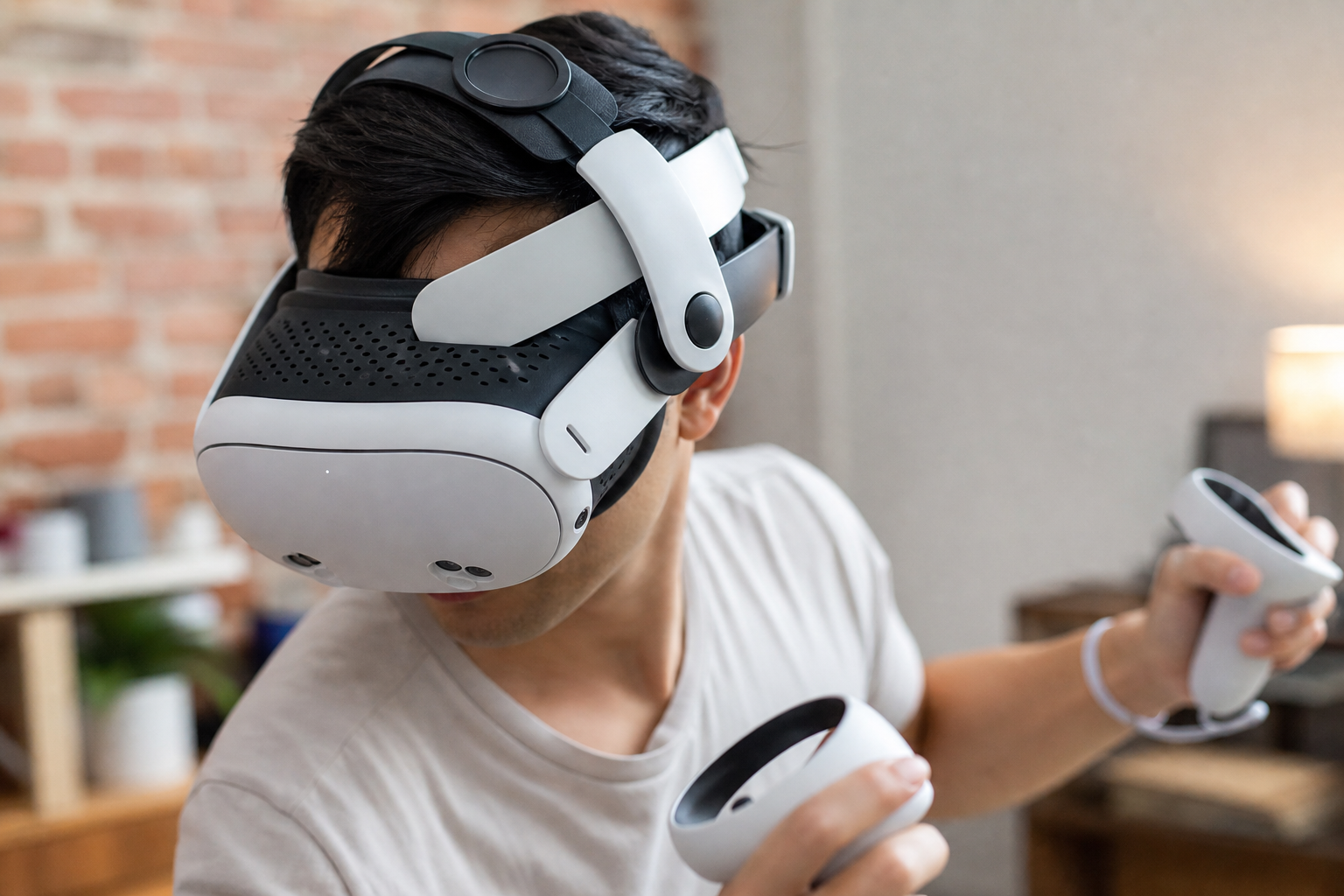
The best way to think about Steam Frame is to look at what Valve did with the Steam Deck. The Steam Deck wasn't just a new handheld console; it was a new way to access your existing Steam library. It broke down the barrier between PC gaming and portable gaming. I think Valve wants to do the same thing for VR. The Steam Frame isn't trying to be a self-contained console like the Quest 3. Instead, it seems designed to be the most comfortable and seamless way to play the PCVR games you already own or want to buy on Steam.
A Focus on PCVR Streaming
Unlike the Quest 3, which has its own mobile processor to run games, the Steam Frame is expected to lean heavily on your gaming PC. The idea is that your PC will do all the heavy lifting, running games like Half-Life: Alyx or Pavlov, and then stream the video to the lightweight headset. This approach allows the headset itself to be smaller, lighter, and potentially cheaper. It’s all about making high-end PCVR more accessible and comfortable.
A Modular, Open Platform
Reports suggest the Steam Frame will be modular, meaning you might be able to swap parts or add accessories easily. This fits with Valve's PC-centric, open-platform philosophy. They want users to tinker and customize their experience. This is very different from Meta's closed, console-like ecosystem.
| Feature | Steam Frame (Expected) | Meta Quest 3 | Steam Deck |
|---|---|---|---|
| Primary Use | PCVR Game Streaming | Standalone VR & MR | Portable PC Gaming |
| Core Library | Steam / SteamVR | Meta Quest Store | Steam |
| Key Strength | Access to massive PC library, lightweight design | Standalone freedom, strong mixed reality | Play your PC games anywhere |
| Hardware Philosophy | Lightweight, modular, PC-dependent | All-in-one, self-contained | All-in-one, self-contained |
Can it still count as a mainstream 2026 headset without color passthrough?
Quest 3 made color passthrough a must-have feature for mixed reality. Now, rumors say Steam Frame will only have black-and-white passthrough. Is that a deal-breaker for a new headset?
Yes, it can still be a mainstream headset. Steam Frame isn't competing with Quest 3 on mixed reality. Its focus is on immersive PCVR gaming. The monochrome passthrough is a cost-saving measure that prioritizes gaming performance and a lower price point over MR features.

When I first heard the rumor about monochrome passthrough, I was a little surprised. After using my Quest 3, playing games in my living room with full-color mixed reality feels futuristic. But then I thought about what Valve is trying to achieve. They aren't building a mixed-reality device; they're building a VR gaming device. For that purpose, a simple black-and-white passthrough is perfectly fine. Its only job is to let you see your surroundings to set up your guardian or grab a drink without taking the headset off. It’s a utility, not a core gameplay feature. This decision tells us a lot about Valve's priorities. They are choosing to cut costs on features that don't contribute to the core PCVR gaming experience. High-quality color cameras are expensive and require significant processing power, which would make the headset heavier and more expensive. By skipping them, Valve can focus on what their target audience really cares about: a crisp display, comfortable ergonomics for long play sessions, and a great connection to their PC. This is a strategic trade-off, not a weakness.
Will the Steam library be more attractive than Meta-exclusive content?
You love Asgard's Wrath 2 on your Quest. But you keep hearing about PCVR giants like Half-Life: Alyx. Is Meta's curated store enough, or is Steam's massive library better?
For many PC gamers, yes. The Steam library, with thousands of titles including VR mods for flat-screen games and high-fidelity titles like Half-Life: Alyx, is a huge draw. Meta has strong exclusives, but Steam's sheer volume and depth are unmatched for dedicated PCVR players.

This is the biggest selling point for the Steam Frame. The Meta Quest store is great; it's easy to navigate and has some fantastic, polished exclusives. I've spent countless hours in games like Resident Evil 4 VR and Beat Saber. It feels like a modern console experience. But the SteamVR library is a different beast entirely. It's the wild, expansive world of PC gaming. You have thousands of titles, from small indie experiments to massive AAA productions. And the crown jewel, of course, is Half-Life: Alyx. It's still considered by many to be the best VR game ever made, and it’s a powerful reason to get into PCVR. Beyond that, you have the world of VR mods. Being able to play games like Fallout 4, Skyrim, or even Cyberpunk 2077 in full, immersive VR is an experience that standalone headsets simply can't offer. For anyone who already has a solid gaming PC, the value proposition of the Steam library is enormous. It’s a near-endless well of content that you can tap into.
Should players wait for Steam Frame or buy Quest 3 before the price is announced?
You're ready to buy a VR headset. The Quest 3 is available right now. But Steam Frame is on the horizon, and it looks interesting. Should you wait for it?
If you want a great all-in-one VR and MR device today, buy the Quest 3. If you are a dedicated PC gamer who primarily wants to stream your Steam library and can wait until potentially 2026, then waiting for Steam Frame might be the better choice.
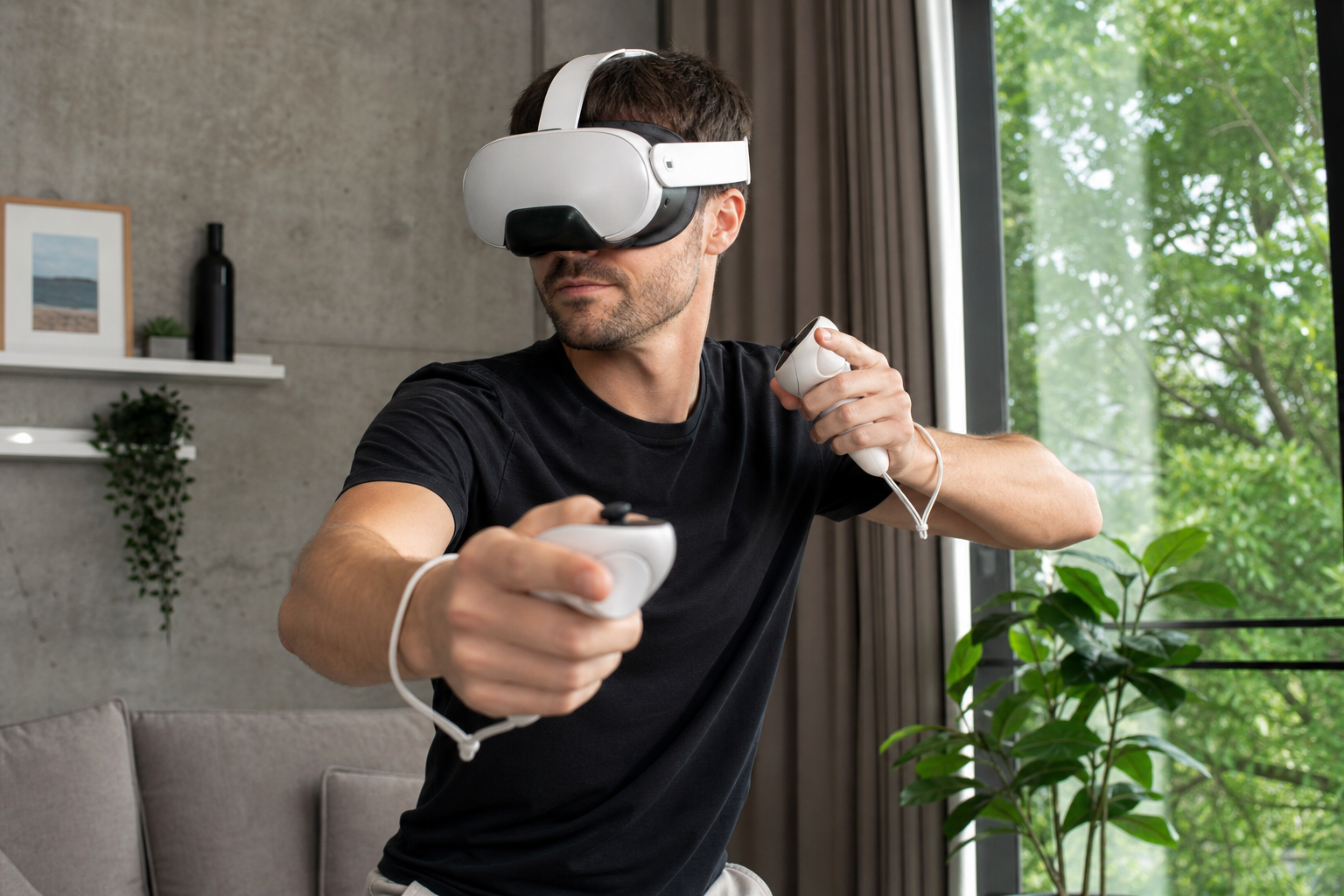
This is the ultimate question, and the answer depends entirely on you. The Meta Quest 3 is a fantastic, known product that you can buy and enjoy right now. It offers incredible freedom with its standalone design. You can take it anywhere, play games without a computer, and experience cutting-edge mixed reality. I use mine for workouts, watching movies, and quick gaming sessions all the time. It’s a versatile entertainment device. The Steam Frame, on the other hand, is still a promise. We don't have a price, a firm release date, or final specs. It is being built for a more specific user: the PC gamer who wants the best and most comfortable way to play their SteamVR library. If you don't have a powerful gaming PC, the Steam Frame won't be for you. If you are patient and PCVR is your main goal, waiting could be worth it. But if you want to get into VR today and enjoy a huge library of standalone games and apps, the Quest 3 is an excellent choice that you won't regret.
Conclusion
Don't regret your Quest 3. Steam Frame is a different device for a different player. Your choice depends on whether you value standalone MR or the vast PCVR Steam library.
Leave a comment