



Is how the cup fits Touch Plus versus older Quest controllers the hidden reason VR Gunstock disappoints buyers?

You bought a VR gunstock for better aim, but it feels awkward. Your shots are still off, and now you have a clumsy accessory making things worse.
Yes, the way newer Touch Plus controllers fit into gunstock cups is a huge hidden reason for disappointment. Older gunstocks were designed for Quest 2 controllers. The different shape of the Quest 3 controller creates a slight wobble, which destroys stable aim during fast-paced games like Contractors Showdown.
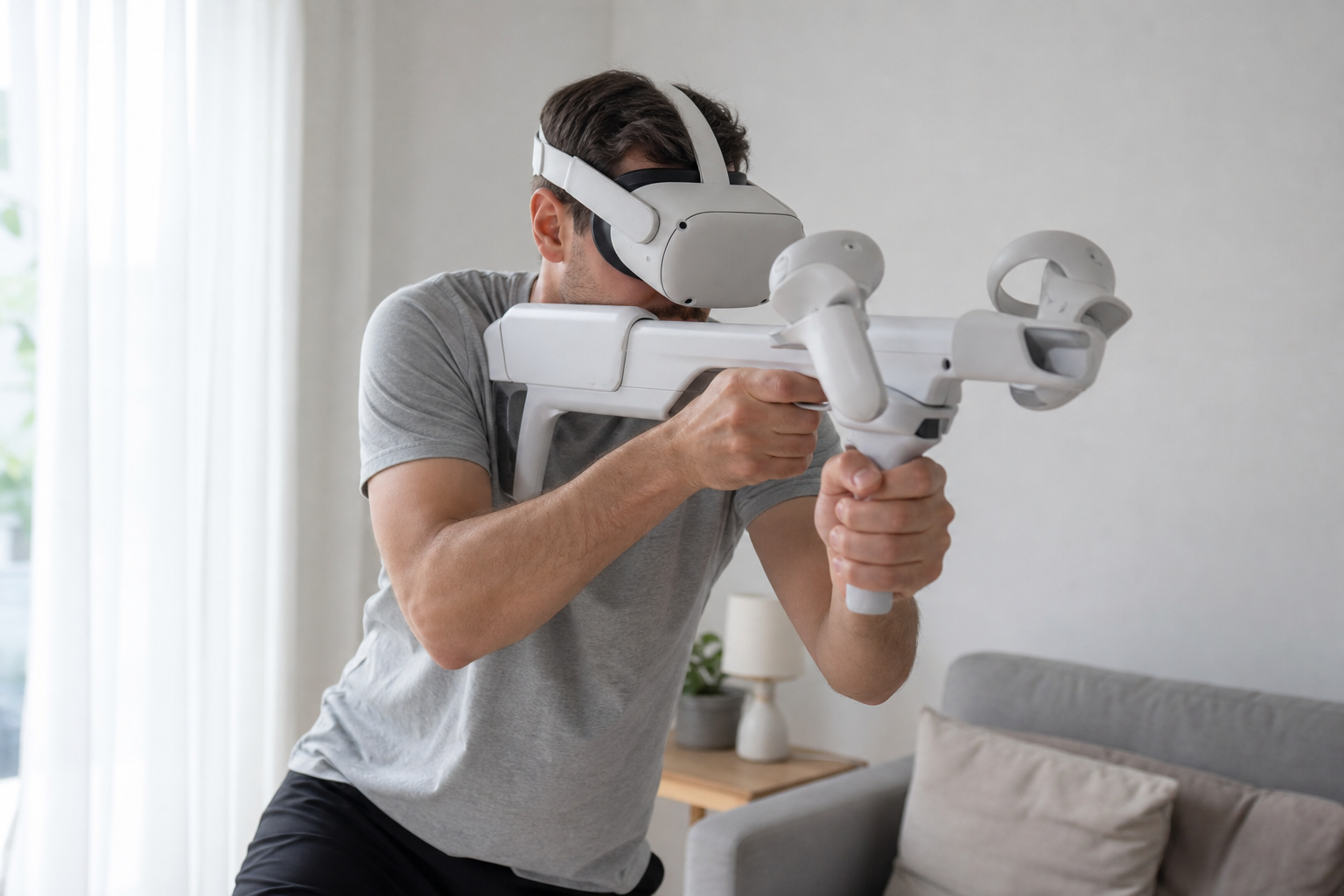
I was so excited to get my first VR gunstock. I thought it would instantly make me a pro in Contractors Showdown. I spent about 20 minutes getting it set up, adjusting the straps, and getting the controller cups just right. It felt solid. But when I jumped into a real match, my excitement turned into pure frustration. My experience fell apart, not because of the product's quality, but because of a series of small, overlooked problems that a beginner like me would never have predicted. It started with my aim feeling just a little "off" and ended with my virtual gun floating away in the middle of a firefight. This case study is my journey through that frustration to find the real answer.
Would FPS beginners notice left-handed setup in Contractors Showdown before they notice comfort or setup?
You just started playing VR shooters and something feels off. You think you just need to "get good," but the real problem is hidden in your setup.
No, a beginner will almost always notice bad comfort or a tricky setup first. They'll blame themselves for bad aim. A left-handed player will only notice critical tracking issues after they've been eliminated a dozen times because their gun disappeared when they turned around too fast.
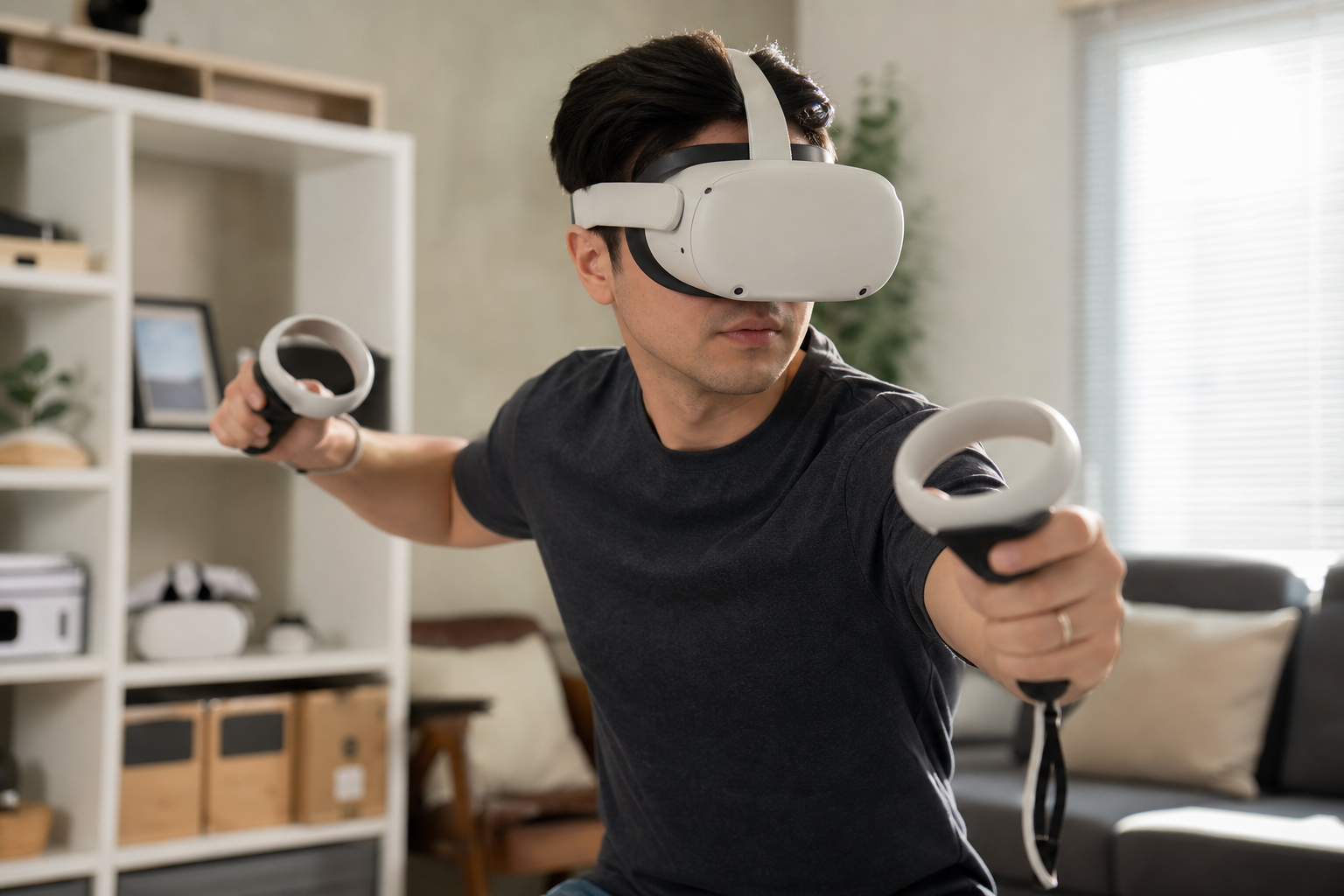
When I first unboxed my gunstock, my focus was entirely on comfort. Does it feel heavy? Do the straps dig into my shoulders? It took me a while to get the length and cheek rest right, but it felt pretty good just standing still. The problem started when I actually moved. As a left-handed player, the world of accessories is often an afterthought. In VR, this is a game-breaking issue. In a game like Contractors Showdown, you have to turn around constantly. When I turned 180 degrees to my right, my body physically blocked the Quest 3 headset's cameras from seeing my left controller, which was mounted on the front of the gunstock. The game lost tracking, and my virtual rifle would either freeze or float away. This happened repeatedly during intense fights, and it took me a long time to realize it wasn't a game bug. It was a fundamental hardware problem made worse by being left-handed.
Initial Impressions vs. In-Game Reality
| Factor | First Impression (Static Test) | In-Game Experience (Dynamic Gameplay) |
|---|---|---|
| Comfort | Felt a bit heavy but manageable. Seemed okay. | Became tiring after 30 minutes. The weight was annoying during quick movements. |
| Setup | Took about 20 minutes to adjust everything. Seemed straightforward. | The magnetic cups were hard to connect quickly when reloading under pressure. |
| Left-Handed Tracking | Worked perfectly in the shooting range. | Catastrophic failure. Turning 180 degrees caused my body to block the left controller, leading to total tracking loss. |
Does Meta Quest 3S compatibility change the answer for this VR Gunstock question?
The new Quest 3S is coming soon. You're wondering if your expensive gunstock will even work with it, or if you'll have to buy a new one.
Yes, the Quest 3S will almost certainly make the gunstock problem worse. It's rumored to have ringless controllers like the Touch Plus, but with tracking that relies even more on the headset's cameras. This means more potential for tracking loss when your hands are close together or near your face.
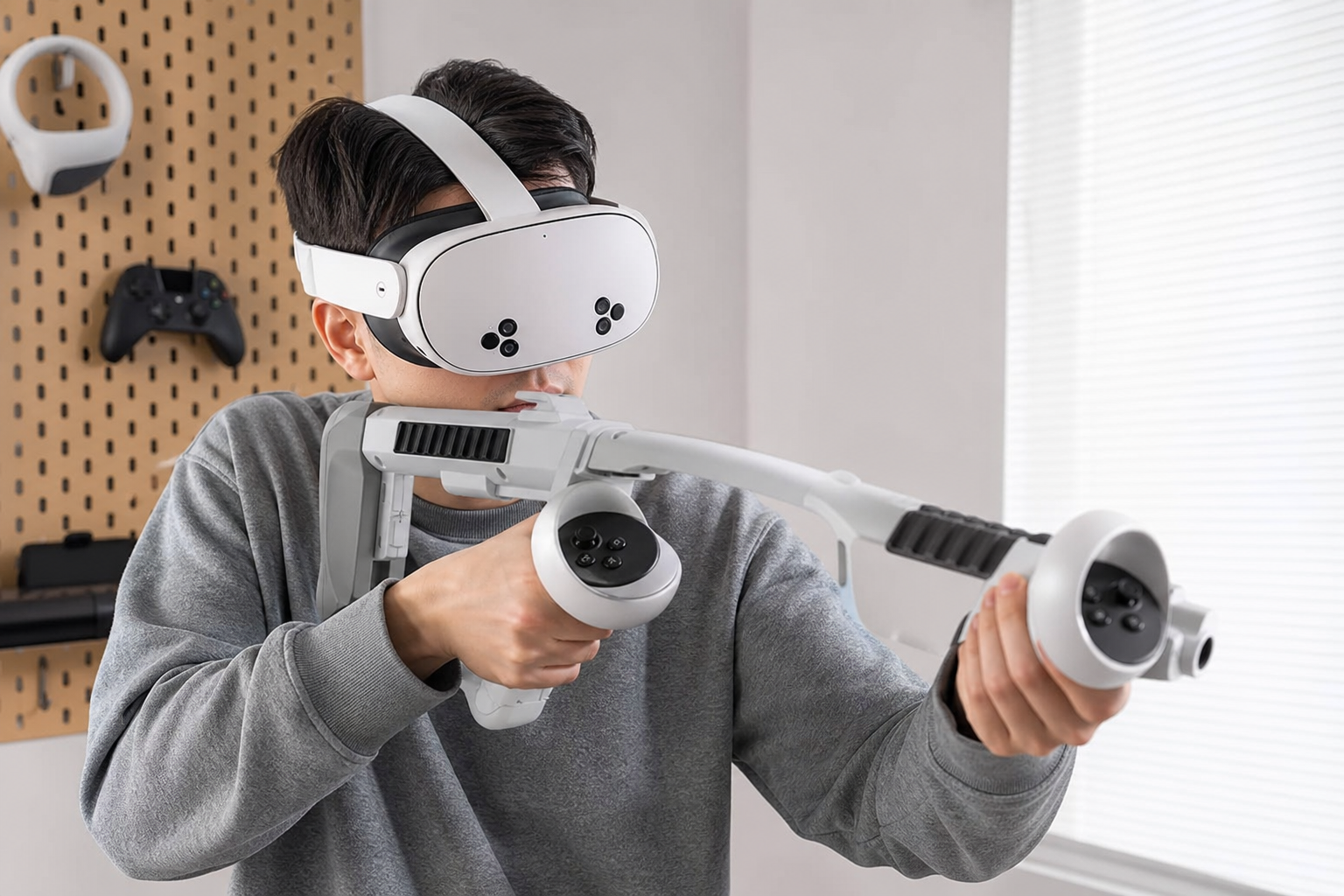
The move away from tracking rings has been a big shift in VR controller design. The rings on the Quest 2 controllers were covered in infrared LEDs that the headset cameras used to track their position. They provided a lot of data from many angles. The Quest 3's Touch Plus controllers got rid of the rings to be more compact. They still have LEDs, but they are embedded in the controller body itself. This already makes them a little easier to occlude (block from the cameras' view). From everything we've heard, the Quest 3S will follow this trend. If the controllers are tracked only by the headset cameras, without any external rings, any physical object that gets between your controller and the headset is a problem. A gunstock is a large physical object that forces your hands into a position where one can easily block the other, especially when aiming down sights. I worry that the Quest 3S will make tracking-loss events, like the one I experienced as a lefty, far more common for everyone.
Does the same advice apply to Quest 2, Quest 3, and Quest 3S?
You want one accessory that works perfectly across all your headsets. It seems like a simple ask, but with VR gunstocks, it's a complicated mess.
Absolutely not. The advice is completely different for each headset. The Quest 2 is the most reliable for gunstocks due to its tracking rings. The Quest 3 is a compromise, and the upcoming Quest 3S will likely be the most problematic and require specially designed stocks.
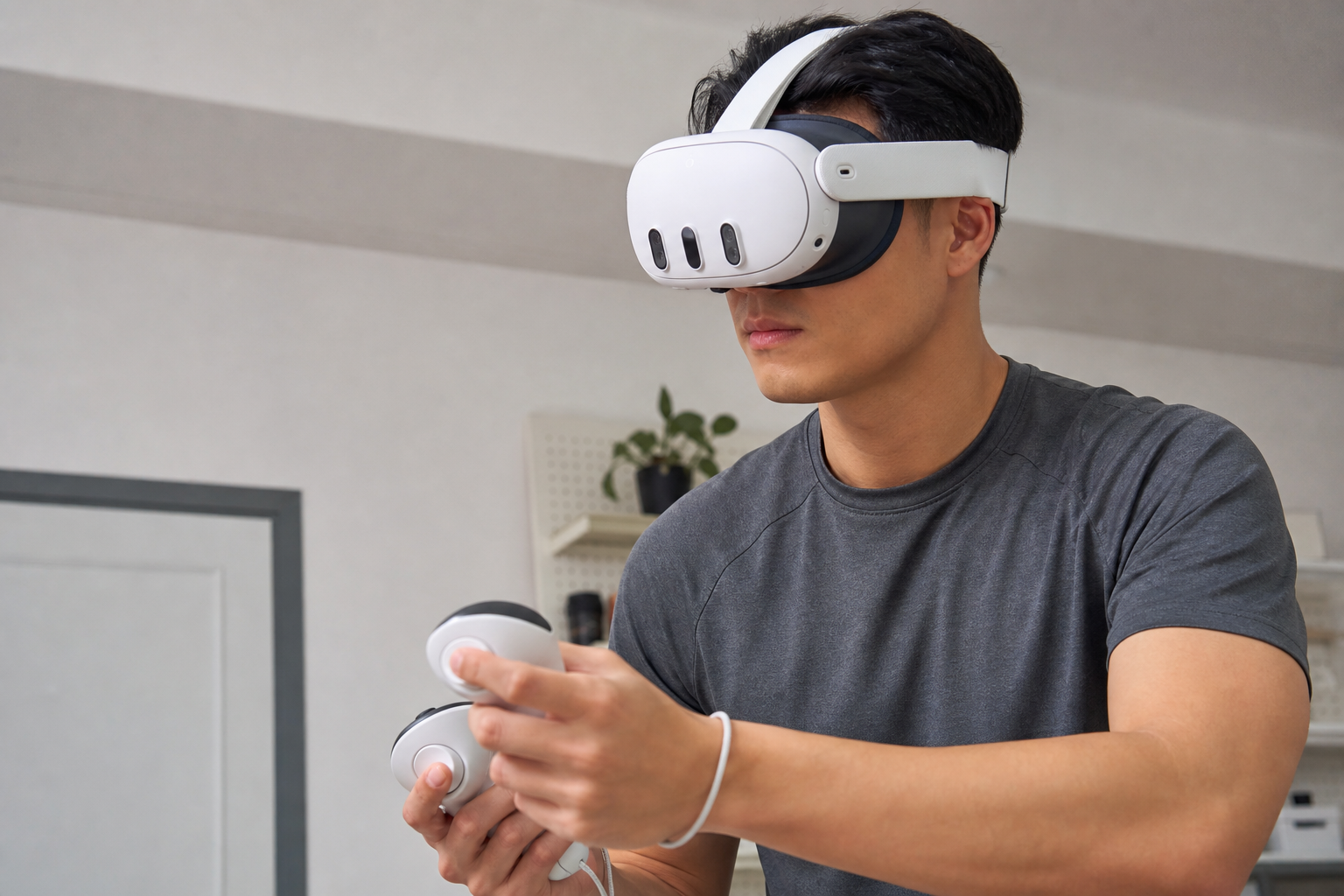
I had a chance to test my gunstock with a friend's Quest 2, and the experience was night and day. The controller fit was snugger, and more importantly, the tracking was way more stable. The large tracking rings on the Quest 2 controllers seem to give the headset cameras a much better target to lock onto, even when my hands were in awkward positions. When I switched back to my Quest 3, the looseness of the controller in the cup was immediately noticeable, and the tracking felt less resilient. This is where the core of the problem lies. An accessory designed for one generation of hardware doesn't just "work" on the next; it often works with serious compromises. The Quest 3S will only make this problem more obvious. We can't assume a "one size fits all" approach. Buyers need to be aware that the performance of a single gunstock can vary wildly depending on which headset they're using it with. A great accessory for a Quest 2 user could be a terrible one for a Quest 3S user.
Does VR Gunstock solve enough of left-handed setup in Contractors Showdown to justify another accessory?
You're a lefty, and you're tired of feeling disadvantaged in VR shooters. A gunstock promises to fix your aim, but you're worried it will just be another expensive gimmick.
For many left-handed players, no. A gunstock can introduce a new, more frustrating problem: tracking loss. While it provides physical stability, that benefit is instantly erased when your gun disappears because the stock helped your body block the controller's sensors during a crucial moment.
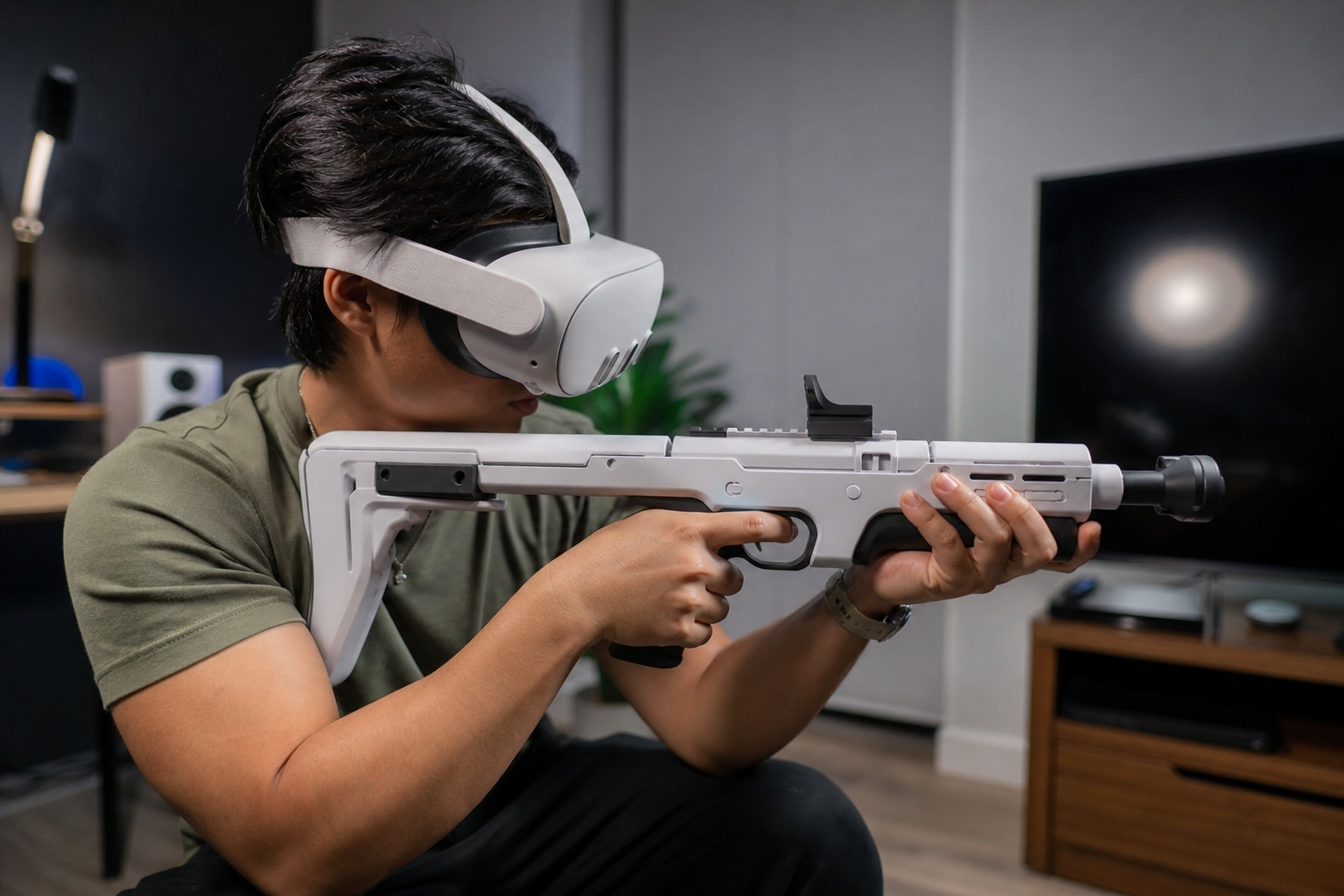
This is where I have to share my failure case. The gunstock did offer one clear benefit: it gave me a physical object to anchor my aim. Holding a rifle-shaped controller felt more natural and my muscle memory for aiming improved. In a shooting range, standing still and facing forward, I was more accurate. But Contractors Showdown is not a shooting range. It's a chaotic, fast-paced game that requires constant movement. The gunstock's stability was useless when the tracking failed. I lost more firefights due to my gun glitching out than I ever did from bad aim. The process of reloading, which involves detaching and reattaching a controller from a magnetic cup, was also slow and clumsy under pressure. The accessory solved the minor problem of "floaty hands" but created the major problem of "disappearing gun." For me, that trade-off was not worth it.
Final Verdict: Buy or Skip?
- Tactical Shooters (Onward, Pavlov): Maybe Buy. If you play slower-paced games where you hold positions and aim carefully, especially on a Quest 2, the added stability could be a real advantage. You are less likely to make the quick, body-blocking turns that cause tracking loss.
- Arcade Shooters (Contractors Showdown, Population: One): Skip it. If you are a left-handed player, use a Quest 3, or play in a small space, I would strongly advise against it. The frantic pace and constant turning will expose the tracking weaknesses, leading to more frustration than fun.
Conclusion
A VR gunstock is a deeply personal accessory. Its success depends heavily on your headset, your dominant hand, and the types of games you play. Don't believe the hype.
Leave a comment