



Is a VR Golf Club Attachment a good gift for someone who mainly plays putting practice for Apartment Players?

Living in an apartment, you want your VR putting practice to feel real. But just holding a controller feels wrong, and you worry an attachment is a clumsy, expensive mistake.
For apartment players who mainly practice putting, a VR golf club attachment can be a good gift if you value swing tempo over convenience. It adds realism, but the fixed height and hassle of removing the controller can be deal-breakers for casual or multi-game users.
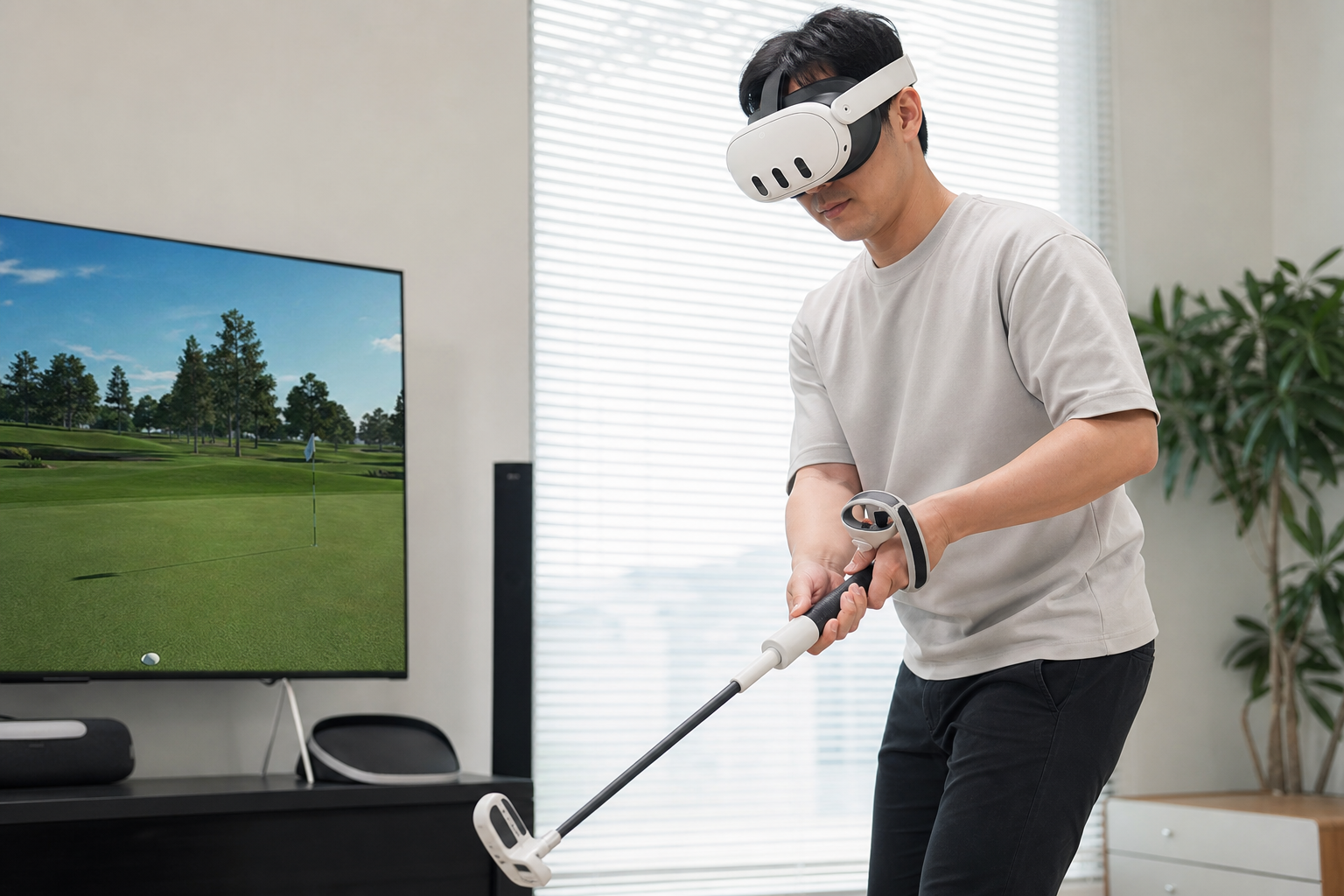
Before you decide, let me walk you through my own experience. I was worried about the same things: hitting my desk, getting the height right, and the general annoyance of using an accessory. As a player with limited space, safety and practicality were just as important to me as realism. I tested one with my Quest Touch Plus controllers to see if the benefits outweighed the problems. Here’s what I discovered after spending some serious time on the virtual green.
If the session lasts 20 minutes, does height fit become more noticeable?
At first, the club feels fine. You're excited. But after a few holes, you feel a little ache in your back. The club feels too short. Let's look at it.
Yes, height fit issues become much more noticeable after 20 minutes. Initial awkwardness can turn into real discomfort or poor posture as fatigue sets in. What feels slightly off at first can ruin your tempo and consistency over a longer putting session.
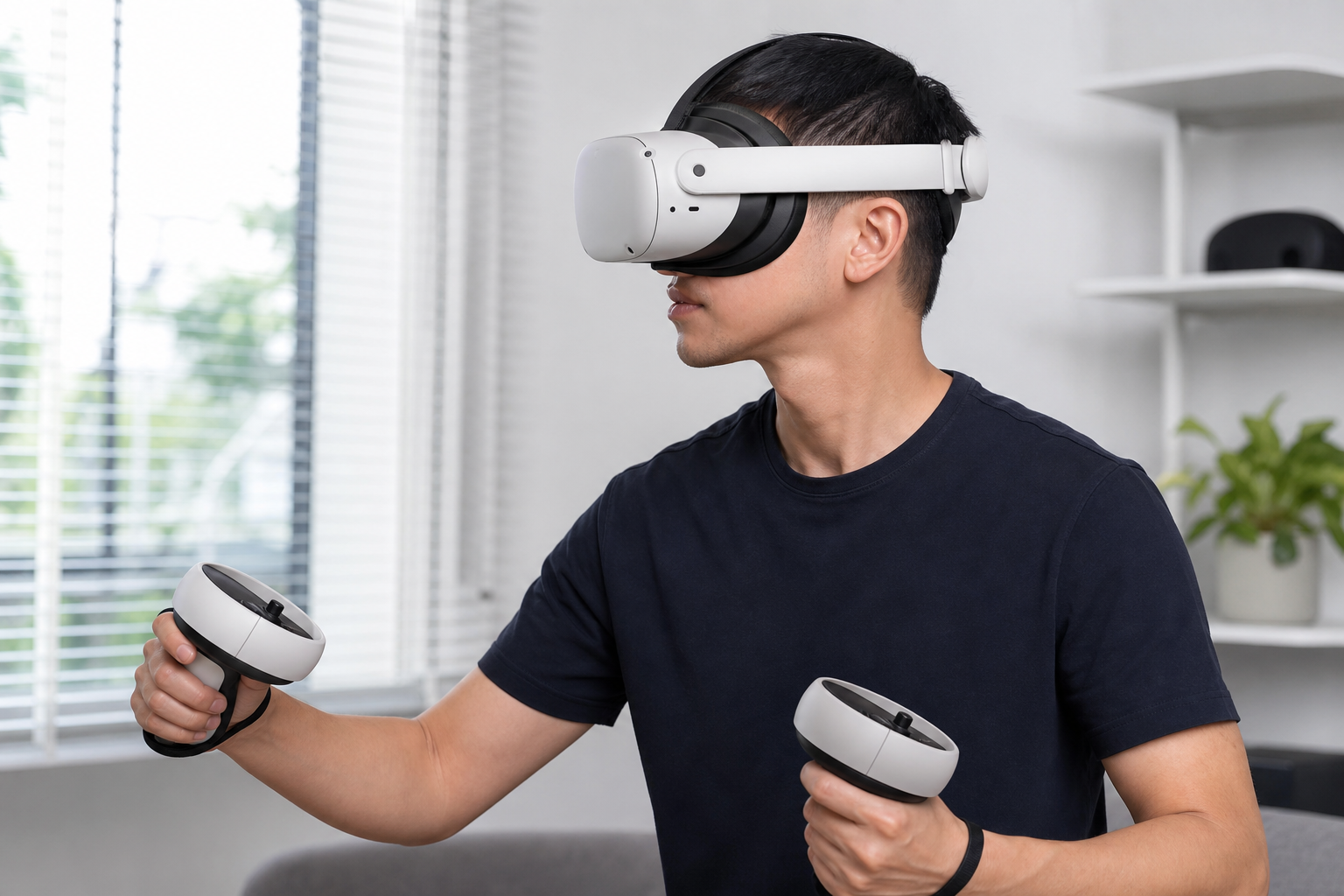
When I first attached the controller, I was just excited about the new feeling. The added weight felt great and immediately improved the tempo of my practice strokes. For the first five minutes, I was completely focused on the game. I didn't notice that I was hunching over slightly to match the putter's position on the virtual floor. My brain just accepted it. But as the session crossed the 20-minute mark, my back started to send me signals. The slight hunch had turned into a constant, uncomfortable posture. My focus shifted from the ball to the feeling of strain. This is where the lived-experience of an apartment player kicks in. You become hyper-aware of your body and your space, and bad posture feels unsafe.
My 20-Minute Putting Test Breakdown
I broke down my experience to see exactly how things changed over time. The difference was clear.
| Factor | First 5 Minutes | After 20 Minutes |
|---|---|---|
| Posture | Felt natural, didn't notice any changes. | Aware of hunching, felt slight back strain. |
| Focus | Completely on the game and putting line. | Distracted by physical discomfort and awkward fit. |
| Tempo | Weight felt great, made my stroke smoother. | Tempo became inconsistent as I fought the bad posture. |
| Fatigue | None. The accessory felt light and easy. | The weight felt heavier because of poor ergonomics. |
The initial benefit of improved tempo was completely undone by the poor height fit over time.
Could height fit be solved by setup changes before buying VR Golf Club Attachment?
You've found a VR golf club you like, but you worry it won't fit your height. You don't want the hassle of returning it. You can test this before you buy.
Yes, you can partially check for height fit by making in-game and headset adjustments before buying an accessory. Calibrating your in-game height, adjusting the floor level in your Quest settings, and changing your real-world stance can reveal if a standard-length attachment will work for you.
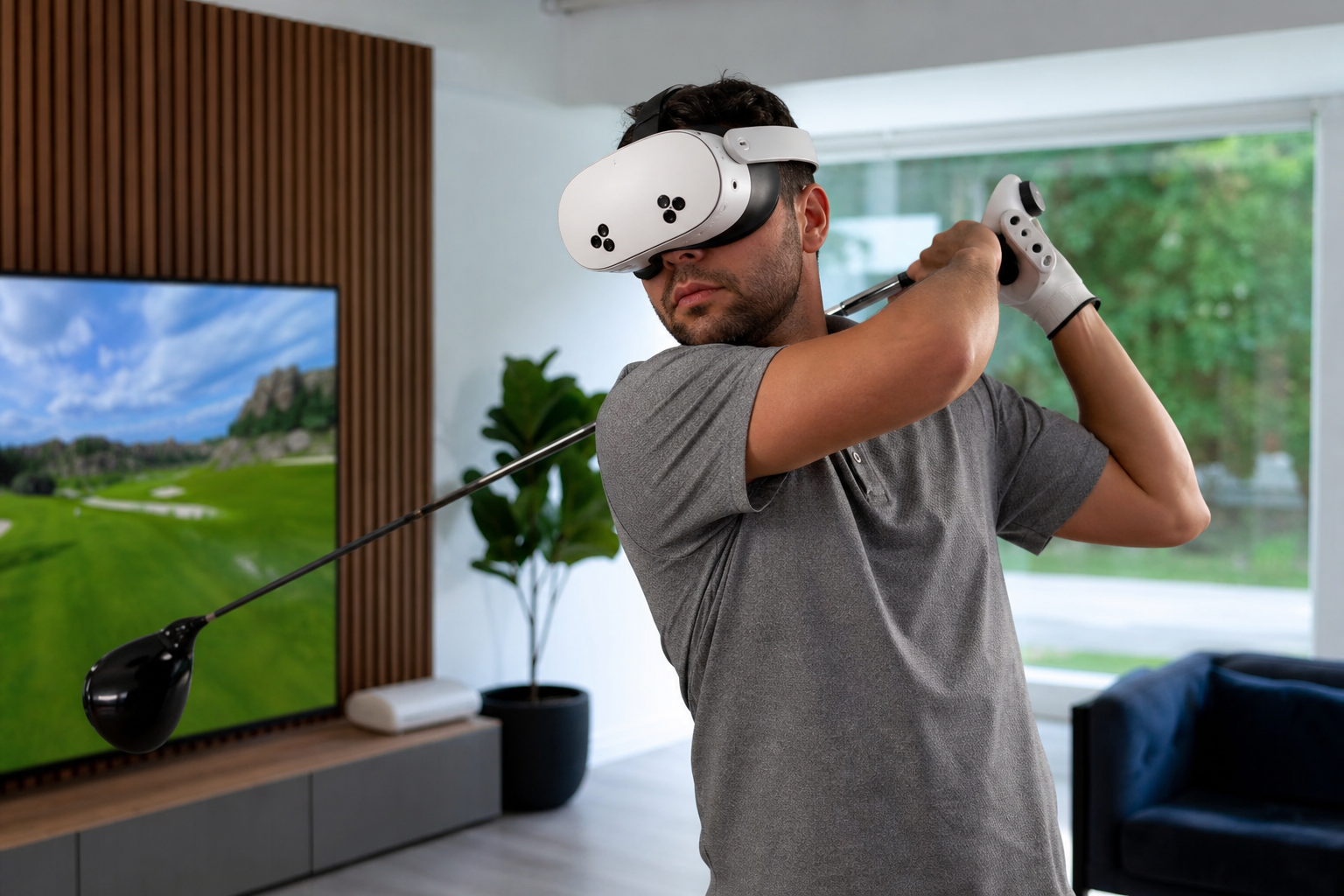
Before I even put an attachment in my shopping cart, I tried to simulate the experience using just my Quest Touch Plus controller. I knew that if my virtual setup was wrong, no accessory could fix it. First, I checked my Quest's guardian settings to make sure the floor level was set correctly. Sometimes it can be off by an inch or two, which makes a huge difference in golf games. After confirming that, I loaded up Golf+ and went straight to the calibration settings. I made sure my player height was entered accurately. This is a step many people skip, but it’s critical. The game uses this information to scale the world and the clubs to you. Then, I tried to mimic holding a putter. I gripped my controller and held it down by my side in a natural putting stance. I watched where the virtual putter head landed on the grass. This simple test told me everything I needed to know. The virtual club felt a bit short even then. This prepared me for the reality that a fixed-length accessory would likely feel the same way. It's a free, easy test that every apartment player should do.
Does the accessory make menus, charging, or controller removal harder?
You love the immersion of a golf club attachment. But what about when you need to navigate a menu, charge, or switch to another game? Let’s break down the daily usability.
Yes, a VR golf club attachment significantly complicates daily use. Navigating menus with a long stick is clumsy. Most designs block the charging port. And removing the controller to switch games can be slow and frustrating, breaking the seamless experience VR aims for.
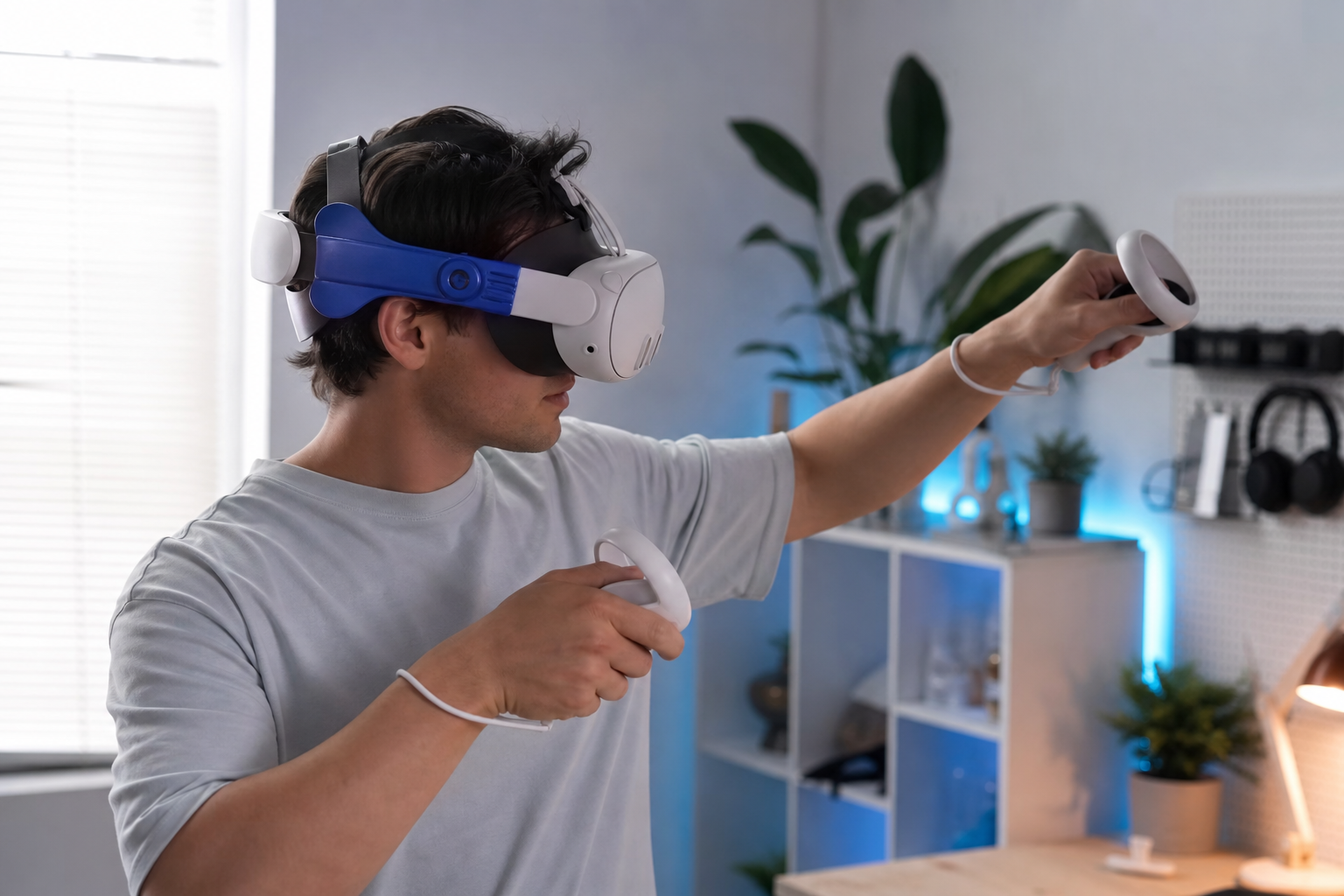
The fun of feeling like a real golfer ended the moment I needed to do anything outside of swinging the club. The first problem was the menu. Trying to point the end of a long club attachment at a small button on a virtual menu is incredibly difficult. It feels like trying to use a broom handle to type on a phone. I gave up and just used my other hand's controller. The next big issue was charging. The attachment I used completely covered the USB-C port on the controller. This meant that after every single session, I had to completely remove the controller from the grip just to charge it. This quickly became my least favorite part of the process. The locking mechanism was a tight plastic clamp, and I was always worried I would scratch the controller or snap the clip. For someone who only ever plays VR golf, this might be a minor annoyance. But I like to switch between different games in one session. The idea of having to stop, unclip the controller, and then re-clip it later was enough to make me not want to use the attachment at all. It adds a layer of friction that goes against the quick, easy nature of VR.
Would a negative putting practice test still help buyers understand height fit on Quest Touch Plus Controllers?
You tried a friend's VR golf club and it felt terrible. You think the accessory is a gimmick. But even that bad experience can teach you what to look for.
Absolutely. A negative putting test is incredibly helpful. It quickly shows you where the height mismatch occurs—whether the virtual club head is floating or buried in the ground. This helps you understand if you need an adjustable attachment or if a standard one is simply wrong for you.
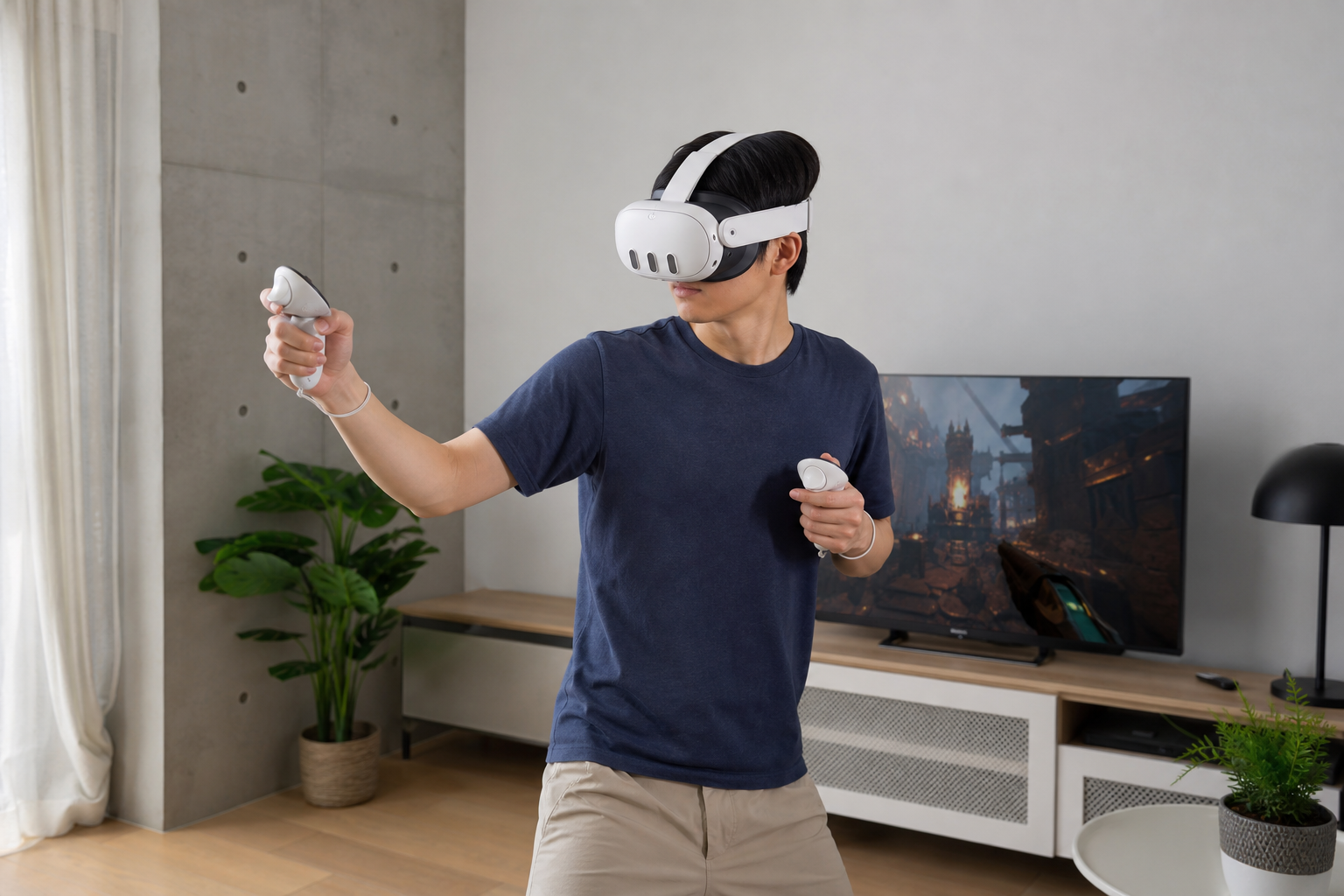
My first putting session with the accessory was a failure, and it was the most useful test I did. As a beginner with the attachment, I just snapped the controller in and started playing. Immediately, I noticed the virtual putter head was floating about an inch above the virtual grass. Every putt felt weak and went offline. My first reaction was to blame the product. I thought, "This thing is just a cheap piece of plastic." But then I remembered my pre-purchase checks. My frustration led me to an experienced-player setup. I took the headset off, put the club down, and went back to basics. I double-checked the floor level in the Quest settings and re-calibrated my height in the game. I put the headset back on and tried again. To see the difference, I played the same par-3 hole twice. With the beginner setup, I three-putted because I had no feel for distance. With the experienced setup, after calibration, I two-putted for par. The club still felt a little short, but it was now playable. That initial negative experience was a gift. It forced me to diagnose the real problem, which was a mix of my setup and the accessory's fixed length. It taught me my personal tolerance for height fit and proved that a bad first impression can give you the best data.
Conclusion
A VR golf club improves putting tempo but creates fit and convenience problems. It is a great tool for dedicated VR golfers but is likely a hassle for casual apartment players.
Leave a comment