



Does a VR Sword fix room safety without slowing down normal controls?

Feeling your VR sword slice through the air, you worry about hitting a wall. You want immersion, not a repair bill. An accessory seems like the perfect fix.
A VR sword accessory can improve room safety by changing how you hold the controller, often shortening your total reach. However, it can slow down menu navigation and isn't a complete fix. Its main benefits are improved grip comfort, weight balance, and a more immersive fitness workout.
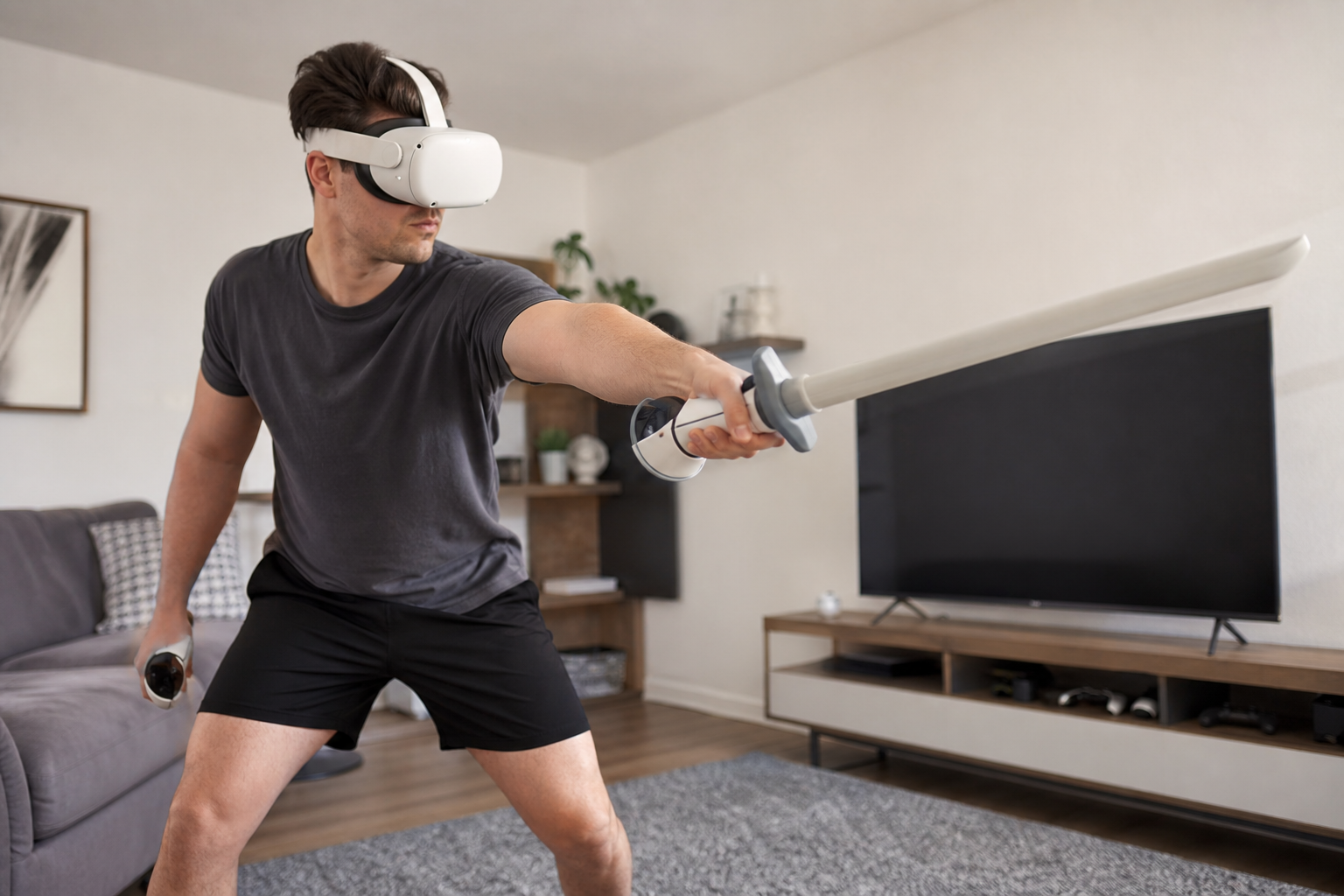
I love VR fitness, especially sword-fighting games. As someone who enjoys cosplay, the feel of the weapon is a huge part of the experience. But holding a small controller never felt right. It would slip during intense workouts, and I always felt my swings were being limited by fear of hitting my desk. I bought a VR sword accessory hoping it would solve everything. I wanted to know if it could make my workouts safer without being annoying to use. This is what I discovered after spending a week with one, using my Quest Touch Plus controllers. My journey was about finding a balance between immersion, safety, and practical use.
For cosplay fans, is room safety really the reason fitness sword workouts feels frustrating?
Your controller feels light and awkward during a sword workout. You keep adjusting your grip, thinking the real problem is your small room. But is it really the space?
For many cosplay and fitness fans, the frustration is less about room safety and more about the unnatural grip, poor weight balance, and lack of immersion from a standard controller. A sword accessory directly addresses the physical feel of the workout, which can be a bigger problem.
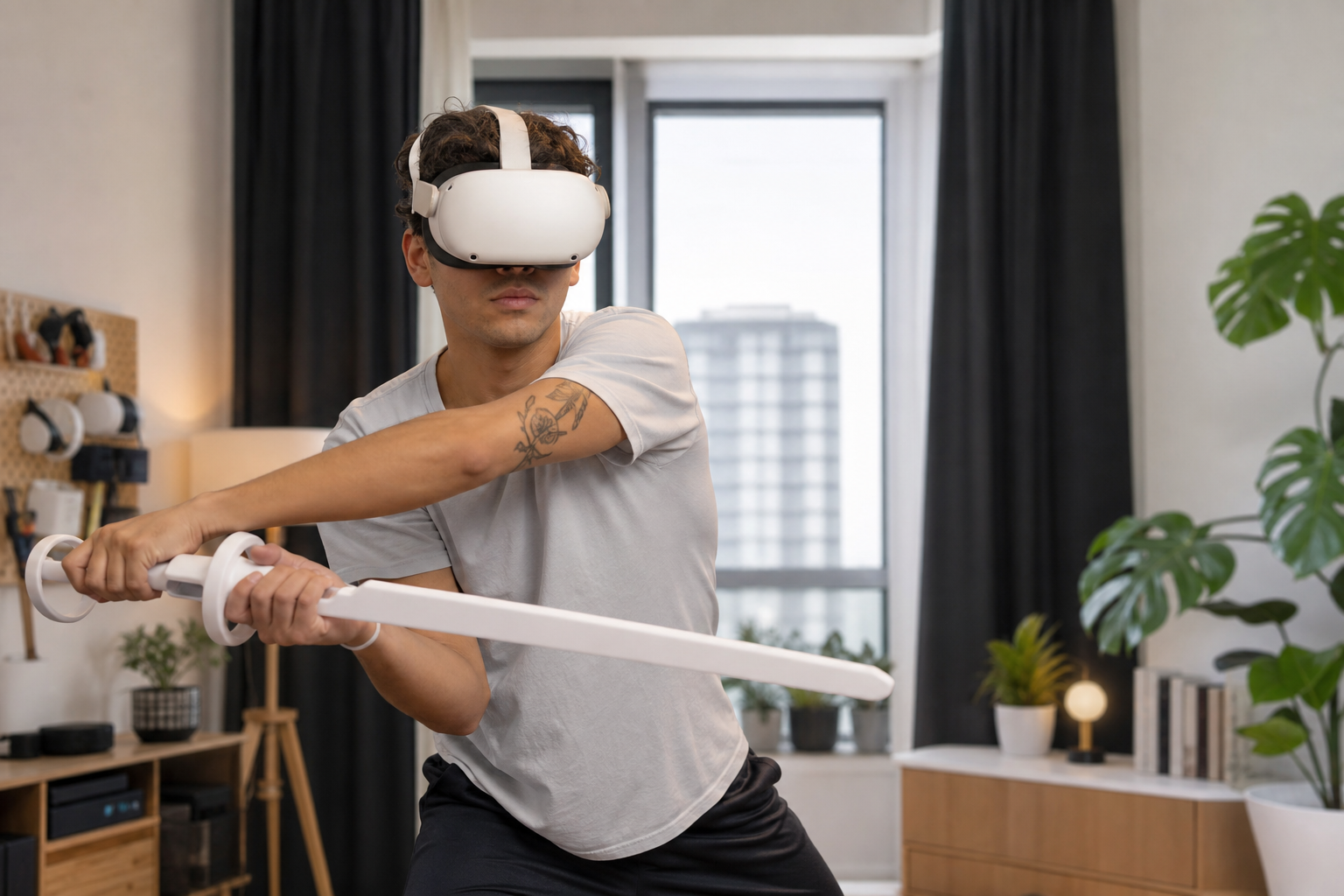
When I first started playing games like Beat Saber and Until You Fall, I thought my main issue was my playspace. I was constantly worried about hitting things. But after a while, I realized something else was bothering me more. The controller is designed to be a universal tool, not a sword hilt. My frustration wasn't just about safety. It was about feel. As a cosplay fan, I want to believe I'm holding a sword. A light piece of plastic with buttons and a joystick breaks that feeling completely. The weight is all wrong, and my grip never feels secure enough for a powerful swing. This led to wrist fatigue after just ten or fifteen minutes. The accessory I tested aimed to fix this by creating a proper handle. The problem is, these attachments can be tedious. If it takes a minute to secure the controller and another minute to remove it, I'm not going to bother for a quick session.
The Real Problem: Grip and Immersion
The core issue for me was the disconnect between what I was seeing and what I was feeling. A standard controller forces a specific grip that feels nothing like holding a real sword. The table below breaks down my frustrations.
| Pain Point | Standard Controller Experience | Goal with an Accessory |
|---|---|---|
| Grip | Unnatural and insecure. Feels like I might throw it. | A stable, two-handed grip that feels like a real sword hilt. |
| Weight Balance | Too light and centered in the hand, not like a blade. | Add a little weight and shift the balance forward for immersion. |
| Immersion | Constantly reminded I'm holding a piece of plastic. | Make me forget I'm holding a controller at all. |
| Wrist Strain | All the swinging motion comes from the wrist, causing fatigue. | Encourage swings from the elbow and shoulder, like a real sword. |
What should be measured before claiming VR Sword fixes room safety?
Accessory makers love to say their products make VR safer. But they rarely show any proof. How can you tell if the claim is real or just marketing talk?
To properly test if a VR sword fixes room safety, you need to measure the change in your total arm reach, the new center of gravity, and how it affects your reaction time to Guardian warnings. An accessory often shortens reach but can add momentum, creating a different safety risk.
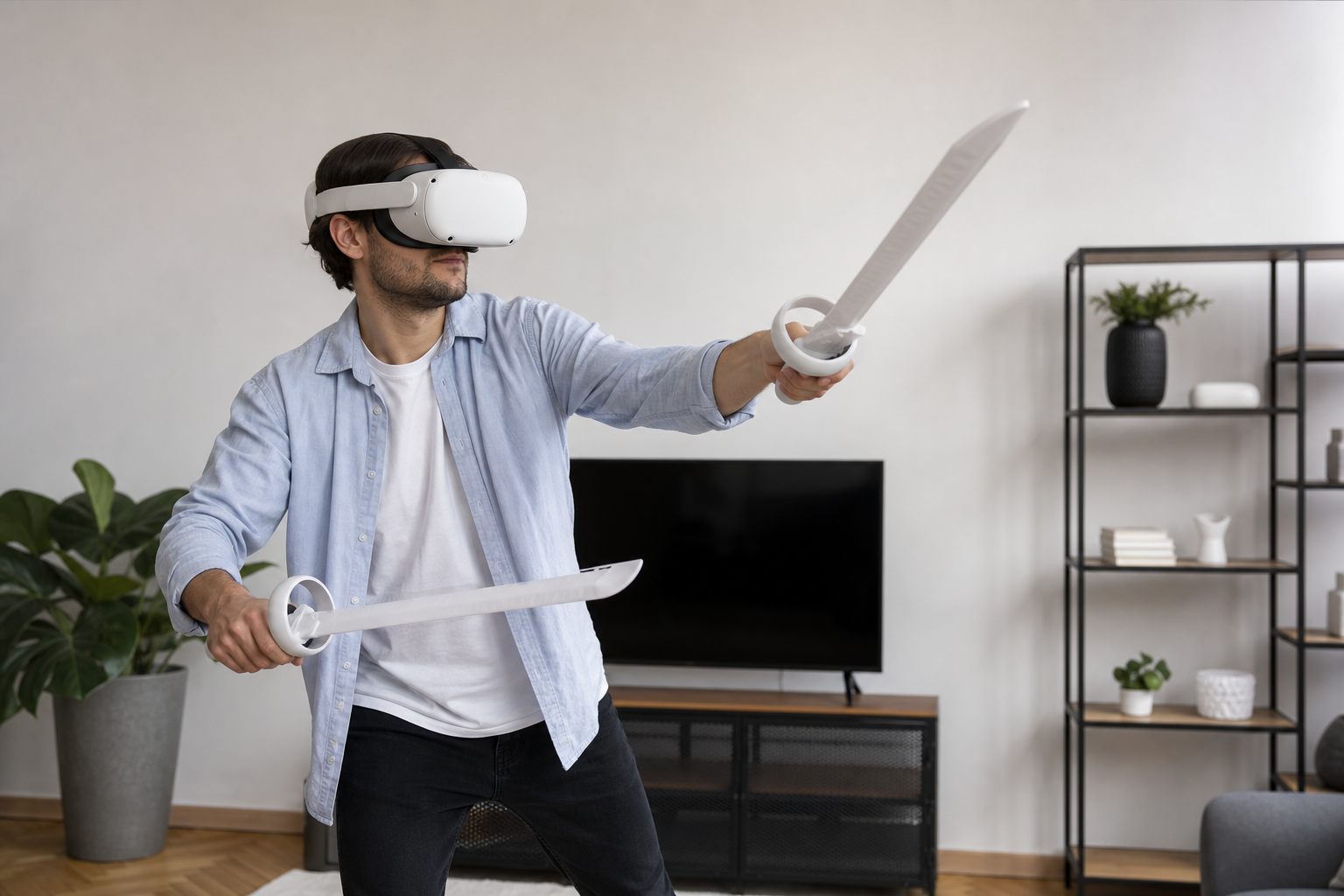
A claim about safety needs proof. When I got my VR sword, I didn't just trust the box. I decided to measure what actually changed. First, I measured my reach. Holding the Touch Plus controller normally, the tip of the controller extends several inches past my fist. With the sword accessory, the controller sits deep inside the handle. This means the total length from my shoulder to the tip of the virtual sword was actually shorter. That part of the safety claim was true. But that's not the whole story. The accessory adds a bit of weight. This changes the momentum of your swing. It takes more effort to start the swing and, more importantly, more effort to stop it. This new momentum could cause you to overswing into a wall if you're not careful. I also looked at my ability to react. The handle covers some of the buttons. If the Guardian wall pops up, I need to be able to pause the game instantly. The accessory made this slightly slower. My biggest failure case came from a false sense of security. Because my reach felt shorter, I got bolder. I took a larger step during a lunge and my other hand, the one without the accessory, hit my bookshelf. The accessory didn't cause it directly, but the overconfidence it gave me did. It doesn't magically fix room safety; it just changes the nature of the risk.
Does the accessory make fitness sword workouts more consistent or just more dramatic?
You want to improve your scores and get a better workout. But you also want to feel like a hero. Can a sword accessory give you both, or just one?
The accessory absolutely makes workouts more dramatic and immersive, which is great for motivation. It can improve consistency by promoting a stable, two-handed grip, but it may hurt performance in fast, wrist-focused games until you adapt your swinging style from the shoulder.
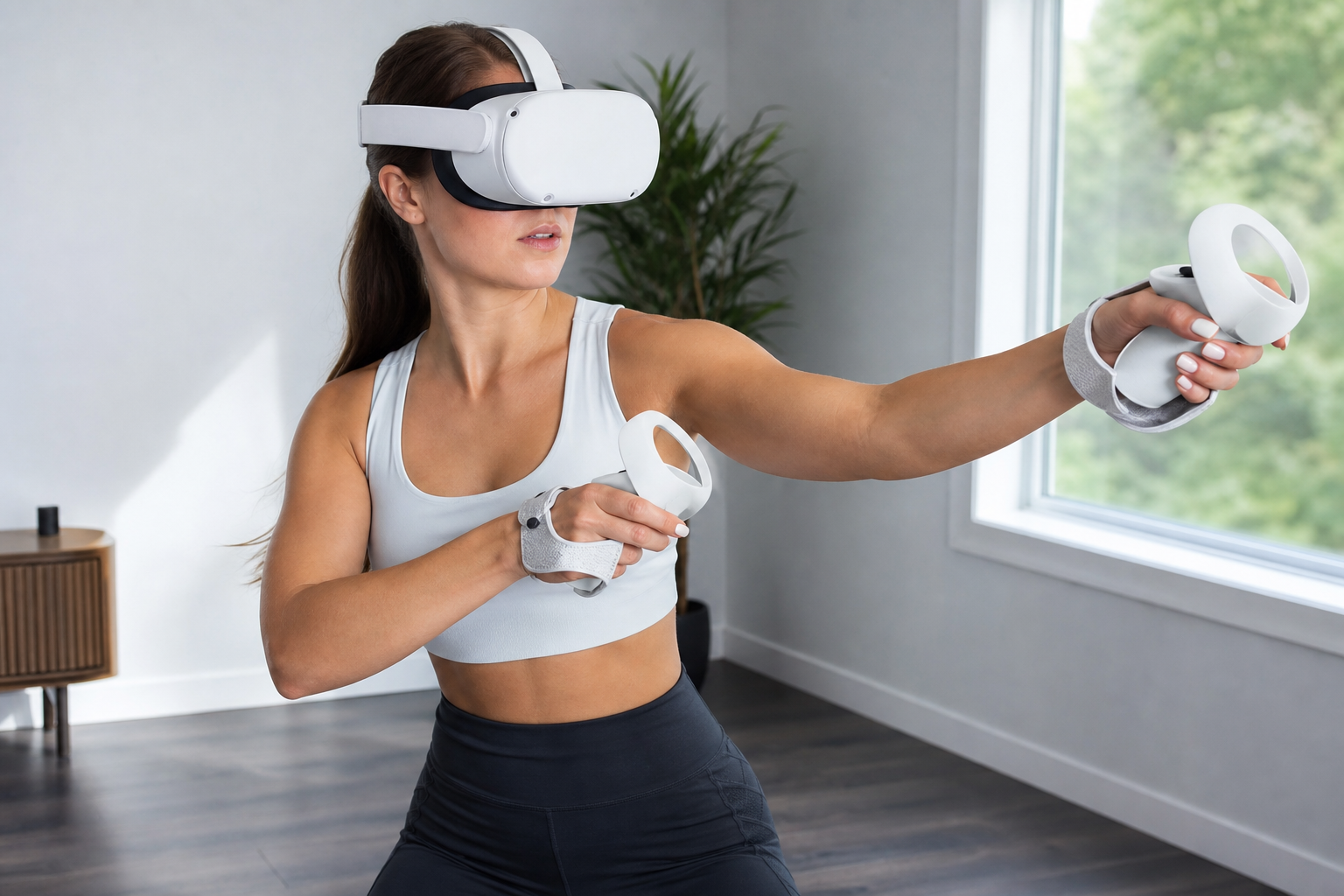
This was the most important question for me. I wanted to know if this was a real training tool or just a toy. The answer is, it's a bit of both. The dramatic effect is immediate. The moment you grip the handle with two hands, you feel more powerful. The added weight makes every swing feel more deliberate and satisfying. This boost in immersion made me want to play longer. It turned a 15-minute session into a 30-minute workout because it was just more fun. But what about performance? That was more complicated. In games that reward big, sweeping arcs, the accessory was a huge help. My form felt more stable, and my swings were more consistent. However, in high-level Beat Saber on Expert+ maps, my scores dropped at first. These maps require incredibly fast wrist flicks. The sword handle is designed to discourage that exact motion. It forced me to use my entire arm, swinging from my elbow and shoulder. This was a much better physical workout, but it was slower. I had to relearn my technique. So, the accessory didn't magically make me better. It changed the workout to be more about power and form, and less about speed and wrist action. It makes the workout more consistent by forcing better habits, but only if you're willing to adapt.
Should the article warn cosplay fans about haptic feel through the handle on Quest Touch Plus Controllers?
The advanced haptics in the Quest Touch Plus controllers are amazing. But what happens when you bury the controller inside a thick plastic handle? You need to know before you buy.
Yes, absolutely. The VR sword handle significantly dampens the detailed TruTouch haptics of the Quest Touch Plus controllers. The sharp, precise feedback from hitting a target or navigating a menu becomes a dull, generalized rumble. This is a major trade-off for immersion.
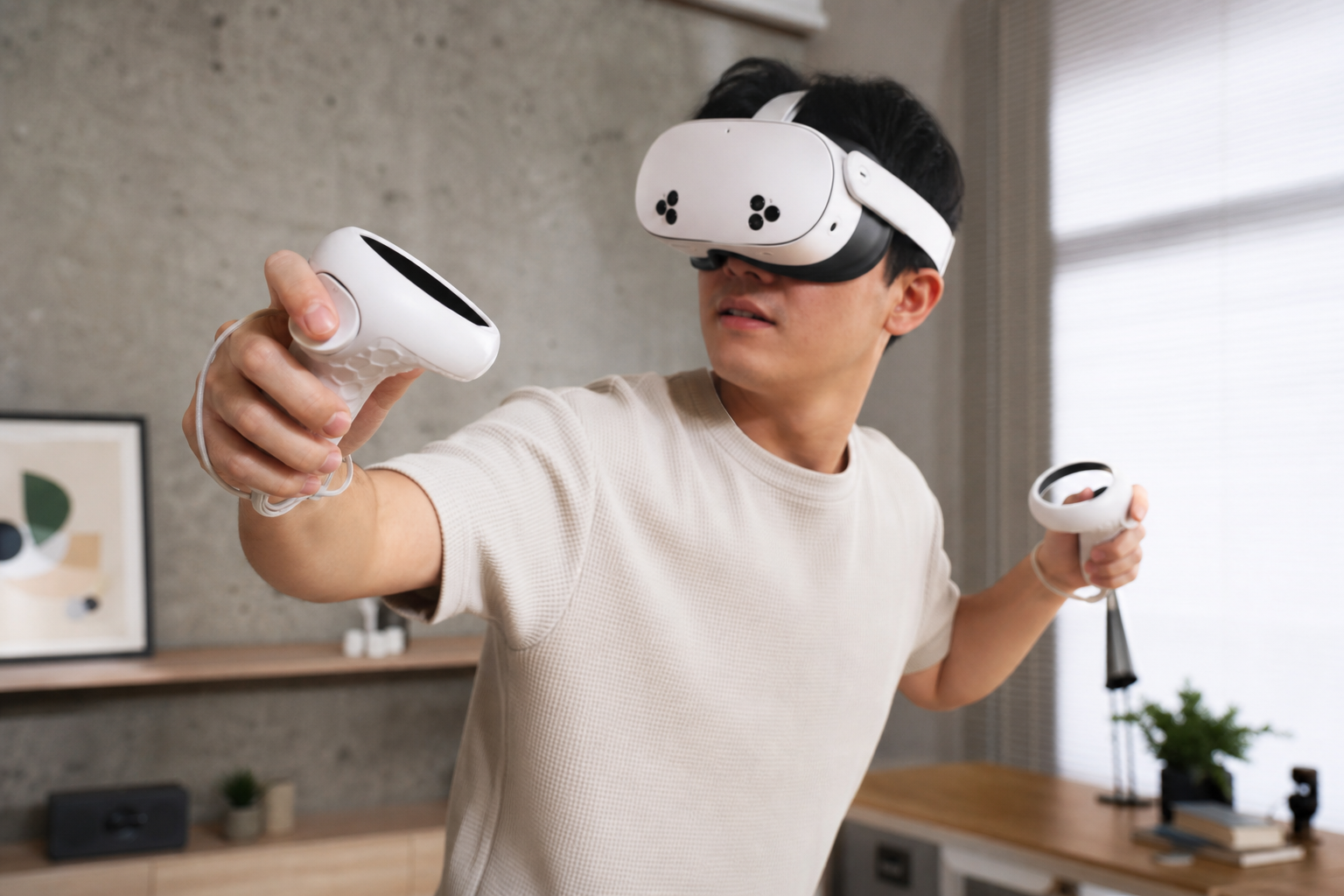
One of the best features of the Quest 3's Touch Plus controllers is the new TruTouch haptics. They provide incredibly detailed feedback. You can feel the subtle click of a button or the sharp crack of a perfect sword hit. I was excited to see how this felt with the sword accessory. Unfortunately, this is where the accessory disappointed me most. The controller is held tightly inside a thick shell of plastic and rubber. This material absorbs almost all of the fine haptic vibrations. When I hit a block in Beat Saber, I expected to feel a crisp jolt. Instead, I felt a low, muddy buzz through the entire handle. All the detail was lost. For a cosplay fan, this is a huge problem. We seek immersion through all senses. Losing that tactile feedback felt like a step backward. It was a direct trade-off: I gained a better physical grip, but I lost a key layer of sensory information from the game world. If you are a competitive player who relies on haptic cues for timing, you should definitely skip this kind of accessory. If you are a casual player who values the physical feeling of holding a sword more than the controller's vibrations, then it might be a worthwhile trade. For me, it was a noticeable downgrade that made the experience feel less responsive.
Conclusion
This VR sword makes workouts feel more immersive and helps with grip. But it's not a perfect safety fix, and it weakens haptic feedback, making it best for dedicated immersion-focused players.
Leave a comment