



Does a VR Sweat Mask change the way boxing players should set up Quest Pro Touch Controllers?

Lens fog can completely ruin a VR boxing workout. You’re in the zone, then your vision blurs. I tested a VR sweat mask with FitXR to see if it’s the solution.
A VR sweat mask helps boxing players by absorbing sweat, which improves hygiene for shared headsets and can slightly delay lens fog. However, it doesn't completely stop fog caused by breathing and temperature differences, so players who don't share headsets might find it an unnecessary extra step.
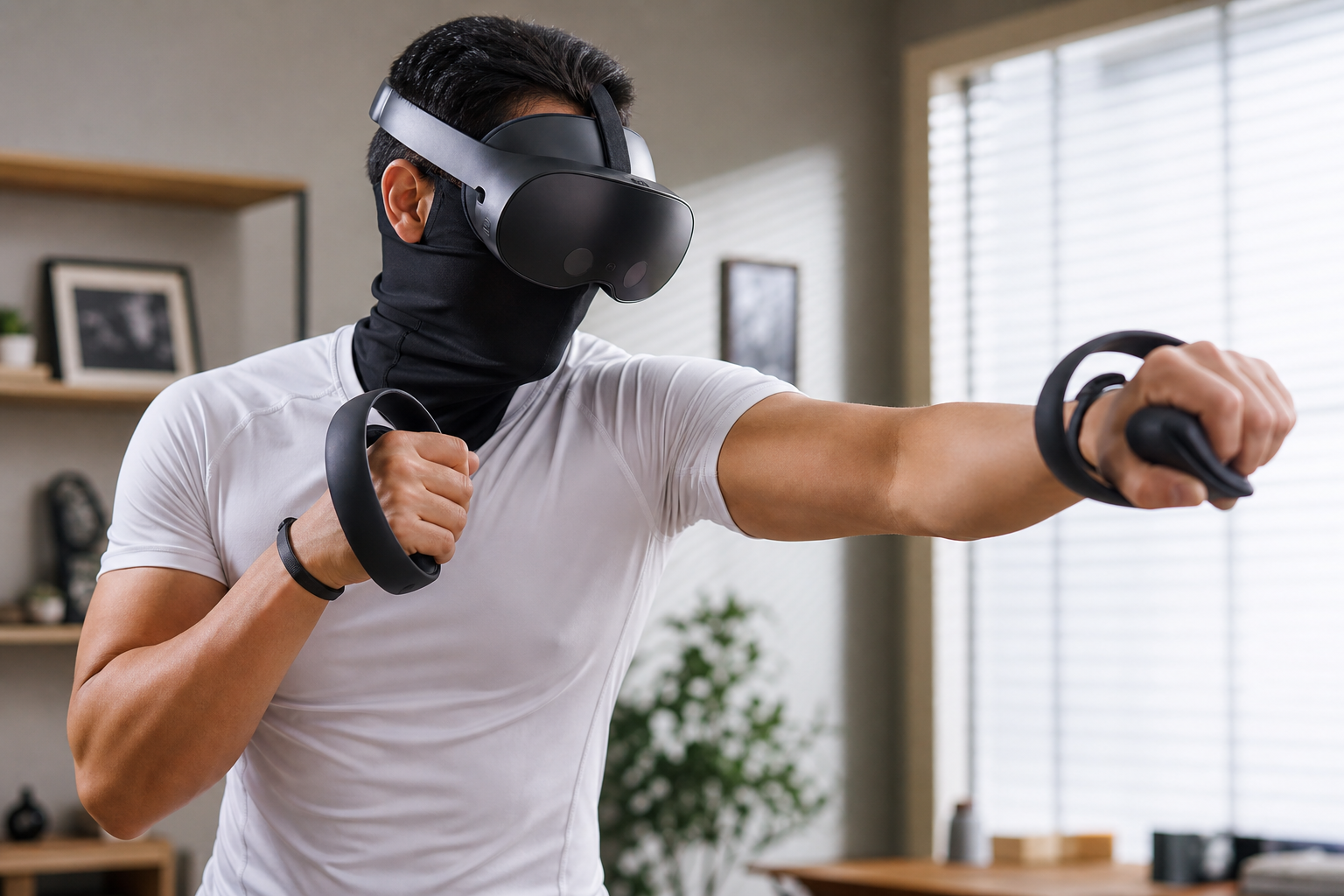
I've spent hundreds of hours in VR fitness, but my partner is just starting. When we decided to share a headset for FitXR, the question of sweat and fog became a real issue. I sweat a lot during high-intensity boxing, and handing over a damp headset felt gross. Fog was also a constant enemy. This led me to a simple experiment with a VR sweat mask. I wanted to answer the questions that every shared-headset owner has, starting with a basic one: does everyone experience fog the same way? The answer would decide if this accessory was a gimmick or a game-changer for our setup.
Does lens fog affect beginners and experienced users in the same way?
You think your headset is the problem when it fogs up. But when a new player tries it, their lenses fog instantly, while yours stay clear. I discovered it’s not just the hardware.
No, lens fog impacts beginners more severely. Beginners tend to have a looser headset fit and breathe more erratically, which traps warm, moist air. Experienced players have a dialed-in fit for better airflow and more controlled breathing, significantly reducing the immediate onset of fog.
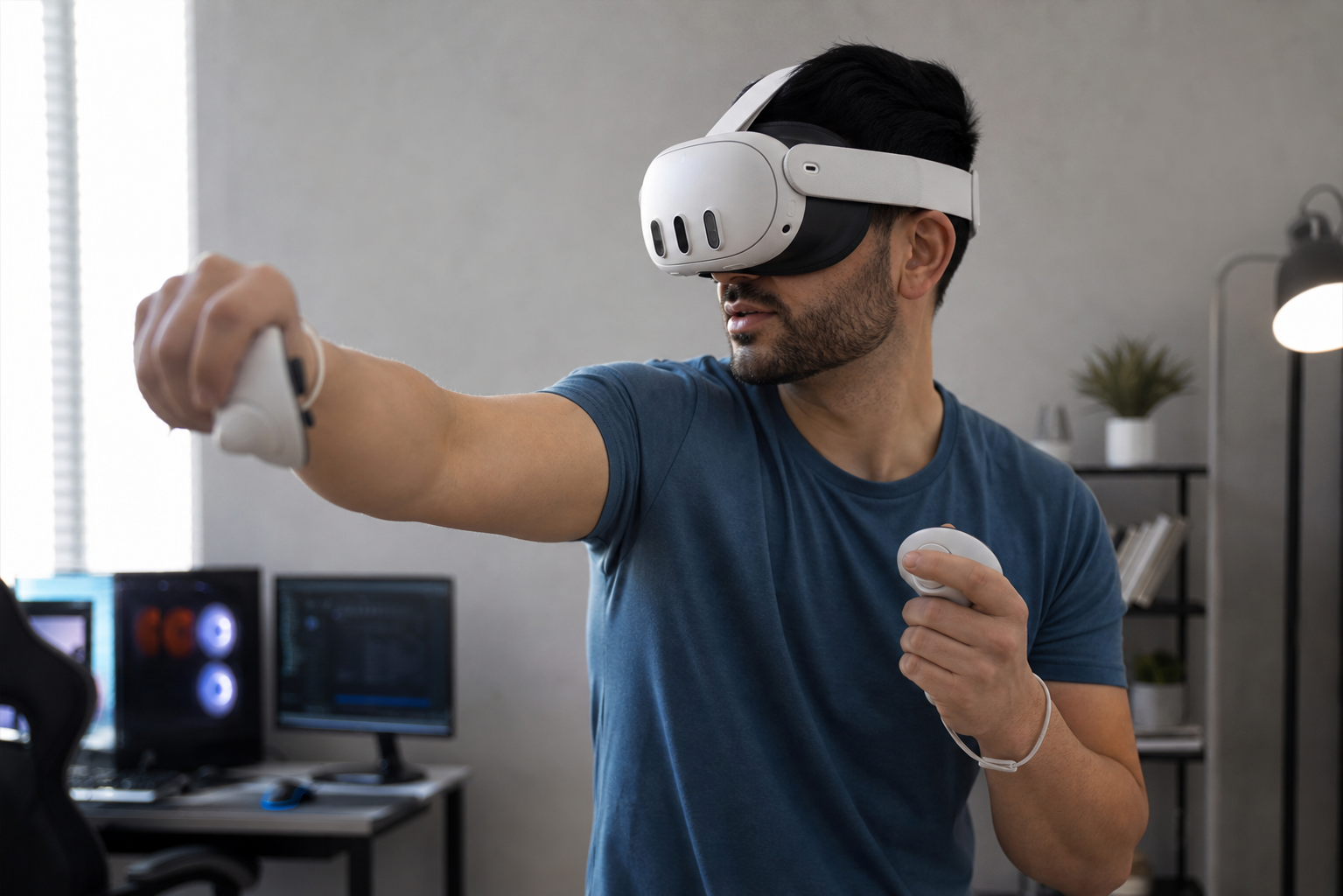
When I first started VR boxing, my lenses would fog up within minutes. Now, it happens much later, if at all. I noticed my partner, a beginner, had the same initial problem I did. The difference isn't just about getting used to the game; it’s about subconscious adjustments we make over time. An experienced user has mastered the little things that prevent fog, while a beginner is just focused on not getting hit. This creates a very different in-headset environment.
Beginner vs. Experienced Player Fog Factors
The physical and mental state of the player directly impacts the conditions inside the headset. A beginner is often tense, breathing heavily, and hasn't yet found the optimal way to wear the device for ventilation.
| Factor | Beginner Experience | Experienced Player Experience |
|---|---|---|
| Headset Fit | Often too tight or too loose, trapping air. | Optimized for comfort and airflow. |
| Breathing Pattern | Heavy, anxious, often through the mouth. | Controlled, relaxed, and rhythmic. |
| Body Heat | Rises quickly due to exertion and stress. | Warms up more gradually. |
| Session Warm-Up | Starts with a cold headset, causing condensation. | Headset is often already at room temperature. |
For a beginner, the combination of a poor fit and panicked breathing creates the perfect storm for condensation. The warm, moist air from their breath has nowhere to go and instantly fogs the cooler lenses. For an experienced player, the headset fits in a way that allows air to circulate, and their calm breathing directs air away from the lenses.
Does a shared-headset swap test prove enough for Quest Pro Touch Controllers users?
You want to share your VR headset with family. The problem is, nobody wants to put on a sweaty, warm device right after you. I ran a swap test to see if a mask helps.
A swap test is very effective. It immediately proves a sweat mask’s value for hygiene, making the headset feel fresh for the next person. While it reduces sweat-related fog, it can’t fully stop condensation if the second user’s face is much cooler than the pre-warmed headset.
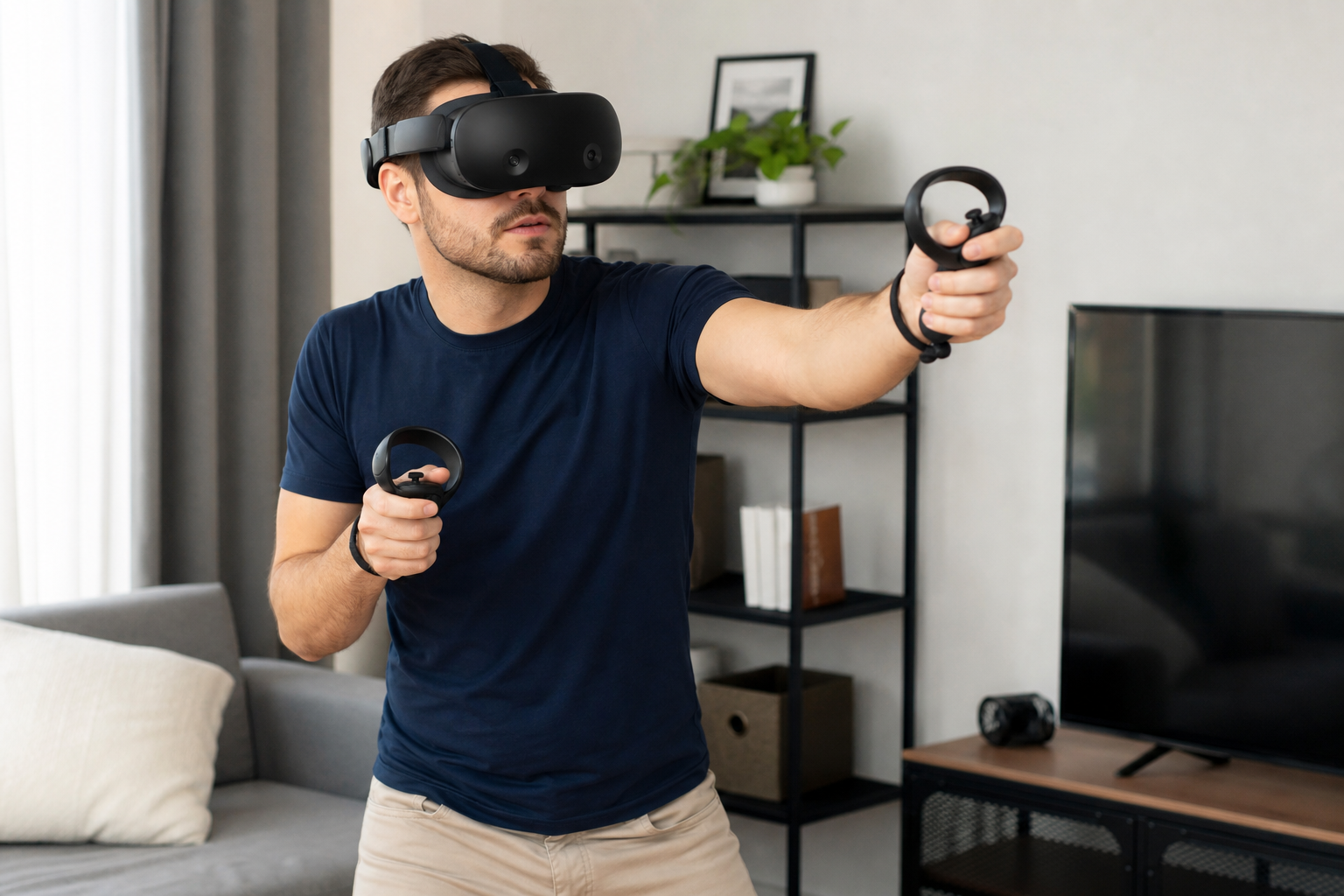
The biggest hurdle to sharing a VR headset for fitness isn't the software; it's the sweat. I decided to test this head-on. I played an intense 15-minute FitXR session, working up a good sweat. Then, I took off the headset, put a fresh, dry sweat mask on it, and handed it to my partner. The first reaction was positive—no clammy foam touching her face. The mask created a clean barrier, instantly solving the "yuck" factor of sharing.
From a technical standpoint, the results were mixed. The mask did a great job absorbing any residual sweat on the facial interface. However, because the headset was already warm from my session and my partner was starting cold, some minor fogging still occurred around the nose area from her breath. The mask couldn't stop basic physics. It proved that for shared use, the mask is primarily a hygiene and comfort accessory. It makes the idea of swapping headsets much more appealing, which is a huge win for family use. It reduces fog, but doesn't eliminate it entirely in a rapid swap scenario.
Does lens fog appear immediately or only after the player relaxes into the session?
You start your workout, and everything is perfectly clear. A few songs later, a blurry haze ruins your high score. I timed my sessions to pinpoint exactly when the fog rolls in.
For me, lens fog consistently appears after the initial warm-up, usually around the 5 to 10-minute mark. This is the point where my body heat has stabilized at a higher level, creating a constant source of humidity that eventually overwhelms the lens's cooler temperature.
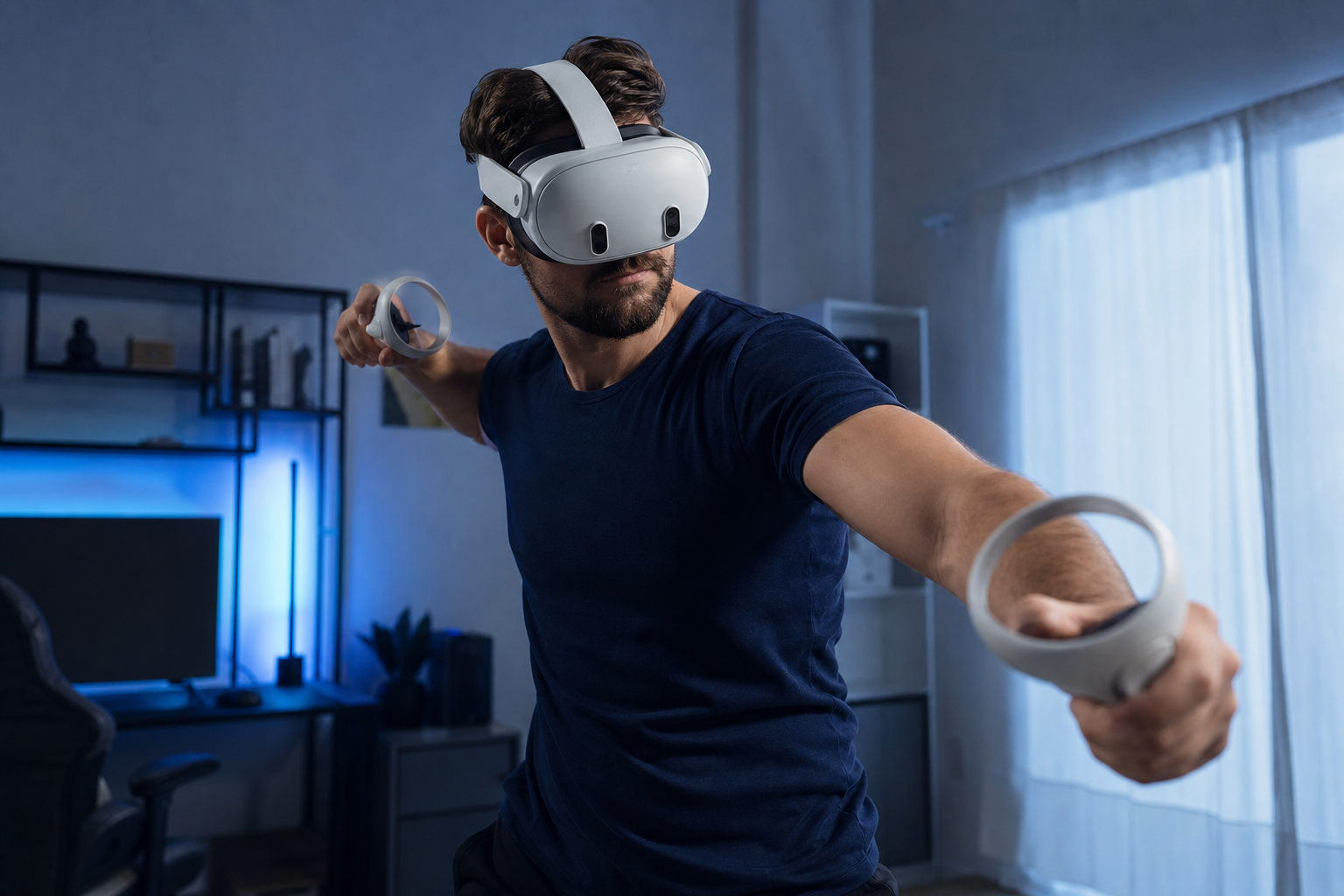
I used to think fog was random, but after tracking it across a dozen FitXR sessions, a clear pattern emerged. The first two or three minutes are always crystal clear. During this time, my body is warming up, and the headset is acclimating to my face. The fog doesn't start until I hit my rhythm. It’s not during the most frantic moments but rather in the steady, high-effort state that follows. My breathing is deep and controlled, but the sheer volume of warm air and rising skin temperature create a microclimate inside the headset.
The sweat mask changed this timing. By absorbing the sweat on my forehead and temples, it removed a major source of moisture from the equation. With the mask on, the fog-free window extended to about the 12 to 15-minute mark. It didn't stop the fog forever, because my breath is still a factor, but delaying it by an extra five to ten minutes is significant. That's enough time to finish a whole extra workout block. It confirmed that fog isn't just about breathing; it's about total moisture management.
After testing FitXR on Quest Pro Touch Controllers, should boxing players buy VR Sweat Mask for lens fog or skip it?
You need a solution for VR workout sweat and fog. But you are tired of buying accessories that don't really fix the problem. Here is my final call on the VR sweat mask.
You should buy a VR sweat mask if you share your headset or sweat heavily. Its primary benefit is hygiene and sweat absorption. You should skip it if you are a solo user with minor fog issues, as proper headset fit and a fan may be more effective solutions.
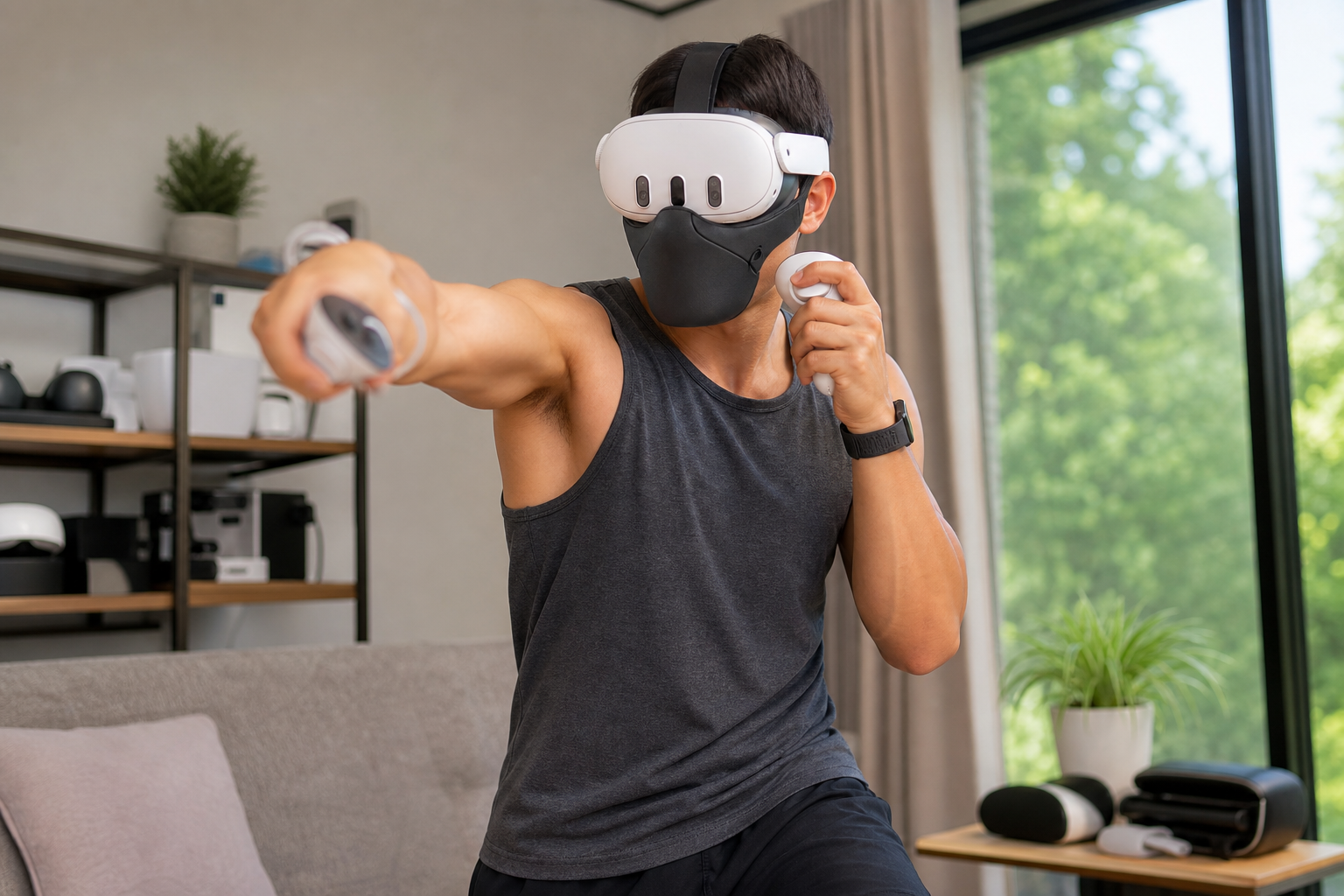
After running all these tests, my conclusion is that the VR sweat mask is a specialized tool, not a universal fix. Its usefulness depends entirely on your specific pain points. For my family, it has become essential. The ability to quickly swap the headset without worrying about hygiene is a massive quality-of-life improvement. It makes sharing the Quest Pro for fitness sessions easy and pleasant. The mask absorbs the sweat, feels clean for the next person, and can be tossed in the wash.
However, if I were the only one using the headset, I'd probably be less consistent about using it. While it does delay fog, it also adds a thin layer of fabric to my face, which can feel a little warmer. For a solo user who doesn't sweat excessively, simply pre-warming the headset, pointing a small fan at the play area, and ensuring a proper fit might be enough to manage fog. The mask is a fantastic solution for a specific problem—shared use and heavy sweating. It's not a magic bullet for all fog issues.
Conclusion
A VR sweat mask is a hygiene lifesaver for shared headsets and a helpful tool for heavy sweaters. It delays fog but doesn't eliminate it. Consider your own needs before buying.
Leave a comment