



Can a VR Sword make small rooms feel natural on the first session?

Worried your VR sword will smash your TV in a small room? You want immersion, but breaking your stuff is a real fear. I tested one to see if it's safe.
Yes, a VR sword can feel natural in small rooms, but it requires new guardian boundaries and a cautious play style. The extra length immediately impacts room safety, making it a bigger concern than with standard controllers, especially for fast-paced games like Beat Saber from the very first minute.
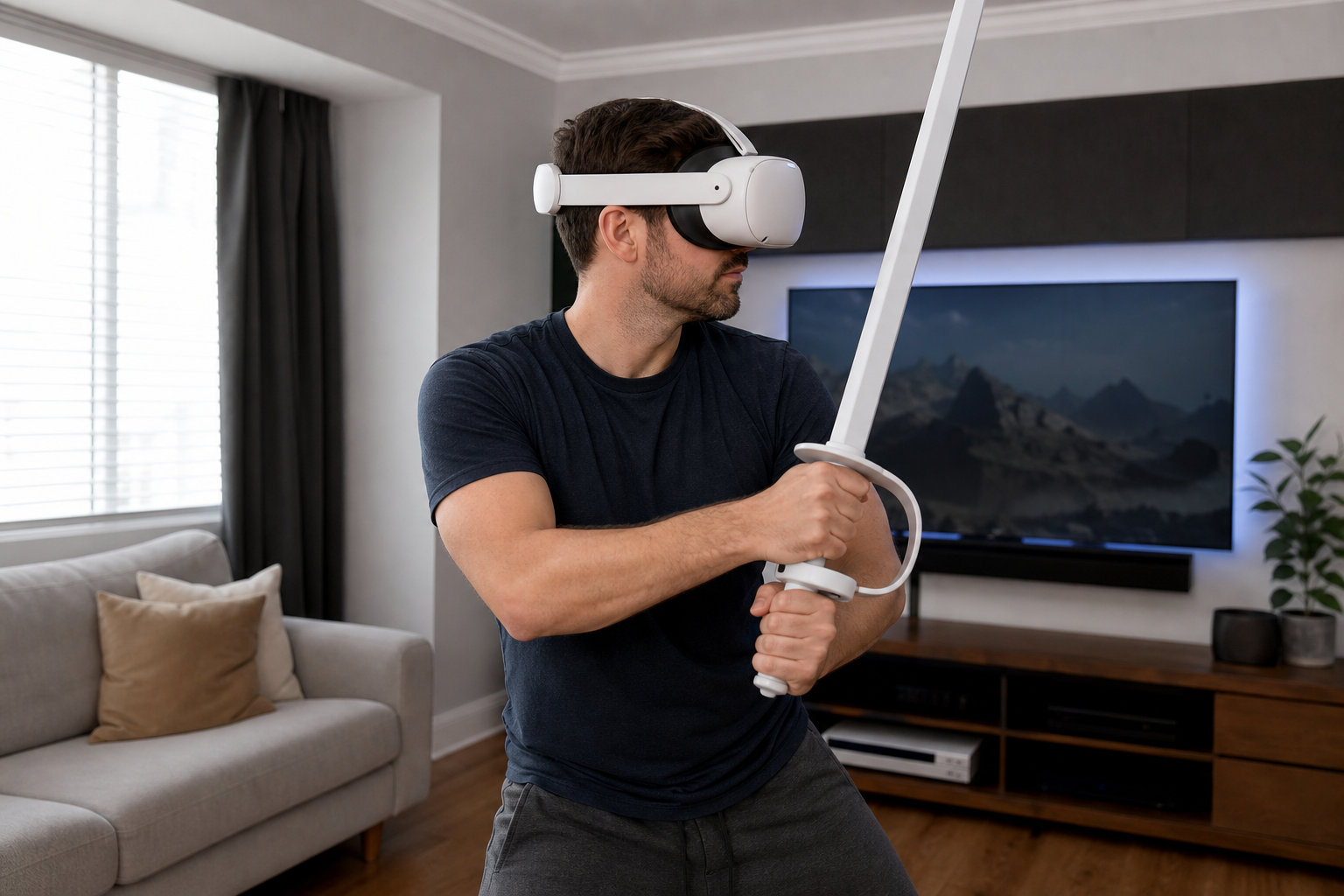
When I first attached the sword handle to my Quest 3S controller, it felt great. The weight, the grip—it screamed immersion. But my playspace is small, maybe 2 meters by 2 meters on a good day. The initial cool factor was immediately followed by a simple question: can I actually play with this thing without causing damage? The first swing is one thing, but a full 20-minute Beat Saber session is a completely different beast. My excitement turned into a real-world test of safety and practicality. So, I jumped in to find out just how aware I'd have to be.
If the session lasts 20 minutes, does room safety become more noticeable?
You feel safe for the first few minutes, carefully controlling your swings. Then you get lost in the music, your body takes over, and you hear a loud THWACK.
Absolutely. Room safety becomes a critical issue after the first 10 minutes. Your initial caution wears off as you focus on the game. Fatigue makes your swings wider and less precise, leading to constant guardian alerts and a real risk of hitting something in your room.
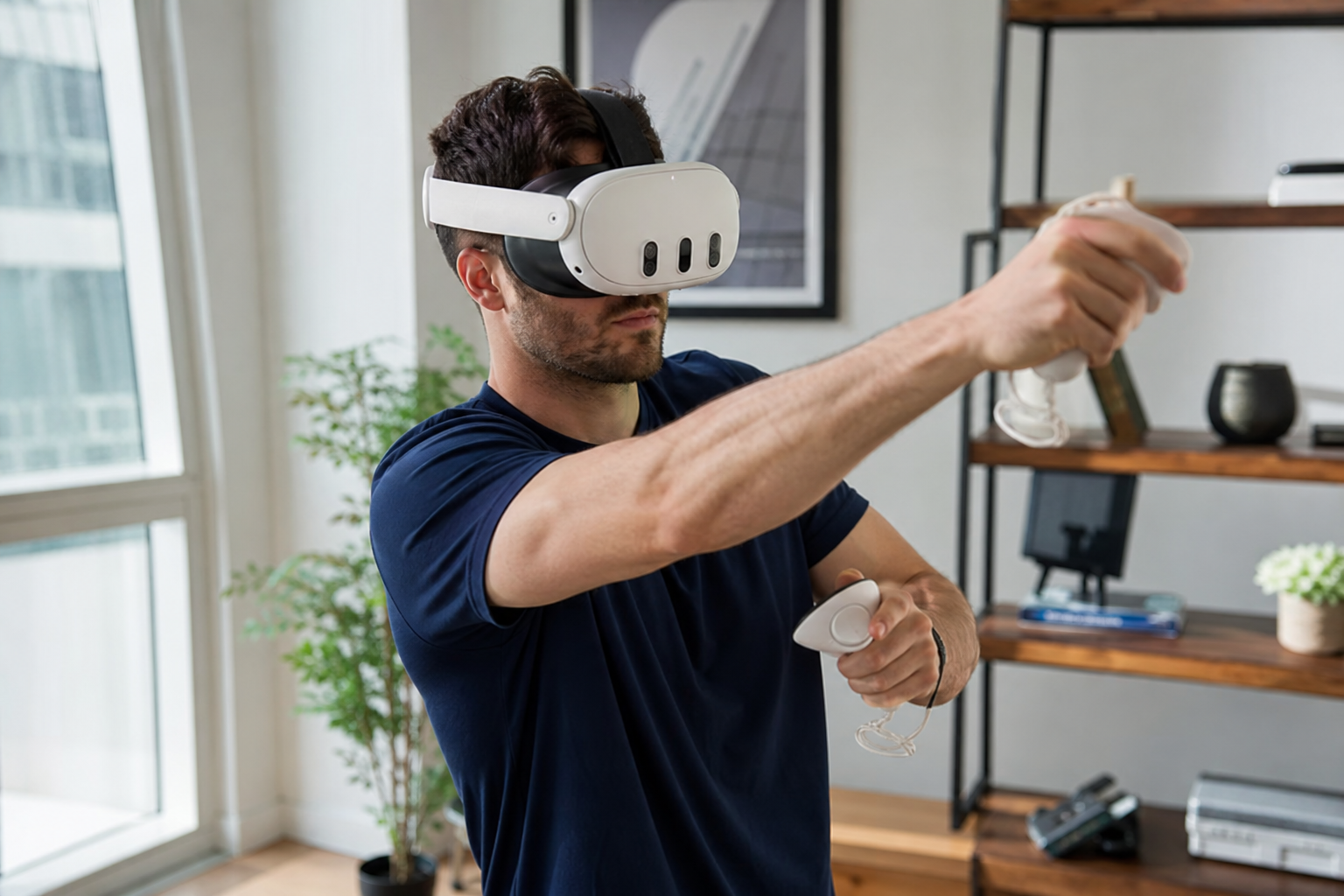
My experiment was simple: play Beat Saber on Expert for 20 minutes and log my awareness. In the beginning, I was hyper-aware of the sword's tip. I made small, controlled wrist movements, focusing on just hitting the blocks. The extra length felt manageable because I was actively thinking about it. But as I got into the flow state around the 10-minute mark, my brain switched off my "don't hit the wall" monitor. My swings started coming from my elbow and shoulder, just like they do with a bare controller. This is where the danger appeared. My muscle memory was betraying me. The guardian boundary, which I rarely see, started flashing constantly. I had to consciously shorten my swings, which threw off my rhythm and killed my score.
My 20-Minute Safety Log
This table breaks down how my perception of safety changed during the session.
| Time Interval | My Focus | Guardian Alerts | Physical Contact Risk |
|---|---|---|---|
| 0-5 Mins | Very high on sword tip location and swing size. | 0 | Low |
| 5-15 Mins | Focus shifts to the game, muscle memory takes over. | Frequent (5-10 times) | Medium |
| 15-20 Mins | Fatigue sets in, focus is on survival, not precision. | Constant | High |
The test proved that long sessions with a sword accessory in a small room require active, constant mental effort to stay safe, which ultimately reduces immersion rather than enhancing it.
What would a real VR Sword test in small rooms on Meta Quest 3S reveal about room safety?
You see ads for VR swords that promise ultimate immersion. But you suspect they don't test them in a tiny apartment bedroom. Will it even work without breaking something?
A real test reveals the core problem is over-extension and a disconnect between your hand's position and the virtual weapon's tip. Fast, diagonal swings are the most dangerous. The Meta Quest 3S tracking itself is flawless, but the physical reality of the extended controller causes collisions.
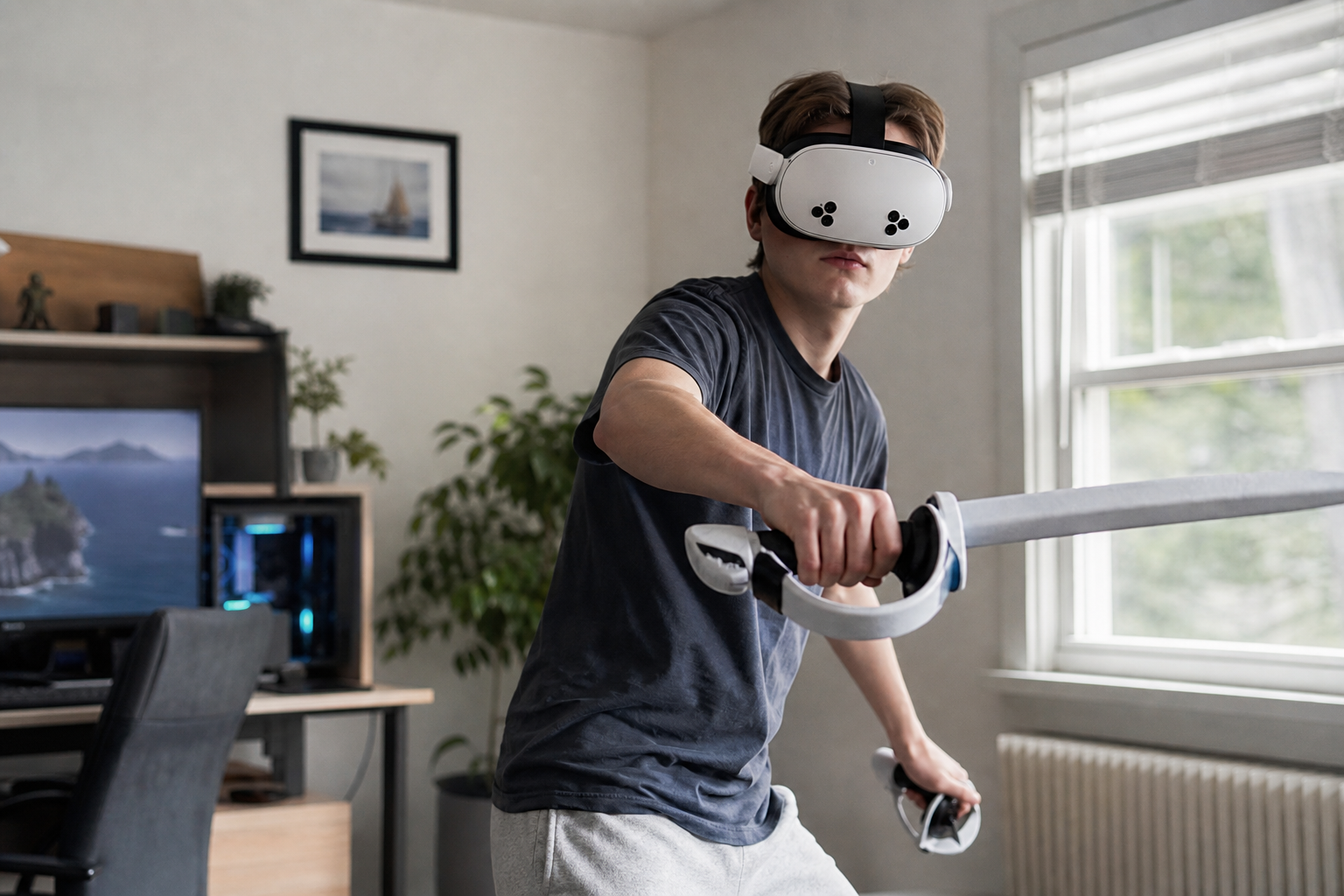
To push the limits, I loaded up a song with lots of fast, wide patterns. I wanted to see if the Quest 3S controller could even keep up with the added weight and momentum. The tracking was perfect. I recorded the session, and as you can see from the clip, the virtual saber never flew off or lost its position. The technology works. The problem is physics. My hand would be safely in the middle of my playspace, but the tip of the accessory would be scraping my wall. This was most obvious with blocks on the far left and right. I had to learn to hit them by rotating my wrist, not by extending my arm. It felt unnatural and less satisfying. Even navigating the game menus felt awkward. The long handle acts like a giant pointer, and I kept overshooting buttons. This small annoyance highlights the big issue: the sword forces you to re-learn your relationship with the virtual space, starting from the main menu. It felt helpful for centered, straightforward swings, but annoying for everything else.
Would a beginner and an experienced player notice the same problem?
You're a Beat Saber pro, so you think you can handle any accessory. Or you're a total beginner, and you assume every weird feeling is just part of learning VR.
No, they notice completely different problems. A beginner's main issue is the physical weight and basic awareness, causing them to bump into things slowly. An experienced player's problem is their own muscle memory, as their powerful, ingrained swings are now a liability in a small space.
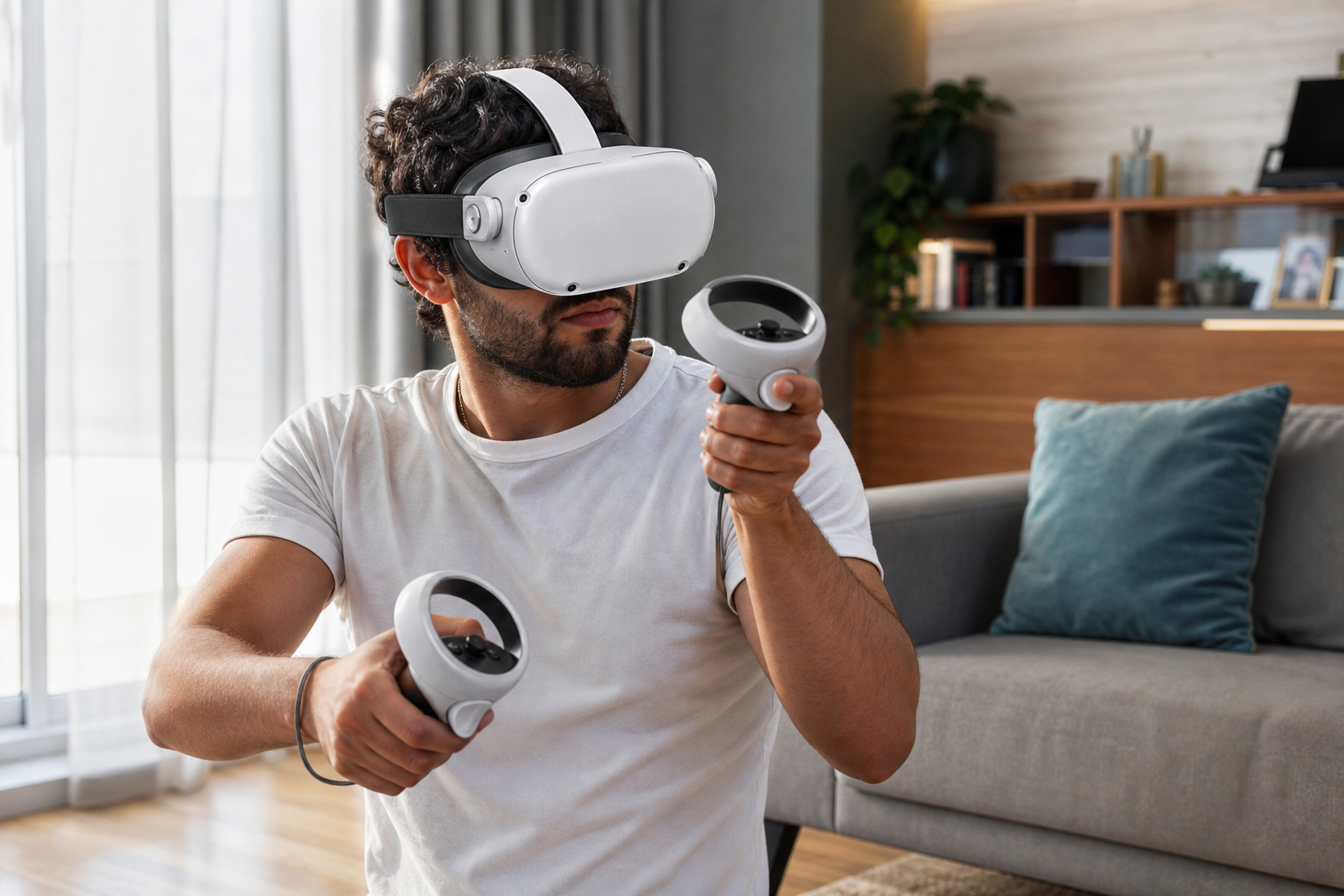
I had my friend, who is new to VR, try the exact same setup. His experience was the total opposite of mine. He was so cautious that he never got close to the guardian boundary. His problem was the sword's weight and length. He kept accidentally tapping the floor with the tip on low swings and felt the controller was too heavy and unbalanced. He was more concerned with simply holding it correctly than with hitting blocks perfectly. For him, the sword was a physical burden. For me, an experienced player, the weight felt good and the balance was fine. My problem was mental. I have thousands of hours in Beat Saber, and my arms know exactly how far to swing to hit a block with perfect form. With the sword, that ingrained knowledge was wrong. I had to actively fight my own instincts on every swing. The beginner's problem was learning physics; my problem was un-learning habits. The accessory created two very different, but equally frustrating, experiences.
Does the answer change when Beat Saber players care more about room safety than price in small rooms?
You're ready to invest in your VR setup for the best experience. But if safety in your small room is your top priority, where should you spend your money?
Yes, the answer changes entirely. If room safety is your primary concern, a VR sword accessory is one of the worst things you can buy for a small room. The value proposition collapses because its core function—extending your reach—is the exact source of the danger.
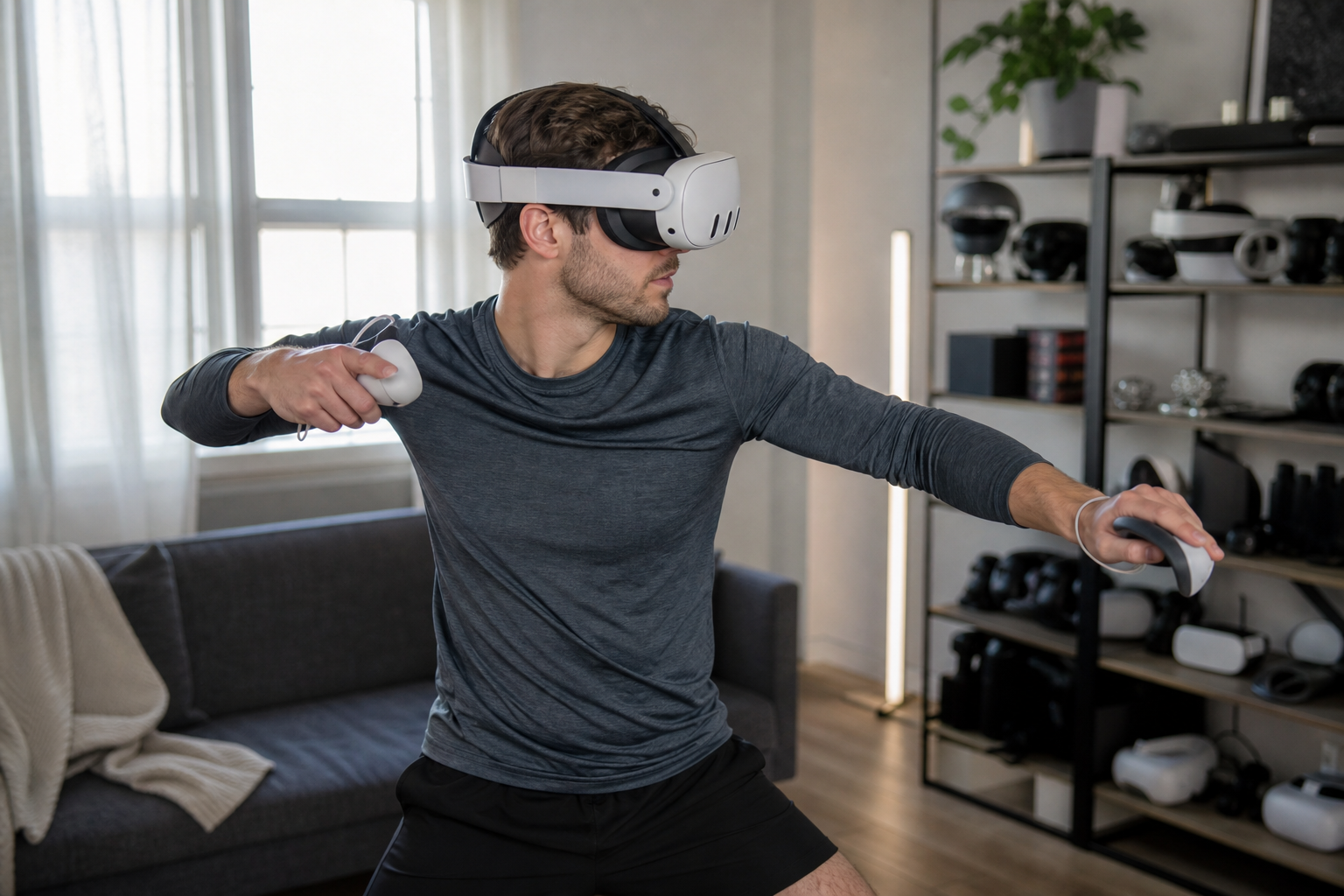
When you shift your focus from "what is the most immersive?" to "what is the safest?", the VR sword becomes a non-starter. Price doesn't matter. A $50 sword that causes you to punch a $500 monitor is a bad deal. For Beat Saber players in confined spaces, safety means predictability and control. Bare controllers offer the most predictable experience. Your physical hand is the endpoint. You know its limits. The sword adds a variable that is hard to track when you're deep in a song. If you truly prioritize safety over everything, your money is better spent elsewhere. A high-quality VR mat with a center marker gives you physical feedback on your position without looking. Upgraded grips can add weight and improve your hold without extending your reach. The VR sword is a fantastic accessory for players with large, dedicated VR spaces. For the rest of us in small rooms, it's an unnecessary risk. Games like Beat Saber are too fast for it, while slower adventure games might be a better fit. For small-room Beat Saber, just stick with the controllers.
Conclusion
A VR sword adds immersion but is a safety risk in small rooms. It's best for players with a lot of space, not for those who need to be careful.
Leave a comment